

Author: Cory Lewis

  • The Shepherd

    The Shepherd

    Intro

    Jesus refers to Himself as The Shepherd. Even more specifically, the Good Shepherd. What exactly does Jesus mean by this? In what ways is Jesus like a shepherd. And how are we, His followers, like sheep?

    Sheep

    To understand why Jesus likens Himself to a shepherd and us to sheep, it would help to get an understanding of what sheep are like. Here’s a handful of characteristics of sheep that as humans, we tend to resemble. Disclaimer: I found the original list here. Credit where credit is due.

    No Sense of Direction

    Sheep are notorious for wandering. Without a shepherd to guide them, the sheep will get hopelessly lost. They’ll likely go wherever the sheep ahead of them goes. If a couple of sheep wander off a cliff, the rest of the flock will probably follow. Stories of sheep doing exactly that are well documented. Here’s one such story.

    Hundreds of sheep followed their leader off a cliff in eastern Turkey, plunging to their deaths this week while shepherds looked on in dismay. Four hundred sheep fell 15 metres to their deaths in a ravine in Van province near Iran but broke the fall of another 1,100 animals who survived. Shepherds from a nearby village neglected the flock while eating breakfast, leaving the sheep to roam free. The loss to local farmers was estimated at $74,000.

    Sounds pretty dumb, right? But let’s be honest. How many people do something, follow some fad, some star just because “it’s cool.” So many people go along with the crowd because they want to be “in.” We don’t always think about the consequences. We just want people to accept us – even if it means doing dumb (or dangerous) things.

    Defenseless

    When you think about an animal who’s great at defending themselves, sheep are probably not the first one that comes to mind. Frankly, they’re terrible at it. Apart from ewes kicking when protecting their young or the fact that when frightened, the whole flock tends to run together (safety in numbers), they can’t defend themselves very well. That’s where the shepherd comes in. They defend the sheep against predators and their own stupidity.

    Similarly, we can run and maybe kick a little against small things, but when it comes to needing protection against the bigger enemies, we desperately need God’s divine protection. Without that, we will fall prey to Sin and Satan over and over again with no hope.

    Can’t Get Up

    I remember watching the VeggieTales adaptation of David and Goliath (Dave and the Giant Pickle) and thinking that the portrayal of sheep falling over and needing help to get back up was just a fun thing the creators put in. After all, there’s no way that there’s an animal incapable of standing back up when it falls over, right? Apparently, there is, it’s called a sheep. When sheep tip over (particularly on their backs), they are physically unable to stand back up. They require assistance from the shepherd to get back on their feet.

    How many times have we fallen in life and would have fizzled out or even died (whether self-inflicted or not) if we didn’t get help from God?

    Emotional and Recognizes Voices

    On a brighter note, sheep have an amazing ability to recognize the voice of the shepherd who cares for them. If a stranger’s voice tries to command them, they will more than likely run away in fear. They know who’s voice they are safe listening to. In addition, sheep are emotional creatures. They build friendships with other sheep and will even stick up for those friends in a fight. They can become anxious or distressed, and they feel sadness when a fellow sheep dies or is lost.

    I don’t think I need to explain the parallels to humans with this one. For we have all felt anxious or distressed at times and most (if not all) of us have felt the pain of a loved one passing away. We long for companionship and connection to fellow humans. And we learn from an early age, the voices of our parents. When strangers try to tell us to do something, we tend to question if we need to listen.

    Can’t Carry Burdens

    If there’s one thing that sheep were not made for, it’s carrying heavy loads. You will never see a sheep as a pack animal. They will be quickly crushed by such a burden. Similarly, God did not mean for us to carry the burdens of life like we do so often. God created us to be dependent on Him, and to give our burdens and trials of life to Him. We can’t carry it all on our own. We were never meant to.

    Settles For Less

    Sheep generally don’t know what’s good for them. If they see a dirty puddle, they’ll stop and drink from it – even though there might be clean water just a few feet away. As long as it satisfies in the moment, sheep just don’t care. Shepherds help the sheep find what’s good for them. And sadly, we are like that all too often. Rather than going after the good things of God, we settle for the things of this world which do not satisfy.

    Valuable

    Another point in favor of sheep is that they were quite valuable back in ancient times – and still are in different parts of the world. Owning large flocks of sheep indicated that one had wealth and influence. God declares us to be His special possession (1 Peter 2:9). God values humans above everything else in all of creation (Matthew 10:29-31).

    Can’t Care for Their Wounds

    Many animals lick their wounds until they heal. But not sheep. Sheep can’t do anything to help their wounds. Without treatment, sheep might die of easily treatable wounds. Shepherds are essential to the treatment of wounds. While we treat our physical wounds very well, we have no ability to treat our spiritual wounds on our own. We need help.

    Innocent

    Lastly, sheep are often associated with innocence and purity. How could you look at a sheep and blame it for anything worse than wandering away from the flock and getting lost? God calls us to be innocent and pure like sheep. Though that’s not possible without His sacrifice on the cross. Jesus washed away our sins and made us spotless as a sheep’s wool. Innocent in His sight.

    Jesus as The Good Shepherd

    Knowing now the nature of sheep, it doesn’t take much to understand the importance of a shepherd. And in John 10:11, Jesus declares himself to be the Good Shepherd. So, now I’ll describe how Jesus fits into that role of a shepherd. I’ll reference back to the list of sheep characteristics and show how Jesus fulfills these.

    Valuable, Innocent, Healed

    I’ve already mentioned how much God values us – similar to how valuable sheep have been. And I’ve also mentioned that through Jesus’ sacrifice on the cross, we are innocent and pure in God’s sight. And going along with that, the cross and resurrection provides the means through which God heals our spiritual wounds – much like the shepherd must care for the sheep’s wounds. Romans 6:8,11 (NIV), “Now if we died with Christ, we believe that we will also live with him…In the same way, count yourselves dead to sin but alive to God in Christ Jesus.” Through Jesus, God made us alive spiritually – totally healed.

    Guidance, Settling

    A shepherd leads his flock of sheep from one place to another. And he always leads them to the best pastures and waters he can find. He ensures that his flock will have everything they need and not settle for less. Psalm 23 is a fantastic passage to describe God leading us as a shepherd does his flock. “The Lord is my shepherd, I lack nothing. He makes me lie down in green pastures, he leads me beside quiet waters, he refreshes my soul. He guides me along the right paths for his name’s sake. Even though I walk through the darkest valley, I will fear no evil, for you are with me; your rod and your staff, they comfort me.” (Psalm 23:1-4, NIV).

    Falling, Carrying Burdens

    I briefly asked how many times we might have fizzled out in life if God hadn’t been there to pick us up. To put a verse to this: Psalm 145:14 (NIV), “The Lord upholds all who fall and lifts up all who are bowed down.” When times are tough, God will be there always to lift us up. And furthermore, Matthew 11:28-30 (NIV) says, “Come to me, all you who are weary and burdened, and I will give you rest. Take my yoke upon you and learn from me, for I am gentle and humble in heart, and you will find rest for your souls. For my yoke is easy and my burden is light.” Jesus carries the burdens we cannot carry on our own. He invites us to come to Him and learn from Him, because His burden is light, and it’s light because He carries it with us.

    Defenseless

    A lot of people might get offended to think that we are defenseless like sheep. And in the physical world, I can’t argue that we will defend ourselves in a variety of ways. However, in the spiritual world, we got nothing. Our only defense against the powers of Satan and our own temptations comes from God. Only through Holy Spirit living in us and enabling us to we have any sort of defense against the dark powers that operate in this world. “Put on the full armor of God, so that you can take your stand against the devil’s schemes.” Ephesians 6:11 (NIV). This verse makes it clear that we need God to stand against the devil. We can’t do it on our own.

    Hearing His Voice

    Jesus states in John 10 that sheep recognize the voice of their shepherd and He further states that His sheep know Him and know His voice (verses 3-4,14-16). A lot of people (myself included) struggle with this idea of hearing God’s voice. We wonder if we are hearing His voice or if it’s our own thoughts or if it’s the enemy trying to trick us. There is a process of learning to recognize God’s still small voice. It comes through spending time with God in prayer, worship, and reading of the Word. Simply knowing His word helps to prevent us from being deceived by other voices. After all, the Bible is the chief way by which He speaks to us.

    Wrapping Up

    Comparing people to sheep may not be the most flattering thing but praise be to God that we have a Good Shepherd to take care of us! I hope this instills more confidence, hope, and peace in your life.

    Outro

    If you enjoyed this post, please consider doing one or all of these things. First, subscribe if you haven’t. If you have, thank you! Second, spread the word. Send these to everyone you know and encourage them to read and subscribe. This blog is purely word of mouth right now. I rely on you, my readers, to help me get more readers. And third, please consider donating. It’ll enable me to continue to offer regular posts.

    Feel free to leave a comment with any questions about what I’ve written, any additional comments about the post, or if there’s a topic you’d like me to write about. Before doing that though, be sure to check out all my posts here and see if I’ve covered it already. And if you find I’ve done it already but aren’t satisfied or still have more questions, let me know!

    Thank you for reading this! I greatly appreciate each one of you. Until next time, God bless you all!
  • Sinners and Saints

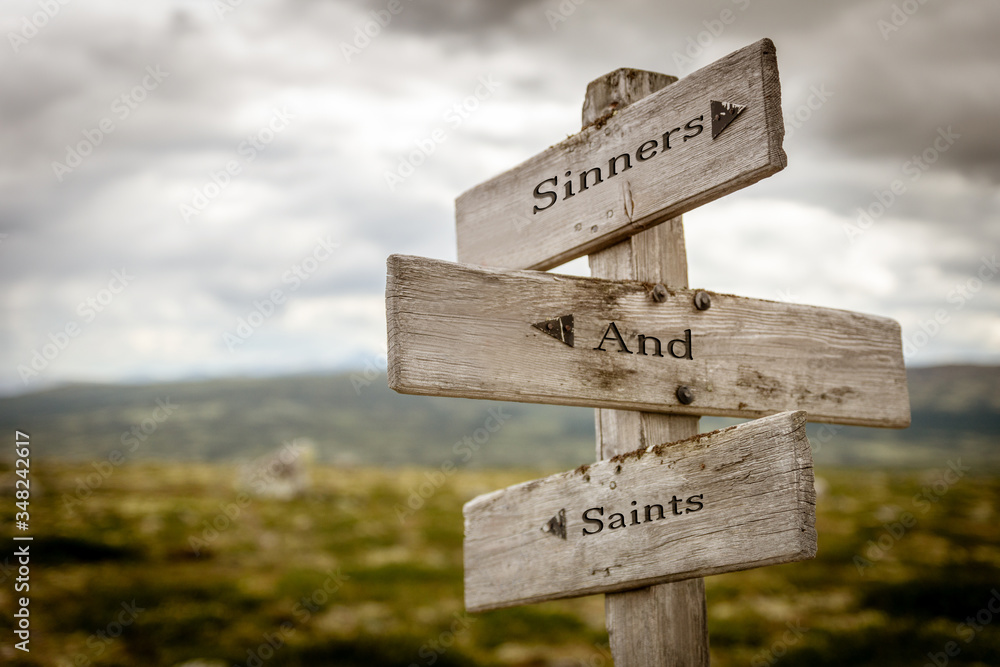
    Sinners and Saints

    Intro

    Christians often use the phrase “We’re just sinners saved by grace” to counteract the claims that we’re all a bunch of “holier-than-thou” people who think we’re “perfect”. Consequently, many Christians tell the non-Christians that “We’re just sinners who have been saved by God’s grace.” And while there’s truth to that, there is also a greater truth: We are saints. But many Christians will shy away from that word because of the images that word stirs up. Images of people who are somehow greater than the average Christian or can be prayed to for different things. Unfortunately, the Catholic church perpetuated these images by making Sainthood something difficult to be achieved rather than an identity you automatically receive in Christ. But at the same time, should we as Christians be saying that we are sinners and saints, as so many do?

    Definitions

    First of all, I’m going to define the two words “sinner” and “saint”. Just plain, simple, English dictionary definitions. After that, I’ll dive into how the Bible uses these two words and how they apply to people. I’ll also explain the key difference between sinning and being a sinner.

    Sinner

    According to the Merriam-Webster dictionary, a sinner is “a person who sins” (link). By that definition, you can classify everyone on Earth a sinner. “For all have sinned and fall short of the glory of God,” Romans 3:23 (NIV). Pretty cut and dry. No real wiggle room here. Let’s see how Merriam-Webster defines saint.

    Saint

    Merriam-Webster lists more definitions for saint than it does for sinner (link). The very first one reads “one officially recognized especially through canonization as preeminent for holiness” – the very definition that I believe leads a lot of Christians (myself included) to shy away from claiming this word as a part of their Christian identity. Some of the other definitions include “one of the spirits of the departed in heaven” (number 2), “one of God’s chosen and usually Christian people” (number 3), and “one eminent for piety or virtue” (number 4). I list all these out for the benefit of seeing how society is most likely to mentally respond to hearing the word “saint”. Now let’s take a look at how the Bible uses these words, especially towards Christians.

    Are Christians Sinners or Saints?

    To this heading, I could add “or both” at the end. I think a lot of people think of themselves as both a sinner and a saint – at the same time. And frankly that’s how a lot of people live. They believe that they have two natures “the flesh” – or sin nature – vs the “the spirit”. However, the Bible teaches that once you are saved, that sin nature dies! It ceases to exist. Paul explains this in Romans 6, but I’ll just put verse 6 here “For we know that our old self was crucified with him so that the body ruled by sin might be done away with, that we should no longer be slaves to sin”. Our old self – the sin nature – died on the cross with Christ. We are now new creations (2 Corinthians 5:17).

    But Christians Still Sin, so….

    Okay, but Christians still sin, and the dictionary says that a sinner is someone who sins. Therefore, Christians are sinners, right? Some people will claim semantics with what I’m going to tell you. But there is a difference between a person who sins and a sinner. For the person who sins, the sinning is something they do, but for the sinner, sinning is a lifestyle. Another word that the Bible uses in place of sinner is evildoer. I don’t think there are any Christians who claim evildoer as a part of their identity! That word conjures up images of people who commit truly vile acts on a regular basis.

    Do you see the difference? Christians still sin, yes, that is true. However, as Paul says in Romans, we are no longer slaves to sin. We no longer bear the title of “Sinner”. Christians no longer pursue the sins of their past or the sins of the world because it’s no longer in our nature to do so. The sinful nature we left behind couldn’t help but sin. Now as God’s saints, we can’t help but avoid sin. Not right away, not in a year or two, but gradually over time – as long as we allow Holy Spirit to work in us – we will find ourselves sinning less and less. And instead, the lifestyle we pursue, and embrace looks more like the Fruit of the Spirit (Galatians 5:22-23).

    Does the Bible Really Call Us Saints?

    To answer the question in a word, yes! The Old Testament uses it a handful of times when referring to those who love the Lord and follow after Him. Sounds like Christians, right? Furthermore, the New Testament continues this trend in several places. I think one of the most blatant declarations that all Christians are saints is found in 1 Corinthians 6:2, “Or do you not know that the saints will judge the world? And if the world is to be judged by you, are you incompetent to try trivial cases?” (ESV). In this passage Paul chastises believers who aren’t living up to some of the dictionary definitions of saint and yet he still calls them saints. This demonstrates powerfully that to be a saint has nothing to do with how you act or what you do.

    Truthfully, when I read the Bible, I find that it talks less about how we can obtain on our own and more about how God gives us these things. We can’t obtain sainthood on our own. But God gives us the identity to be one of His saints. God covers our sin and our attempts at righteousness with the righteousness of Jesus Christ. Holy Spirit empowers us to overcome the sin in our life and become more Christlike. As humans we want to feel accomplished, we want to say, “Look what I did” or “See what I’ve overcome in my life”. Hence why we use the word saint to say trivial things like “that person was a saint when he helped me”. Or why we make saint a special title for a special few who did extraordinary things for God. Newsflash: if you’re doing what God tells you, it’s extraordinary!

    Wrapping Up

    The Bible teaches that sinners and saints are two different categories of people. Sin enslaves the sinner, while righteousness enslaves the saint. Though the enslavement for saints is really freedom, but that’s another topic for another time.

    With what I’ve written here, I hope that you become more confident in your identity in Christ and will gladly claim saint as a part of who you are and reject the notion that you are a sinner anymore. I don’t expect you to get it immediately after reading this (I’m still working on it!), but I do hope that in time you become more comfortable with the word saint. Christ died to make us saints, so let’s believe that and wear that proudly (just be careful not to have a holier-than-thou attitude).

    Outro

    If you enjoyed this post, please consider doing one or all of these things. First, subscribe if you haven’t. If you have, thank you! Second, spread the word. Send these to everyone you know and encourage them to read and subscribe. This blog is purely word of mouth right now. I rely on you, my readers, to help me get more readers. And third, please consider donating. It’ll enable me to continue to offer regular posts.

    Feel free to leave a comment with any questions about what I’ve written, any additional comments about the post, or if there’s a topic you’d like me to write about. Before doing that though, be sure to check out all my posts here and see if I’ve covered it already. And if you find I’ve done it already but aren’t satisfied or still have more questions, let me know!

    Thank you for reading this! I greatly appreciate each one of you. Until next time, God bless you all!

  • God’s Sovereignty

    God’s Sovereignty

    Intro

    God’s sovereignty is undisputed amongst Christians. However, what they do dispute about is how that sovereignty translates to the world we live in. In other words, how much of what we see in the world (the good and the bad) is a part of God’s will to happen? And how much is because we have free will? I only briefly mentioned God’s sovereignty in my post about God the Father and I aim to expand upon that today. In addition, I actually can’t fully talk about sovereignty without comparing it to God’s goodness, which I’ve already established in both the Trinity Trilogy post and my last one, Good Good Father.

    Good Vs Sovereign

    Admit it, you weren’t expecting that as a heading. It’s Good vs Evil right? In this case, when people ask the question “If there is truly a good and loving God, why is there evil in the world?”, they are questioning God’s sovereignty. Therefore, when talking about His sovereignty, I need to balance it out with His goodness. And believe it or not, the truth is simpler than people make it out to be. And it’s easier to figure out than people realize as well. When I first heard what I’m about to tell you, I was blown away by its simplicity. And it brought a greater measure of peace and confidence in my life. Enough teasing let’s get started.

    Simple Vs Complicated

    As I mentioned, I need to balance out God’s sovereignty with His goodness. Putting these two together is the only way to make sense of how God’s sovereignty works in the world and can explain why evil exists. And when performing this balancing act, I also need to introduce two other factors: simple vs complicated. You see, when people try to explain evil in the world in light of God’s goodness and sovereignty, they also (often unknowingly) describe one or both of these attributes as simple or complicated.

    After defining these, I am going to mix and match them to get four types of worlds that we could be living in based on God’s goodness vs sovereignty. I’ll describe these four worlds and then use what the Bible says about God and the world as well as real-life experience to determine which of the four worlds we live in. Let’s get started.

    Simple Goodness

    When I say God’s goodness is simple, I’m saying that God wants only good all the time. He will never want nor use evil to get good. He will not use an “Ends justifies the means” approach to how He operates in the world.

    Complicated Goodness

    To put this simply, a complicated goodness means God ultimately wants good things and will always circle back to good but might trudge through some evil to get there. In this world, God might reach inside my body and mess with it to ensure I end up with some disease just so He could do something in my life that is good.

    Simple Sovereignty

    This is also pretty simple to define, it means God’s will occurs all the time. Everything that happens is from God and is His will. Literally nothing happens in the world that God did not plan out and say, “I want this to happen.”

    Complicated Sovereignty

    With a complicated sovereignty, God is supreme, but His will won’t always occur. Instead, He is working to establish His will in our world. I teased this concept in a previous post with an analogy, I’ll repost it here to refresh your memory (or introduce for the first time if you haven’t read that post).

    The monarchs of old Europe were sovereign over their kingdoms. But not all their subjects obeyed the laws or did what the monarch would’ve like them to. Criminals ran around doing as they pleased disregarding what the king desired. It’s the same with God and our world. God is sovereign over all, but not everyone chooses to live their lives by His standards or do what He desires them to.

    Four Worlds

    Now that I’ve defined each of these terms, I’m going to mix and match to get the four worlds I mentioned earlier. Each world will have a basic list of attributes that would be true of that world.

    Simple G.Complicated G.
    Simple S.Cosmic Utopia
    -Perfection.
    -No sickness, death, crimes, etc.
    -No free will.
    Cosmic Blueprint
    -Two nations fighting, God is playing both sides. That means only one will, one rule, and one kingdom.
    -Satan and demons are puppets of God.
    -No free will.
    Complicated S.Cosmic Battle
    -God is good all the time.
    -Two kingdoms, two wills fighting.
    -Free will plays a role.
    Cosmic Mystery
    -No clue what is and is not of God.
    -God is unknowable.
    -There is no anchor point to know God.
    -Free will plays a role.

    Let’s go through each of these and see what works and what doesn’t based on the Bible and reality.

    Cosmic Utopia

    I’m going to say little to nothing about this one because it’s so obviously not what we see in the world and the Bible is all about how broken man and the world are and how God is working to restore everything. So, it’s pretty safe to say that God’s goodness and His sovereignty can’t both be simple.

    Cosmic Mystery

    I know, I’m not going in order, but I want to show both ends of the extreme since there are rare times when an extreme is the truth in life. With Cosmic Mystery, we can’t just look at the world and say if it is reality like we could with Cosmic Utopia. However, when we read the Bible, we can. The Bible is very clear that we can know God. Jesus is the anchor point for knowing God. John 14:9 (NIV), “Jesus answered: “Don’t you know me, Philip, even after I have been among you such a long time? Anyone who has seen me has seen the Father. How can you say, ‘Show us the Father’?””

    The Bible also repeatedly calls us to grow in our knowledge of God. How can we if He is unknowable? Given that, I can confidently say that God’s goodness and sovereignty also cannot both be complicated.

    Cosmic Blueprint

    Ever hear the phrase “God works in mysterious ways”? Or “Everything happens for a reason”? Both of these are great descriptions of this world, the Cosmic Blueprint. In this world, God’s goodness is complicated, while His sovereignty is simple. So, everything that happens is in God’s will and He is willing to use evil to ultimately accomplish good in the lives of people. As humans, we have no free will, no choice. God determines all our choices for us. Satan and his horde are mere puppets. Unable to do anything without God’s permission.

    I see multiple problems here. First, the Bible puts blame on Satan for various things such as deceiving Eve (2 Corinthians 11:3), being a murderer and a liar (John 8:44) and snatching the truth from people’s hearts (Matthew 13:19). Expanding on that, Revelation 20 describes the punishment Satan will receive for his deeds. But if Satan can’t do anything without God’s permission, then everything Satan has ever done and will do are basically his marching orders. And that means that the Bible is unjustly blaming Satan and using Him as a scapegoat.

    Secondly, the Bible is also clear that as humans we make pretty rotten choices. The entire book of Judges is all about Israel rejecting God, getting punished, crying out to Him for help, and God sending someone to rescue them. Again, Israel would be unjustly punished if they didn’t have free will. Without free will, we are a bunch of fleshy robots only able to do what we are programmed to do. In this world, God is playing a one-player game. And He controls everything in it.

    So based on this, there’s no way that the correct combo is Simple Sovereignty with Complicated Goodness. This leaves one more.

    Cosmic Battle

    The final one is the combination of Simple Goodness and Complicated Sovereignty. I already gave an example of old Europe for how sovereignty doesn’t immediately equate to everything happening in accordance with the will of the sovereign. In addition, the New Testament uses multi-kingdom analogies all over. We see phrases such as “Kingdom of God”, “Kingdom of Light”, “Kingdom of Darkness”, etc. Revelation talks about a war between Satan and his angels against Micheal and his angels. And Ephesians chapter 6 is all about preparing to go to war against Satan.

    And to demonstrate from the Bible the simple goodness of God, “Every good and perfect gift is from above, coming down from the Father of the heavenly lights, who does not change like shifting shadows.” James 1:17 and “This is the message we have heard from him and declare to you: God is light; in him there is no darkness at all.” 1 John 1:5 (NIV). Furthermore, Jesus says that He came that “they may have life” while it is the thief that “comes to steal and kill and destroy” (John 10:10). And since Jesus is the anchor point for knowing God, we can be confident that this applies to God as well.

    In this world, even though God doesn’t cause evil in order to bring good, He most certainly takes the evil and turns it around to bring something good from it.

    What’s Left

    It’s pretty clear to me that the Bible points to Simple Goodness and Complicated Sovereignty. Now, this actually doesn’t answer all the questions. For example, what about the Old Testament with all of the punishments attributed to God? Wouldn’t that point to a complicated goodness? Not necessarily. In short, God established a covenant with Israel that said “If you obey me and follow me, I will give you blessings. If you turn your back on me, I will punish you.” So, God promised to punish the people should they turn their back on God. And God always keeps His promises (an attribute closely related to His goodness). Granted, it is still a little confusing and deserves its own future post.

    One final thing I’d like to say about how God’s kingdom operates. God chooses to limit Himself and work through people and angels to accomplish His will. Could God just snap His fingers and get it all done? Yep. But He doesn’t. He chooses to use finite beings who screw up to get things done. Why? Because He wants us to choose Him of our own volition. Free choice is one way we are made in the image of God. God desires us to follow and obey Him, but He wants us to choose Him, not just be a bunch of robots programmed to do that.

    Wrapping Up

    By now I hope I’ve done justice to God’s sovereignty and His goodness. They are two key aspects of God, and it wouldn’t be good to treat them flippantly. And it’s important to remember that God is on the throne, He is sovereign, and all things will be made new and put right. And we all need to remember that we are in a war. We live in a world of two kingdoms duking it out. But we have nothing to fear. For God will work it all out in the end. That is our hope as Christians that we can hold onto.

    Outro

    If you enjoyed this post, please consider doing one or all of these things. First, subscribe if you haven’t. If you have, thank you! Second, spread the word. Send these to everyone you know and encourage them to read and subscribe. This blog is purely word of mouth right now. I rely on you, my readers, to help me get more readers. And third, please consider donating. It’ll enable me to continue to offer regular posts.

    Feel free to leave a comment with any questions about what I’ve written, any additional comments about the post, or if there’s a topic you’d like me to write about. Before doing that though, be sure to check out all my posts here and see if I’ve covered it already. And if you find I’ve done it already but aren’t satisfied or still have more questions, let me know!

    Thank you for reading this! I greatly appreciate each one of you. Until next time, God bless you all!

  • Good Good Father

    Good Good Father

    Intro

    I’m sure many of you have heard the song Good Good Father by Chris Tomlin. The song does a good job capturing the heart of God as a loving Father. I’ve already briefly touched on God as Father in my post God the Father. I didn’t have time to go in depth on that, but now I’m ready to dive a little deeper into what it means for God to be our Father. In addition, I aim to hit upon another of His characteristics that I only briefly mentioned – His goodness. It’s hard to talk about God as Father without also talking about His goodness.

    Fatherhood

    The Bible refers to God as our father on a number of occasions. While the Old Testament tends to demonstrate the distance between man and God, there are still several references to God as the Father of the Jewish nation. For example, Isaiah 64:8 (NIV) says, “Yet you, Lord, are our Father. We are the clay, you are the potter; we are all the work of your hand.” The Israelites certainly had this understanding, but the relationship wasn’t intimate. To many of them, He was more of a distant Father. Someone you see or talk to occasionally and dare not disappoint or upset in any way. Someone you respected with fear and trembling.

    However, the distance between Israel and God was Israel’s doing. God had a more intimate view of their relationship. The first few verses of Hosea chapter 11 records God saying He “loved him [Israel] and out of Egypt I called my son”, “taught Ephraim to walk”, “healed them”, “led them with cords of human kindness, with ties of love”, and He “bent down to feed them”. Jeremiah 31:9 (NIV) says, “I am Israel’s father, and Ephraim is my firstborn son.” God declared Himself to be Israel’s father – and a very loving father at that – even though Israel itself didn’t share the same view. Hosea 11 also notes how Israel kept going astray and didn’t acknowledge what God was doing in their midst. And yet God kept loving them. And that’s how God treats us as Christians. With perfect love.

    Abba Father

    And when Jesus came, He doubled down on God as father. He called God His Father on numerous occasions using the deeply intimate word “Abba” (Daddy). One such example is in Mark 14:36 (NIV), “‘Abba, Father,’ he said, “everything is possible for you. Take this cup from me. Yet not what I will, but what you will.” In one of Jesus’ most difficult moments, He cries out to God with the most intimate word. But even when all was going well, Jesus used that same term. And taking it a step farther, Jesus taught His disciples to pray to God using the phrase “Our Father…”. I’m sure you are all now mentally reciting the Lord’s prayer. In addition, Jesus says multiple times throughout the Sermon on the Mount (Matthew 5-7) the phrase “your Father” when referring to God. Clearly Jesus wanted us to understand and know God as our Father.

    And not just any father. A good father. Matthew 7:11, “If you, then, though you are evil, know how to give good gifts to your children, how much more will your Father in heaven give good gifts to those who ask him!” (NIV). Matthew 6 gives two other examples about our “Father in heaven” caring about our basic needs – clothing and food. He tells us not be worried about those things because God will take care of us. And this is the perfect segway into the second half of this post.

    Goodness

    There’s a phrase I remember hearing as a kid and later as a young adult when I would go to Lifest, the MC of the festival (Peder Eide) would say “God is good” and wait for the crowed to respond, “All the time”, then “All the time”, “God is good.” Numerous songs talk about how good God is and people will say the phrase “God is good” over and over again.

    And yet, there are people who doubt that. Does the Bible really claim that God is good? Yes! I referenced the Sermon on the Mount where Jesus says that God will supply our needs and gives good gifts to His children. But even more than that, we find it all over the Psalms. Here are a couple of examples from the NIV: Psalm 34:8, “Taste and see that the Lord is good; blessed is the one who takes refuge in him.” and Psalm 31:19, “I remain confident of this: I will see the goodness of the Lord in the land of the living.”

    In addition to the Psalms, when King David appointed Levites to minister before the Ark, he gave them words to praise the Lord with. And the entire passage 1 Chronicles 16:8-36 is just praising the Lord for how good He is and how He is worthy of praise and is their deliverer, etc. The Israelites knew what it meant for God to be deliverer. Just read the account of the Exodus and the worship service that occurred after the crossing at the Red Sea. And as mentioned before, the Psalms are loaded with similar songs of praise to God for His goodness. Not just all the good things He has done for the people, but simply for His goodness.

    God’s Nature

    God doesn’t just do good deeds. Goodness is a part of the nature of God. God is good. It’s impossible for God to do anything evil. I do recognize that there is lots of evil in the world. But I also firmly believe that God did not, does not, and will not cause any of that evil. But there are many people who question the existence of evil, “If God is so good, why is there evil in the world?” And this is a good question that deserves a thorough answer. Which I cannot give here in this post. I plan on covering that question when I address the related question of evil and the sovereignty of God. As you’ll see there, the issues of God’s goodness, His sovereignty, and the existence of evil in the world, are all tightly related.

    Wrapping Up

    I sure hope and pray that you see how much God loves you as a good father loves his children. I know that earthly fathers disappoint us, and some are downright terrible to their children. My goal with this post was to encourage you that God isn’t and will never be that kind of father. He perfectly loves you and has been and always will be good to you.

    A Time to Remember

    Earlier in this post I mentioned Peder Eide, the MC of the Lifest Grandstand. As I was working on this post, I needed to confirm the spelling of Peder’s name and discovered that he passed away April 26, 2024 (this is a very good read on the kind of man Peder was – the image of him on stage is from Lifest). It’s a very sad thing to hear and Lifest will never be the same. Peder was fun to listen to as a MC, but he was also a musician. Two of his songs that I know are both songs that fit right in with this post’s twin themes of God’s goodness and His fatherhood: “Taste and See” (based on Psalm 34:8) and “Abba, I belong to You”. Because of that, I’m dedicating this post to Peder Eide, I know that you are in Heaven worshipping before Abba, Father God.

    Outro

    If you enjoyed this post, please consider doing one or all of these things. First, subscribe if you haven’t. If you have, thank you! Second, spread the word. Send these to everyone you know and encourage them to read and subscribe. This blog is purely word of mouth right now. I rely on you, my readers, to help me get more readers. And third, please consider donating. It’ll enable me to continue to offer regular posts.

    Feel free to leave a comment with any questions about what I’ve written, any additional comments about the post, or if there’s a topic you’d like me to write about. Before doing that though, be sure to check out all my posts here and see if I’ve covered it already. And if you find I’ve done it already but aren’t satisfied or still have more questions, let me know!

    Thank you for reading this! I greatly appreciate each one of you. Until next time, God bless you all!

  • The Infallible Word of God

    The Infallible Word of God

    Intro

    When I started this journey, I wanted to start writing about many of the basics of Christianity. Hence why I started with God and the Trinity. Another highly important topic is the infallible Word of God, the Bible. And that’s where I’m going today. I aim to demonstrate the importance of the Bible being infallible and the dangers of not believing in its infallibility.

    What is Infallibility?

    First of all, I should address the meaning of the word “infallible”. It’s not as common a word these days, so I can’t expect all my readers to know what it means. The dictionary definition of infallible is “incapable of making mistakes or being wrong.” So, when I claim that the Bible is infallible, I’m saying that the Bible has zero mistakes in it, never contradicts itself, is not outdated, and is never wrong in anything it says. That is a tall order to fill. And yet, Christians have believed this for centuries.

    Now the question is, what’s the big deal? Does it matter whether we believe in the infallibility of the Bible? The answer is yes! It absolutely matters. And I’m going to tell you why.

    Why is it Important?

    So, what is the big deal? What are the consequences if the Bible is fallible? The consequences are many. First off, our beliefs as Christians would be questionable. Understanding and knowing God becomes impossible since the Bible reveals the nature of God. The Bible being fallible calls into question God’s very existence as well. Because if the Bible is wrong on one point, then it’s probably wrong elsewhere. And the problem now becomes knowing what is and isn’t an error. It makes trusting the Bible impossible.

    As Christians, we claim to believe in an all-perfect, all-knowing, all-loving God. And we came to this knowledge through His Holy Word – the Bible. If, however, the Bible contains errors – or worse, lies – then how can we claim that God is all-perfect and all-knowing? If His revelation to mankind contains errors or lies, then that would imply that God Himself is capable of making mistakes and/or lying. That’s not a God that I want to serve. He becomes like many of the “gods” of the ancient pantheons that act more like fickle humans with superpowers rather than divine beings.

    The Bible itself claims that “All Scripture is God-breathed” (2 Timothy 3:16). Which means that God impressed upon the authors the words to write. So, not believing in the infallibility of the Bible also implies a non-belief in the infallibility of God Himself! And yet, many people will claim to believe in God’s perfection while denying the infallibility of the source of that claim. Do you see the paradox in that?

    What are the Dangers?

    As a Christian, what are some of the risks of not believing in the infallibility of the Bible? Four main things I see: Falling into sin, falling into false doctrine, falling away from your identity, and falling away from the faith entirely.

    Falling into Sin

    Many people in the world view the Christian lifestyle as a list of don’ts. “Don’t drink,” “Don’t steal,” “Don’t sleep around,” etc. But where did we come up with these lists of “thou shalt not”? From the Bible! The Bible lays down in a number of places various things that it calls “sinful”. And when Christians believe in the infallibility of God’s Word, it’s easier to say what is right and wrong. What is sin and what pleases God. However, those who say they are Christians and don’t believe in Biblical infallibility will have a much harder time. And each Christian who doesn’t believe in Biblical infallibility will likely have a different list of what’s right and wrong. Suddenly, things aren’t as black and white. And as a result, Christians can become trapped in a sinful lifestyle because they believe the Bible got it wrong for that particular sin.

    The truly concerning thing about this is if they feel no conviction of sin. That’s scary because one of Holy Spirit’s jobs is to convict of sin (see my previous post about Holy Spirit here). And He lives within true Christians, so if a Christian is sinning regularly and not feeling convicted…well, let’s just say it begs the question of whether or not that person is saved.

    As an aside, ignorance can play a role in not recognizing Holy Spirit’s conviction. So, if you don’t know that the Bible calls out something you’re doing as a sin, you may not recognize when Holy Spirit convicts you of that. That has happened to me and to many other Christians (it’s not that we weren’t convicted, it’s that we didn’t recognize it as conviction at first). That just brings into question how much time you spend in the Bible rather than salvation.

    Falling into False Doctrine

    False doctrine runs rampant today. Okay, it always has. Even in the first century church there was false doctrine cropping up. One of the most popular of the time came from Jewish Christians who claimed that Gentiles had to keep the Jewish Law in order to be saved – in addition to believing in Jesus. So, the Church is no stranger to dealing with false doctrine. Much of the false doctrine comes as a result of misinterpreting what the Bible says. However, the false doctrine of not believing in Biblical infallibility can lead to believing many, many more false doctrines. After all, even though the Bible may say something explicitly, if it contains errors, then it may simply be wrong about this part of Christian doctrine. People might start out saying the Bible was wrong about something minor, but before you know it, they’re denying the divinity of Jesus.

    I actually knew someone years ago who made a comment about not thinking the Bible was accurate on how many wives and concubines Solomon had. Claimed those numbers were way too high to be real. As a reminder, the Bible says he had 700 wives and 300 concubines (🤢). Sometime later, I recall him denying something far more fundamental to the Christian faith. I don’t remember exactly what, but my reaction was something like, “How can you even be a Christian and not believe that? That’s one of the core tenants of the faith.” This, my friends, is one of the biggest dangers of believing that the Bible contains errors.

    Falling Away from Your Identity

    Do you know your identity in Christ? Do you know what the Bible has to say about your identity? If not, I highly encourage you to look it up. There are so many amazing things the Bible has to say about those who believe. Unfortunately, if you don’t believe in Biblical infallibility, how many of those encouraging statements are true? The Bible calls us His children. Pretty cool, right? But is that true? Maybe, maybe not, depending on if those parts of the Bible contain errors. Are we truly a new creation because of what Christ did on the cross and His resurrection? Again, it all depends.

    I find great comfort and encouragement in what the Bible says about my identity. Every so often (and I need to do it more frequently) I pull out a sheet of paper with these identity statements written on them and the associated passages. I’ll read through them to remind myself of how God sees me and the truth of who I am in Him. This makes it harder for the devil or the lies of the world or the struggles of my past to fill my mind with the opposite. When you don’t believe what the Bible says about you, you will turn to the world for validation, for identity. And the results are sad. Everywhere I look, there are people clearly struggling with their identities, their meaning and purpose in life.

    When Christians start placing their identity in things this world says you should, they start to experience worry, anxiety, dissatisfaction, and other things that God has said we don’t have to carry anymore. In addition, it can lead to a sinful lifestyle or addiction as they try to cope with not feeling fulfilled. It breaks my heart to see it.

    Falling Away from the Faith

    Any one of the aforementioned things has the potential to lead to this last one: falling away from the faith entirely. The inability to trust the Bible at some points will more likely than not lead to denying God’s existence. It might take months, it might take years, but at some point, it’ll probably happen. After all, if the Bible is wrong about how many wives Solomon had and is wrong about Jesus’ true nature, then how can we trust the Bible when it says that God exists, and He created everything? People will try to pick and choose what they want to believe from the Bible, but almost always ends up just throwing the whole thing away. And this is logical. You either have to take it as a whole, or don’t take it at all. God didn’t intend the Bible to be chopped up like that.

    This is an all or nothing faith journey. As Revelation 3:16 says, “So, because you are lukewarm – neither hot nor cold – I am about to spit you out of my mouth.” To be spiritually apathetic is not an option in God’s Kingdom. Similarly, to be Biblically apathetic (aka treating the Bible flippantly by choosing what parts of it to believe and pay attention to) is not an option. It’s all or nothing.

    Wrapping Up

    By now I hope you see the importance of Biblical infallibility. Without it, our faith stands on shifting sand with no firm foundation. If you’ve wavered or struggled in believing this, I hope God touched you through my post. And I hope that you will find peace and confidence in the validity of your faith and being able to trust the Word of God and trust the God who breathed it into existence, just like He did you.

    Outro

    If you enjoyed this post, please consider doing one or all of these things. First, subscribe if you haven’t. If you have, thank you! Second, spread the word. Send these to everyone you know and encourage them to read and subscribe. This blog is purely word of mouth right now. I rely on you, my readers, to help me get more readers. And third, please consider donating. It’ll enable me to continue to offer regular posts.

    Feel free to leave a comment with any questions about what I’ve written, any additional comments about the post, or if there’s a topic you’d like me to write about. Before doing that though, be sure to check out all my posts here and see if I’ve covered it already. And if you find I’ve done it already but aren’t satisfied or still have more questions, let me know!

    Thank you for reading this! I greatly appreciate each one of you. Until next time, God bless you all!