Author: Cory Lewis

  • Victory in Jesus

    Victory in Jesus

    Intro

    The church in America has been infected with a defeatist mindset. I don’t know how long ago it started, but at some point the Church forgot it has victory in Jesus over the enemies of God. All too often we live like we have been defeated and won’t even bother trying to fight. We say things like, “That’s just the way it is” and other similar things. Many Christians don’t realize that we don’t have to settle for struggling with sin and muttering “I can’t wait to get to Heaven to not have to deal with this struggle.” They don’t realize that in Jesus we have victory over the devil and he has to flee from us when we tell him to. Some people might even claim that we are powerless to do anything. I beg to differ. The Bible tells a very different story. Check it out.

    Victory Over Sin

    The Bible says that Jesus was tempted and yet didn’t sin (Hebrews 4:15). Because of that Jesus’ sacrifice on the cross atoned for the sins of the every person ever born from the creation of the world until now. And beyond. Jesus’ supreme victory over sin enables us to live victorious over temptations and sinful lifestyles.

    Those who belong to Christ Jesus have crucified the flesh with its passions and desires. Galatians 5:24 (NIV)

    No one who is born of God will continue to sin, because God’s seed remains in them; they cannot go on sinning, because they have been born of God. 1 John 3:9 (NIV)

    Now I hear you saying, “But, Cory, I’m saved, but I still sin. What gives?” And my answer is simple. Ask yourself this question, “Am I living in a sinful lifestyle with no intention of changing, or am I actively fighting my sinful tendencies?” If you are actively fighting, then don’t worry, you’re on the right track! When John says “they cannot go on sinning” he means that we as Christians cannot live a lifestyle of sin and enjoy it like we used to. This means that we have victory in Jesus to overcome our sinful past and the temptations that crop up.

    Victory Over Satan

    When Jesus rose from the dead, He also defeated Satan once and for all. When Satan tempted Jesus, He claimed to own the Kingdoms of the world and could give them to Jesus. All Jesus had to do was bow down and worship Satan (see Matthew 4:1-11 and Luke 4:1-13). But look at what Jesus said after He rose from the dead.

    Then Jesus came to them and said, “All authority in heaven and on earth has been given to me.” Matthew 28:18 (NIV)

    Jesus reclaimed all the earth through the Cross and the Resurrection! And to top it off, this passage – referred to as the Great Commission – shows Jesus telling His disciples that He gives them His authority as well. Furthermore, during Jesus’ ministry, He sent out His disciples and gave them authority over demons and evil spirits. So, why then are so many Christians afraid of Satan and his minions? Jesus gave us authority over them. There’s nothing to be afraid of. If you suspect that there’s some demonic spirit affecting you or a loved one, tell it to go! They have to obey. If it doesn’t seem to work or you are just struggling with the idea, then seek out someone with experience.

    Victory Over Struggles

    I’ve already talked about the sin struggles and struggles against demonic enemies. So what other struggles could I be referring to? How about mental struggles. Stuff like fear, anxiety, depression, general pessimism towards life, negative attitudes, addictions, etc. All these things can (and do) plague Christians every single day. But they shouldn’t. These are all things that Christ gave us victory over on the Cross. God says 365 times (or 366 times, I’ve heard it both ways) in the Bible “Do not fear”. 2 Timothy 1:7 says that God doesn’t give out spirits of fear. He gives a spirit of a sound mind. A sound mind in this context is one of calmness. One that remains unbothered by what’s going on in the world. Yes, you should acknowledge that terrible things are happening, but you shouldn’t let it drive you into fear or anxiety.

    We are not slaves to the thoughts that hit our mind.

    We demolish arguments and every pretension that sets itself up against the knowledge of God, and we take captive every thought to make it obedient to Christ. 2 Corinthians 10:5 (NIV)

    In Jesus, you have the victory to take every thought you have and give it to Jesus and instead force yourself to think about holy, pure, righteous things (Philippians 4:8). Jesus gave this power to us. But so much of the time, we allow the news and other negative talk dominate our thoughts and minds. I’m so grateful that I don’t have to allow it. I can turn around and combat it with the Spirit of God that lives in me.

    How to Walk in Victory?

    The question that all this brings up is, how do I do this? How do I actually overcome the struggles in my life? I hinted at part of it in the last section. The mind. All these struggles I mentioned have at their roots a particular mindset. Whether that mindset is “I can’t control the thoughts that enter my mind” or “Satan is so powerful I’ll never overcome him” or even “I have an advanced stage of cancer, I need to prepare for the inevitable”. In all these cases, in order to start walking with the victory we have in Jesus, you need a mindset change. And here’s some practical ways to go about getting that mindset change.

    The Practical Side

    1. First, you need to believe it. Choose today that you are going to start believing that Jesus already gave you victory over these things. And remind yourself of this every day.
    2. Start every day reading the Word. Fill your mind with what the Bible says about who God is and who He says you are.
    3. Speak life into your life. Declare out loud (doesn’t have to be loud) what God says about you from the Bible. Some good ones to start with are “I am more than a conqueror”, “God is with me”, and “I walk by faith, not by sight”.
    4. Let go of shame. Do not allow sins and mistakes of the past rob you of joy or of being who God called you to be. Jesus already paid for those. Let it go.
    5. Walk in obedience. Obey what God says in his Word and obey what God has called you to personally. The more you walk in obedience, the less you’ll find yourself doing or thinking the things you struggle with.
    6. Surround yourself with people of faith. This goes back to a previous post of mine. It’s impossible to live this Christian life without a community of believers around you to build you up.
    7. And lastly, pray with boldness. Did you know that God says we can come boldly to His throne (Hebrews 4:16)? But all too often we come with hesitancy and pleading, begging God to do something. The early church did not pray that way. In fact, they prayed with boldness, declaring the victory of Jesus over situations – and it happened! So pray like you have the victory. Pray with boldness. And if you struggle with boldness, pray for boldness! Acts chapter 4 says that the church prayed for boldness and God answered that prayer.

    Wrapping Up

    As I wrap this up, I just want to say that I’m talking to myself just as much as I’m talking to you. I struggle with thoughts and temptations and (at times) fear. I struggle with physical issues that I’m seeking healing on, but haven’t seen yet. My mindset isn’t fully renewed to see myself walk in the full victory of Jesus. But I’m learning, I’m moving forward not backward. And at the end of the day, that’s all God asks from us. To move forward. And God will do the rest. He’ll get us there. So, get out there and walk with your head held high and a smile on your face. People might think you’re crazy, but we have a hope that the world doesn’t have. And we are victorious in every way possible. So why shouldn’t we smile?

    Outro

    If you enjoyed this post, please consider doing one or all of these things. First, subscribe if you haven’t. If you have, thank you! Second, spread the word. Send these to everyone you know and encourage them to read and subscribe. This blog is purely word of mouth right now. I rely on you, my readers, to help me get more readers. And third, please consider donating. It’ll enable me to continue to offer regular posts.

    Feel free to leave a comment with any questions about what I’ve written, any additional comments about the post, or if there’s a topic you’d like me to write about. Before doing that though, be sure to check out all my posts here and see if I’ve covered it already. And if you find I’ve done it already but aren’t satisfied or still have more questions, let me know!

    Thank you for reading this! I greatly appreciate each one of you. Until next time, God bless you all!

  • Infinite God

    Infinite God

    Intro

    When you think of the word “infinite” what comes to mind? Outer space? The number system? An attribute of God? All too often we as Christians put God in a box. We try to put limitations on Him and then wonder why He doesn’t move in our lives. Some of us have grown up being told that God is infinite, but then being told that He doesn’t do certain things. So let’s get back to the basics. Our God is infinite. In an infinite amount of ways. And I wish to highlight some of the big ones that I know we’ve all heard. As has been the point of this entire blog, I want to go back to the basics. The simple truth of the Word of God and break it down to its core elements. So that we might have understanding and faith in it once again.

    So what are those “big” infinite attributes I wish to highlight? Ever hear these words: Omnipotent, Omnipresent, Omniscient, and Immutable? These are the ones I wish to highlight today (plus another one, but you’ll have to keep on reading to discover what it is).

    Omnipotent

    When I start talking about an infinite God, I think this is the attribute that comes to mind quickest. Omnipotent means “All-Powerful”. It means that God has the power to do whatever He wants. He created the entire universe with just His voice.

    By the word of the Lord the heavens were made, their starry host by the breath of his mouth. Psalm 33:6 (NIV)

    Some other examples of God’s omnipotence include: parting the Red Sea so Israel could walk across dry ground, giving a 100 year old man and 90 year old barren woman a son, making the sun stand still (which technically was making the earth stop rotating, but semantics), sending a global flood to wipe out everything on the earth (except those on the ark), becoming a man through a virgin birth, performing a crazy number of miracles as a man, and the list goes on. Seriously, just read through the Bible and you’ll be amazed at the number of miracles that God did. And He still does them today! All throughout history and up until the current day, there are testimonies of what God has done in people’s lives. I’ve heard some and know people who have encountered the unexplainable. Unexplainable, that is, except by an omnipotent God.

    Omnipresent

    To be omnipresent is to be everywhere all at once. The infinite presence of God is another attribute of His that readily comes to people’s minds. And the Bible makes this pretty clear.

    Because God has said, “Never will I leave you; never will I forsake you.” Hebrews 13:5b (NIV)

    And surely I am with you always, to the very end of the age. Matthew 28:20b (NIV)

    These are just two places – and the Hebrews is a quote from Deuteronomy 31:6. Doing a quick search online, there are at least 100 different verses that tell us that God is with us. Think about that for a moment, the minimum number of times the Bible states this is 100. More likely the number is higher than that, but I’m not going to try and count them all. For me personally, this has been one of my favorite attributes. One of the first times I clearly heard God was when I was going through something painful and I asked, “God where are you? Do you see me?” And He clearly spoke to me and said, “Yes”. God’s infinite presence highlights something else about God that is infinite. His love. God’s love is without limit. And His omnipresence proves that. If He didn’t love us, why stay with us?

    Omniscient

    To be omniscient is to be all-knowing. God knows literally everything. You can’t hide anything from Him. Every star that goes nova, every drop of rain that falls, every tear a person cries, every bacteria that divides to reproduce, etc. God knows it all. The Bible says that God calls each star by name and knows the number of hairs on your head. And it gets crazier. Because to be omniscient also means knowing everything from beginning to the end. God’s memory isn’t just remembering everything that has happened in the past, it’s also knowing about everything before it even happens. This breaks my brain a bit. The Bible says before the foundations of the earth were put into place, He planned to send Jesus to the cross (see 1 Peter 1:18-20).

    This one is hard to comprehend. God knew before He created anything that mankind would sin and reject Him and He would have to send His Son to die a horrible death (see my post here about how bad it was) to redeem us. And He still did it! Why? Refer back to my comment about God’s infinite love. And this also goes along with Him giving us free will, so we can choose to love and serve Him. God wants us to choose. Because of His omniscience, God knew all possible outcomes depending how He chose to create everything. Free will? Rebellion, suffering, and redemption. No free will? I don’t even know what would have actually come out of that. But I can promise you there wouldn’t be any sin, suffering, or death! If there still was, God would not be the good God the Bible says He is.

    Immutable

    Immutability is actually a little less known than the prior three. The definition of immutable is “unchanging”. To put it into terms of God, God stays infinitely the same. As He was in the past, so shall He be in the future. God will never diverge from what His Word says about Him. This is comforting to know because if we’re seeking direction from God and we hear something, sometimes we wonder “Is this God, the devil, or me?” And one of the first things we can ask is “Does this line up with the Bible?” “Is it consistent with what the Bible says about God?” If not, then discard it because God will never change. The Bible clearly states this in a few different places.

    Jesus Christ is the same yesterday and today and forever. Hebrews 13:8 (NIV)

    I the Lord do not change. So you, the descendants of Jacob, are not destroyed. Malachi 3:6 (NIV)

    The one from Malachi hints at another part of God’s immutability. When God makes a promise, He keeps it. No matter how long it takes, He will fulfill it. He is faithful even when we aren’t. Israel kept turning its back on God and rebelling against Him. But because of His covenant, God did not destroy them. Because He is immutable. Another verse that highlights God’s immutability is found in Psalm 102. And with this one, I’m going to transition to the final infinite attribute of God that I wish to highlight – since Psalm 102 also highlights it.

    But you remain the same, and your years will never end. Psalm 102:27 (NIV)

    Eternal

    The final (and bonus!) attribute is God is eternal. He has no beginning and He will have no end. Revelation contains a popular verse about this.

    I am the Alpha and the Omega, the First and the Last, the Beginning and the End. Revelation 22:13 (NIV)

    But there are many others. Another common one to quote for God’s eternal nature is found in Psalm 90.

    Before the mountains were born or you brought forth the whole world, from everlasting to everlasting you are God. Psalm 90:2 (NIV)

    I wish to highlight the phrase “from everlasting to everlasting you are God”. What does that mean exactly? It simply means what I already said, God had no beginning – from eternity past He existed – and God will have no end – He will continue to exist for eternity future.

    This is another one that kinda breaks the brain. To be sure, most of us can grasp the concept of having no end. Okay, something or someone just never dies or ceases to exist. I can get behind that. After all the Bible makes it clear that my spirit will continue to exist for all of eternity. And while it’s hard to imagine what I’ll be doing for all of eternity, I can at least grasp the concept. Grasping the idea of having no beginning is where I trip up. Bound in a world where time exists and everything around us has a beginning makes it difficult to imagine anything without one. This mindset begs the question “Where did God come from?” I’ve heard entertaining stories of children asking that question and the parents trying to explain a concept they don’t fully understand to a 4 year old.

    Wrapping Up

    So to wrap up, what does this all mean? Why talk about it at all? By knowing and understanding this, you and I can trust God with our problems. We can trust that He knows (Omniscient) what we are going through, that He is with us in the storm (Omnipresent), that He has the power to calm that storm (Omnipotent), and that He will come through when He says that He will help us (Immutable) because having been around for a while (Eternal) He is a stable God and a firm foundation upon which to build our lives. So cast your cares upon Him today and trust Him to come through for us when we need Him.

    Outro

    If you enjoyed this post, please consider doing one or all of these things. First, subscribe if you haven’t. If you have, thank you! Second, spread the word. Send these to everyone you know and encourage them to read and subscribe. This blog is purely word of mouth right now. I rely on you, my readers, to help me get more readers. And third, please consider donating. It’ll enable me to continue to offer regular posts.

    Feel free to leave a comment with any questions about what I’ve written, any additional comments about the post, or if there’s a topic you’d like me to write about. Before doing that though, be sure to check out all my posts here and see if I’ve covered it already. And if you find I’ve done it already but aren’t satisfied or still have more questions, let me know!

    Thank you for reading this! I greatly appreciate each one of you. Until next time, God bless you all!

  • Fruit of the Spirit

    Fruit of the Spirit

    Intro

    “The fruit of the Spirit is love, joy, peace, patience, kindness, goodness, gentleness, faithfulness, and self-control.” I think we’ve all heard this before. It’s an often quoted passage from Galatians that children are taught. Sometimes I think we teach children this verse because we want them to behave that way. But that’s just a theory.

    But given that, what do these all mean? Sometimes I think we go through this list without fully grasping what each one means. Especially since the original Greek may or may not mean what we think it means. Dive in with me to see what Paul is really telling us about the Christian lifestyle here.

    My Experience

    I’ll be honest here. I haven’t always been good about giving a personal connection with each of the topics I’ve written about. And that’s a bit unfortunate. Because frankly, the best blogs and messages are the ones where the writer or speaker has a personal connection to it. Some reason or motivation that gives them a reason to truly love the topic and be passionate about it. Many of the topics I’ve written about have all been fantastic topics that I enjoy and recognize as foundational. But to put a personal touch on each, I just couldn’t do. I mentioned a few times during my series on Baptismal Regeneration that I’ve had personal encounters with people who believe that way. That made me more invested in those than in some of the others. I genuinely wonder how many of you picked up on the different tone because of that.

    But all that to say is that for this topic – the Fruit of the Spirit – I have a more interesting story and connection to it. And before jumping into talking about the Fruit, I’m going to share it.

    The French Chef

    Many years ago in high school, I volunteered at a local church’s Awana program as a junior leader for the Sparks age group – Kindergarten through 2nd grade. One semester, the topic for the kids teaching was the Fruit of the Spirit. And to help them learn it, the Sparks director – Mrs. Pat – found a fun skit to help the kids learn and remember. And she asked me to play as the titular character, a French Chef named Chef Tellzeetruth (gotta love these children’s skits, lol). As this chef, each week I would come in and talk with Mrs. Pat about a different aspect of the Fruit of the Spirit and would use a different real life fruit to symbolize the Spiritual side.

    Now, I do not remember any of the fruits used or anything I talked about specifically, but I do remember that during this time I personally grew in the very characteristics I talked about during those Wednesday evenings. Amazing how that works. Sometimes to see the growth that you desire, you must step out and teach another. I mentioned in my introductory post that I was known for my Biblical knowledge and would get asked questions periodically. And if I didn’t have the answers, I would find them. That research and searching helped me learn as well. And that’s what I’ve found with my blogs also. So, a little encouragement here is to step out and help others learn. Share your knowledge and search for ways to learn more. Volunteer like I did. Teaching kids is a great way to learn more yourself! The questions they ask, lol.

    Now that I’ve said all that, let’s dive into today’s topic. I first want to cover the context in which Paul wrote this passage before going into the individual fruits.

    The Context

    Here’s the passage from Galatians as we know it and tend to teach it.

    But the fruit of the Spirit is love, joy, peace, forbearance, kindness, goodness, faithfulness, gentleness and self-control. Against such things there is no law. Galatians 5:22-23 (NIV)

    The immediate context of this verse is Paul contrasting a life lived by the Spirit vs one lived by the flesh. The preceding verses have this to say.

    The acts of the flesh are obvious: sexual immorality, impurity and debauchery; idolatry and witchcraft; hatred, discord, jealousy, fits of rage, selfish ambition, dissensions, factions and envy; drunkenness, orgies, and the like. I warn you, as I did before, that those who live like this will not inherit the kingdom of God. Galatians 5:19-21(NIV)

    Having these two different lists to contrast is important. After all, many of the godly characteristics listed here could technically be seen in some form in non-believers. However, it’s probably not a lifestyle – and it certainly has no eternal value. So sometimes you need to look for additional fruits (good or bad) to discern if someone is living by the Spirit or gratifying the desires of the flesh.

    Paul’s whole deal here is arguing against the need for circumcision and obeying the law in order to follow Jesus and be saved. And he warns that anyone who practices any of these sinful lifestyles should not be fooled into thinking they are in Christ simply because of circumcision. And it’s only through the power of Holy Spirit that anyone can overcome these lifestyles and life the Christian lifestyle – as characterized by the Fruit of the Spirit.

    One thing I wish to mention as an aside. If you are a Christian who struggles with a sin and are actively fighting it and trusting in God to help you overcome, you do not fall into Paul’s warning. Paul’s warning only applies to those who are not even trying and feel no reason to stop. These people are most likely not even saved – no matter what prayer they may have prayed or the fact that they were baptized at some point in their life.

    The Fruit

    Moving on to break down each characteristic of the Fruit of the Spirit. Notice I said “characteristic”. Also notice that the Bible uses “fruit” singular. It’s actually one giant fruit that manifests itself in 9 distinct ways. Cool right? And to keep it in front of us, here’s the passage again.

    But the fruit of the Spirit is love, joy, peace, forbearance, kindness, goodness, faithfulness, gentleness and self-control. Against such things there is no law. Galatians 5:22-23 (NIV)

    You’ll notice that rather than “patience” the NIV uses the word “forbearance”. I will be discussing that in the section on patience. Now let’s go through each one to see what Paul meant and the expectations for us.

    Love

    We all probably think we know what love is. But did you know that the Greek had at least 8 different words for love? It’s true. And only a few show up in the New Testament. The two that most Christians are familiar with are philia – love between friends – and agape – unconditional love. Guess which one appears here in Galatians? If you guessed agape, congrats! (If you guessed eros…you might need to do some more study.) Evidence of Holy Spirit working in the lives of a Christian is that Christian having a godly, unconditional love towards people. No strings attached. We love others because God loves them.

    Joy

    When the New Testament talks about joy, it isn’t talking about a happiness dependent on our circumstances. Here in Galatians the word is chara. This word translates as joy or delight and is often accompanied with gladness. Regardless of circumstances. After all, God redeemed us and gives us grace, mercy, and His overwhelming love. Who cares what the world and the devil throw at us? We have the King of kings as our Father! “Rejoice in the Lord always. I will say it again: Rejoice!” Philippians 4:4 (NIV).

    Peace

    Biblical peace (eirene in the Greek) includes wholeness and harmony with God and other people. It includes a life free of conflict. Now that doesn’t mean that everything will be perfect and tranquil. But if you have true Biblical peace, then regardless of the circumstances, you will choose to not be at conflict. Someone might be angry with you and not want anything to do with you. But you choose to forgive and let it go and not stew about it. You are not in conflict with that person. As far as you are concerned, you are at peace with them. “In this world you will have trouble. But take heart! I have overcome the world.” John 16:33 (NIV).

    Patience

    The NIV translates the Greek word here (makrothumia) as forbearance. Because of the lack of familiarity, other translations will use patience or long-suffering – which is a bit easier to understand. Other words that fit here to help us understand the meaning would be endurance, steadfastness, and perseverance. The root of the Greek word relates to two other words meaning “long” and “passion”. The picture we get with this word is to become “long-tempered” through the circumstances and temptations we go through (as opposed to short-tempered). Holy Spirit empowers us to “forbear” through all circumstances and not give in to temptation to sin or to lie down and give up when the going gets tough.

    Kindness

    I think most us has a pretty good idea what it means to show kindness. Some words that go along with being kind are friendly, generous, and considerate towards others. Putting their needs before your own. The Greek word here – chrestotes – conveys moral goodness, integrity, usefulness, and benignity (not harmful, gentle). The Bible says that it’s God’s kindness that leads to repentance. Not yelling at people that they’re going to Hell because of X, Y, and Z. Let’s save judgment for God and just show people kindness and respect. Okay?

    Goodness

    Goodness (agathosune) means uprightness of heart and life, goodness, and kindness. And when I say goodness there, I mean in action. It’s more than just saying good things, it’s living it out in our personal lives and our public ones.

    Gentleness

    I think this is another one we know pretty well. It conveys humility and compassion towards others. The Greek word, prautes, was translated in the KJV as “meekness” (interestingly, the KJV then had “kindness” as “gentleness”). However, “meekness” became associated with “weakness” and later translators opted for “gentleness” to convey the same thing. But meekness is not weak. When applied to wild animals, the Greek word actually means “tame”. In other words, the wild animal has not lost any strength. But it knows how to control it and when to use that strength. Jesus is the perfect example of meekness. The God who created the universe became a man. With a word He could have destroyed everything, but He didn’t. That’s meekness. That’s gentleness. And we must be like that. Humble, knowing our strength, but not lording it over people.

    Faithfulness

    We all know someone who is faithful. They show up week after week to serve or to help out. Anytime you call them for anything, they answer and they will help you to the best of their abilities. Biblical faithfulness is loyalty, reliability, trustworthy, etc. The Greek word pistis encompasses all these with a dependability on God. Because without Him, we can’t do anything.

    Self-Control

    The last characteristic of the Fruit of the Spirit listed by Paul is Self-Control. The Greek word here is egkrateia. It means the ability to control one’s own body, its appetites and desires – physically and mentally. In the context of the early church in Galatia, it would have been related especially to sobriety and chastity. Today it would relate to these and so much more. I mean, do we really need to be picking up our phone every time there’s a lull in a conversation?

    If you feel overwhelmed by any one of these, just remember that this is only possible with God’s help. Apart from Him, we can’t do anything (see John 15:5). Frankly I’m glad I have Holy Spirit helping me. Because I’d fail at so many of these on my own. Praise the Lord for what He has done in my life!

    Wrapping Up

    I hope from this brief study of the Fruit of the Spirit, you feel that you have a greater understanding of what God desires for your life as well as an encouragement that you aren’t expected to accomplish this alone. Only with Holy Spirit’s help can you live this life. That’s why Paul calls it the “Fruit of the Spirit” and not “Fruit of the Christian”. God bless you all!

    Outro

    If you enjoyed this post, please consider doing one or all of these things. First, subscribe if you haven’t. If you have, thank you! Second, spread the word. Send these to everyone you know and encourage them to read and subscribe. This blog is purely word of mouth right now. I rely on you, my readers, to help me get more readers. And third, please consider donating. It’ll enable me to continue to offer regular posts.

    Feel free to leave a comment with any questions about what I’ve written, any additional comments about the post, or if there’s a topic you’d like me to write about. Before doing that though, be sure to check out all my posts here and see if I’ve covered it already. And if you find I’ve done it already but aren’t satisfied or still have more questions, let me know!

    Thank you for reading this! I greatly appreciate each one of you. Until next time, God bless you all!

  • Jesus’ Triumph

    Jesus’ Triumph

    Intro

    After my last post I wouldn’t blame you if you felt a little depressed or defeated. The Son of God betrayed, beaten, crucified, died, and buried in a borrowed tomb. That’s rough. The disciples certainly felt depressed and defeated. They scattered while Jesus hung on the cross. Fearful for their lives, they dared not stick around. What they didn’t seem to recognize (despite Jesus’ predictions) was that Jesus was supposed to die, but that His death was not the end. In fact, with Jesus’ death came the greatest triumph in all of human history. Come explore Jesus’ triumph over death with me. (I realize Easter is over, but there’s much more to talk about.)

    Importance of Resurrection

    Thinking about the resurrection, what makes it so important? After all, Jesus’ death accomplished the sacrifice needed to pay for all our sins and satisfy the wrath of God. Furthermore, none of the animals from any sacrifices came back to life, they all stayed dead. So, why should Jesus come back? What makes His resurrection so necessary? While many reasons can be given, I’ll only present four here.

    Proof of Sufficient Sacrifice

    Jesus’ triumph over the grave by coming back to life was proof given by God that He accepted Jesus’ sacrifice as sufficient to cover our sins. God vindicated Jesus by bringing Him back to life because “the wages of sin is death” and Jesus lived a sinless life, therefore He didn’t deserve to die in the first place. And to make this argument stronger, Paul relates that without the resurrection, our faith is useless and in fact, we are still in our sins.

    And if Christ has not been raised, our preaching is useless and so is your faith….And if Christ has not been raised, your faith is futile; you are still in your sins. 1 Corinthians 15:14, 17 (NIV)

    So, Paul saw the connection between the resurrection and the forgiveness of our sins. That’s a pretty big argument for the resurrections importance!

    Proof of Deity

    In addition to proving the sufficiency of His sacrifice, Jesus’ resurrection also proved His deity. Psalm 16:10 claims that God’s Holy One would never see corruption (or decay). By rising again, Jesus’ body never saw that corruption. Thus proving that He is God’s Holy One. Time and again, Jesus declared Himself the “Son of God” and equated Himself with God (don’t believe Jesus ever claimed that? check out my post on who Jesus is). And to take it a step further, Jesus predicted His own death and resurrection. So by rising again, He proved to everyone that He was indeed the Son of God. The long-awaited Messiah and Savior of the world.

    Death Has No Power

    Here’s a fun reason. When Jesus rose from the grave, death lost it’s power and was forever defeated. As Peter proclaimed in his sermon on the Day of Pentecost:

    But God raised him from the dead, freeing him from the agony of death, because it was impossible for death to keep its hold on him. Acts 2:24 (NIV)

    Notice he said that “it was impossible for death to keep its hold on him”. This actually goes back to the fact that Jesus lived a sinless life and death had no right to hold Jesus.

    To make this even better, Jesus’ triumph over death extends to us as well. As His followers, He defeated death for us too! Hallelujah! If you keep reading Paul’s discourse in 1 Corinthians 15, he says that because Christ was raised, we too shall be raised from the dead. Now all believers who die a physical death will immediately go to be with the Lord in Heaven, but someday God will raise these physical bodies and recreate them into something glorious.

    So hold on, sickness, suffering, and death do not have the final word. Jesus does. And He defeated all those things on the cross and through His resurrection.

    Matter Matters

    This might sound confusing but let me explain. The resurrection means that this physical world (matter) matters to Him. And this is hugely important since just a few decades later, something called Gnosticism would start spreading. This teaching claims what we do in the physical doesn’t matter. Our spirits are perfect so we can live how we want and we’ll still go to Heaven. However, by rising again in a physical body, Jesus refutes this by proclaiming that the physical creation matters. It’s important to Him. This also gives us hope that creation itself which groans under the weight of sin (Romans 8:22) will be redeemed (Revelation 21).

    Resurrection Foretold

    The triumph of Jesus recorded in the New Testament as His resurrection was prophesied a number of times. Most people recognize that Jesus prophesied His own death and resurrection on several occasions (I’ll cover some of those later), but not everyone realizes that the Old Testament records prophesies of Jesus’ resurrection as well. They acknowledge OT prophesies of His death, but don’t always recognize the resurrection ones as well. I wish to open up your eyes to these prophesies and show you yet more evidence that Jesus was who He claimed to be.

    Old Testament Prophecies

    David utters a line in Psalm 16 that really makes no sense at the time he wrote it. I imagine it confused a lot of people. At least until more prophets started prophesying about a coming Messiah, then people might’ve started connecting it to the Messiah.

    because you will not abandon me to the realm of the dead, nor will you let your faithful one see decay. Psalm 16:10 (NIV)

    I referenced this verse earlier and noted that the Messiah would not see any physical decay. Nor was His spirit left in the realm of the dead (called Sheol by the Jews). A pretty clear picture of rising from the dead here. And Peter in his Pentecost sermon makes reference to this very Psalm.

    Less specific than this one are simply various prophecies about the Messiah that demand His resurrection. What do I mean by that? Various prophecies place the Messiah as sitting on the throne of David, ruling the world, establishing peace and justice throughout the ages. He can’t do that if He’s still in the grave. Zechariah, for example, offers different images picture of a suffering Messiah who comes in humility and lowliness (think riding on a donkey) who is pierced and a Kingly, Ruling Messiah. These differing images demand a resurrection takes place between piercing and ruling.

    I don’t have time to go into all the prophecies of Zechariah, Isaiah, Jeremiah, or the other prophets, but they are all littered with these contrasting images of suffering Messiah and conquering Messiah that demand a resurrection.

    Jesus’ Prophecies

    As I mentioned already, you may be more familiar with Jesus’ prophecies about His own triumph over the grave by rising again. Real quickly I’m going to list some of them out here.

    From that time on Jesus began to explain to his disciples that he must go to Jerusalem and suffer many things at the hands of the elders, the chief priests and the teachers of the law, and that he must be killed and on the third day be raised to life. Matthew 16:21 (NIV)

    When they came together in Galilee, he said to them, “The Son of Man is going to be delivered into the hands of men. They will kill him, and on the third day he will be raised to life.” And the disciples were filled with grief. Matthew 17:22-23 (NIV)

    “We are going up to Jerusalem,” he said, “and the Son of Man will be delivered over to the chief priests and the teachers of the law. They will condemn him to death and will hand him over to the Gentiles, who will mock him and spit on him, flog him and kill him. Three days later he will rise.” Mark 10:33-34 (NIV)

    Jesus saw that they wanted to ask him about this, so he said to them, “Are you asking one another what I meant when I said, ‘In a little while you will see me no more, and then after a little while you will see me’? Very truly I tell you, you will weep and mourn while the world rejoices. You will grieve, but your grief will turn to joy. A woman giving birth to a child has pain because her time has come; but when her baby is born she forgets the anguish because of her joy that a child is born into the world. So with you: Now is your time of grief, but I will see you again and you will rejoice, and no one will take away your joy. John 16:19-22 (NIV)

    Jesus answered them, “Destroy this temple, and I will raise it again in three days.”

    They replied, “It has taken forty-six years to build this temple, and you are going to raise it in three days?” But the temple he had spoken of was his body. After he was raised from the dead, his disciples recalled what he had said. Then they believed the scripture and the words that Jesus had spoken. John 2:19-22 (NIV)

    Wow, that’s quite a few times Jesus states that He’s going to die and rise again! And this isn’t even all of them! Makes me wonder how the disciples missed it. But sometimes when we get certain ideas in our heads, everything else just flies right over our heads. The disciples had the Kingly, conquering Messiah image in mind and thus couldn’t comprehend a suffering, dying Messiah.

    I’m going to go in a different direction for the next section. Get a little more apologetic if you don’t mind. And even if you do mind, I’m still going to do it.

    Contradictory Accounts?

    One of the greatest criticisms from skeptics of the Bible and the resurrection is the stark differences between the resurrection accounts found in the 4 gospels. None of them are identical and they even appear to contradict each other on some of the details. While I noticed the differences, I also inherently understood that the different writers recorded different pieces that they had available. Maybe they talked to different people or at the time of their writing only certain people were available (or alive) to get their account. Or perhaps the gospel writers wanted to focus on specific people or aspects of the resurrection. As you can see, just off the top of my head I listed several possibilities to explain the inconsistencies. And I’m sure there’s more.

    Harmonizing the Accounts

    However, this isn’t good enough for the skeptic. So, I found a harmonization of the 4 accounts. I can’t take credit for this so here’s a link to the original article.

    In Summation

    As you can see, we have a pretty strong example of a consistent, non-contradictory series of events that make up one cohesive resurrection story. And it’s very likely that this isn’t the only one out there. But regardless, what’s important is that despite the inconsistencies between the 4 gospels, it can’t be proven that the accounts contradict.

    Wrapping Up

    From everything I’ve said in these last couple of posts, it’s pretty clear that Jesus’ suffering had to occur in order for His triumph – the greatest in human history – to take place. Let us keep these things in mind with gratitude and rejoicing all year long – not just during this season.

    Outro

    If you enjoyed this post, please consider doing one or all of these things. First, subscribe if you haven’t. If you have, thank you! Second, spread the word. Send these to everyone you know and encourage them to read and subscribe. This blog is purely word of mouth right now. I rely on you, my readers, to help me get more readers. And third, please consider donating. It’ll enable me to continue to offer regular posts.

    Feel free to leave a comment with any questions about what I’ve written, any additional comments about the post, or if there’s a topic you’d like me to write about. Before doing that though, be sure to check out all my posts here and see if I’ve covered it already. And if you find I’ve done it already but aren’t satisfied or still have more questions, let me know!

    Thank you for reading this! I greatly appreciate each one of you. Until next time, God bless you all!
  • Jesus’ Suffering

    Jesus’ Suffering

    Intro

    Easter season is upon us. We all know what that means. Easter candy!!! Lol, in all seriousness, though, we know this as the time Jesus suffered and died a horrible death to pay the penalty for our sins. We’ve heard it said that Jesus’ suffering bought us right standing with Father God. Kind of crazy to think about, right? Just thinking about all that He endured humbles me. I don’t feel like I’m worth it. Do you? But that’s the love of God on full display right there. No matter how much any of us have messed up, He died for us. While we were still sinners (see Romans 5:8); still lost and not caring at all about knowing God.

    I do wonder, however, how many of us fully comprehend Jesus’ suffering. Or how many of us take this time of year for granted (guilty). Here I wish to open all of our eyes to His suffering in two distinct areas: His physical suffering and His spiritual suffering. But before I do, I’m first going to show you how Jesus fulfilled Scripture by going to the cross. (All Scripture here comes from the NIV.)

    Prophetic Suffering

    The Jewish people looked for a Messiah. However, the Messiah they searched for was a kingly Messiah. A conqueror who would free them from Roman oppression. That’s why no one expected Jesus. And when He hung on that cross, most of His followers thought they got it wrong. And it is true that Old Testament prophecies speak to a conquering, kingly Messiah. However, there are also many prophecies that point to a suffering Messiah. But because of all the oppression that the Jews went through, they all clung to the conquering Messiah. In another post I’ll reconcile the two and how Jesus did and will fulfill these.

    But for now, I’ll focus on how Jesus’ suffering fulfilled the suffering servant Messianic prophecies found in the Old Testament. And these prophecies cover both the physical and the spiritual suffering. As well as some other details such as His betrayal.

    Betrayed By Friend

    These prophecies include the prediction and fulfillment of Jesus’ betrayal by a friend and the prophecy of the money the religious leaders paid said friend to betray Him.

    Prophecies

    Psalm 41:9, “Even my close friend, someone I trusted, one who shared my bread, has turned against me.”

    Zechariah 11:12-13, “I told them, “If you think it best, give me my pay; but if not, keep it.” So they paid me thirty pieces of silver. And the Lord said to me, “Throw it to the potter”—the handsome price at which they valued me! So I took the thirty pieces of silver and threw them to the potter at the house of the Lord.”

    Fulfillment

    Matthew 26:14-15, “Then one of the Twelve—the one called Judas Iscariot—went to the chief priests and asked, “What are you willing to give me if I deliver him over to you?” So they counted out for him thirty pieces of silver.”

    Matthew 27:5-7, “So Judas threw the money into the temple and left. Then he went away and hanged himself. The chief priests picked up the coins and said, “It is against the law to put this into the treasury, since it is blood money.” So they decided to use the money to buy the potter’s field as a burial place for foreigners.”

    Sham Trial

    These prophecies include the false witnesses that appeared as well as Jesus not responding to any accusations.

    Prophecies

    Psalm 27:12, “Do not turn me over to the desire of my foes, for false witnesses rise up against me, spouting malicious accusations.”

    Isaiah 53:7, “He was oppressed and afflicted, yet he did not open his mouth; he was led like a lamb to the slaughter, and as a sheep before its shearers is silent, so he did not open his mouth.”

    Fulfillment

    Matthew 26:59-60, “The chief priests and the whole Sanhedrin were looking for false evidence against Jesus so that they could put him to death. But they did not find any, though many false witnesses came forward.”

    Mark 15:3-4, “The chief priests accused him of many things. So again Pilate asked him, “Aren’t you going to answer? See how many things they are accusing you of.” But Jesus still made no reply, and Pilate was amazed.”

    Forsaken

    These cover the prediction of all who forsook Him in some way.

    Prophecies

    Zechariah 13:7, “‘Awake, sword, against my shepherd, against the man who is close to me!’ declares the Lord Almighty. ‘Strike the shepherd, and the sheep will be scattered, and I will turn my hand against the little ones.’”

    Psalm 22:1, “My God, my God, why have you forsaken me? Why are you so far from saving me, so far from my cries of anguish?”

    Fulfillment

    Mark 14:50, “Then everyone deserted him and fled.”

    Matthew 27:46, “About three in the afternoon Jesus cried out in a loud voice, “Eli, Eli, lema sabachthani?” (which means “My God, my God, why have you forsaken me?”).”

    Misunderstood

    These prophecies include the mocking Jesus endured and the fact that He was counted as a criminal rather than the Messiah.

    Prophecies

    Psalm 22:7-8, “All who see me mock me; they hurl insults, shaking their heads. ‘He trusts in the Lord,” they say, ‘let the Lord rescue him. Let him deliver him, since he delights in him.’”

    Isaiah 53:12, “Therefore I will give him a portion among the great, and he will divide the spoils with the strong, because he poured out his life unto death, and was numbered with the transgressors. For he bore the sin of many, and made intercession for the transgressors.”

    Fulfillment

    Matthew 27:39, 43 “Those who passed by hurled insults at him, shaking their heads…’He trusts in God. Let God rescue him now if he wants him, for he said, “I am the Son of God.”‘”

    Luke 23:33, “When they came to the place called the Skull, they crucified him there, along with the criminals—one on his right, the other on his left.”

    Lots Cast For Clothing

    Even what happened to His clothing was prophesied!

    Prophecy

    Psalm 22:18, “They divide my clothes among them and cast lots for my garment.”

    Fulfillment

    John 19:23-24, “When the soldiers crucified Jesus, they took his clothes, dividing them into four shares, one for each of them, with the undergarment remaining. This garment was seamless, woven in one piece from top to bottom. “Let’s not tear it,” they said to one another. “Let’s decide by lot who will get it.” This happened that the scripture might be fulfilled that said, “They divided my clothes among them and cast lots for my garment.” So this is what the soldiers did.”

    Family & Friends Witnessed

    Have you ever considered that Jesus’ suffering was witnessed by His own family and closest friends (not just the 12 disciples)? Awful when you think about it.

    Prophecy

    Psalm 38:11, “My friends and companions avoid me because of my wounds; my neighbors stay far away.”

    Fulfillment

    Luke 23:49, “But all those who knew him, including the women who had followed him from Galilee, stood at a distance, watching these things.”

    Physical Body

    A lot happened to Him physically. Whether it was the injuries or even just being given vinegar to drink. All these forms of Jesus’ suffering were prophesied centuries before.

    Prophecies

    Isaiah 50:6, “I offered my back to those who beat me, my cheeks to those who pulled out my beard; I did not hide my face from mocking and spitting.”

    Isaiah 52:14, “Just as there were many who were appalled at him – his appearance was so disfigured beyond that of any human being and his form marred beyond human likeness.”

    Psalm 22:16, “Dogs surround me, a pack of villains encircles me; they pierce my hands and my feet.”

    Zechariah 12:10, “…They will look on me, the one they have pierced.”

    Psalm 34:20, “he protects all his bones, not one of them will be broken.”

    Psalm 69:21, “They put gall in my food and gave me vinegar for my thirst.”

    Fulfillment

    Matthew 27: 26b, 29a, 30, “But he had Jesus flogged, and handed him over to be crucified….and then twisted together a crown of thorns and set it on his head….They spit on him, and took the staff and struck him on the head again and again.”

    John 20:24-25, “Now Thomas (also known as Didymus), one of the Twelve, was not with the disciples when Jesus came. So the other disciples told him, “We have seen the Lord!” But he said to them, ‘Unless I see the nail marks in his hands and put my finger where the nails were, and put my hand into his side, I will not believe.’”

    John 19:33-34, “But when they came to Jesus and found that he was already dead, they did not break his legs. Instead, one of the soldiers pierced Jesus’ side with a spear, bringing a sudden flow of blood and water.”

    John 19:29, “A jar of wine vinegar was there, so they soaked a sponge in it, put the sponge on a stalk of the hyssop plant, and lifted it to Jesus’ lips.”

    Suffered for Sins

    Isaiah made clear that sin was the reason for Jesus’ suffering.

    Prophecy

    Isaiah 53:4-6, “Surely he took up our pain and bore our suffering, yet we considered him punished by God, stricken by him, and afflicted. But he was pierced for our transgressions, he was crushed for our iniquities; the punishment that brought us peace was on him, and by his wounds we are healed. We all, like sheep, have gone astray, each of us has turned to our own way; and the Lord has laid on him the iniquity of us all.”

    Fulfillment

    Romans 5:8, “But God demonstrates his own love for us in this: While we were still sinners, Christ died for us.”

    1 Peter 2:24, “‘He himself bore our sins’ in his body on the cross, so that we might die to sins and live for righteousness; ‘by his wounds you have been healed.’”

    Spirit Committed & Burial

    Prophecies

    Psalm 31:5, “Into your hands I commit my spirit.”

    Isaiah 53:9, “He was assigned a grave with the wicked, and with the rich in his death.”

    Fulfillment

    Luke 23:46, “Jesus called out with a loud voice, “Father, into your hands I commit my spirit.” When he had said this, he breathed his last.”

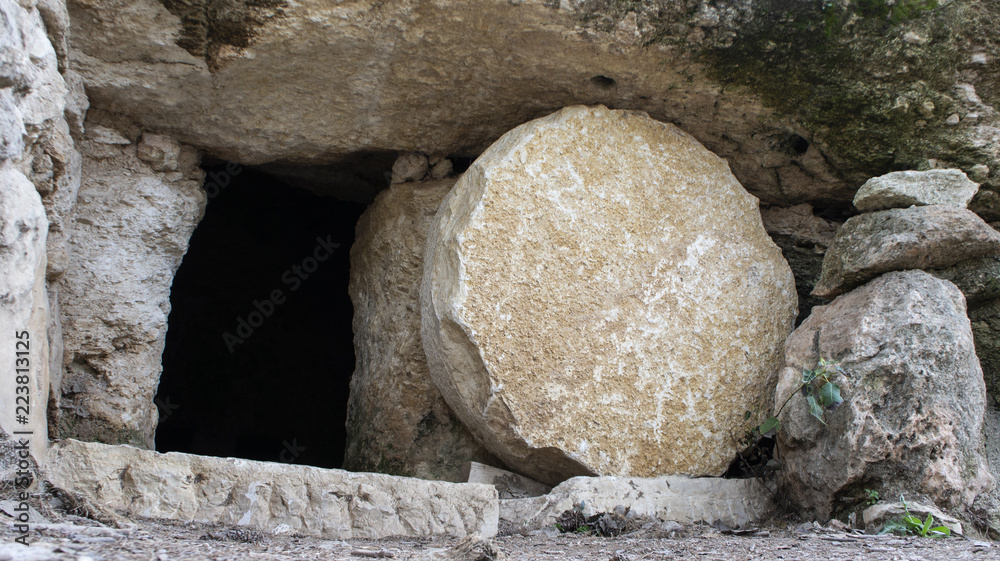
    Matthew 27:57-60, “As evening approached, there came a rich man from Arimathea, named Joseph, who had himself become a disciple of Jesus. Going to Pilate, he asked for Jesus’ body, and Pilate ordered that it be given to him. Joseph took the body, wrapped it in a clean linen cloth, and placed it in his own new tomb that he had cut out of the rock. He rolled a big stone in front of the entrance to the tomb and went away.”

    Physical Suffering

    I realize that this post is already getting pretty long. Bear with me a while longer. I now want to turn from the prophesies of Jesus’ suffering to what He actually endured physically. And not just restating what the Bible says He went through. I want to comment on what Roman Crucifixion actually did to the body and what the person went through. I’m using extra-Biblical sources in this research and I’m sure you’ll recognize many of them since the Bible directly references much of what the Romans actually did when crucifying people.

    Flogging

    Romans flogged every person slated for crucifixion – except for Roman senators, soldiers (except for desertion), and women. A typical flog consisted of a short whip with several single or braided leather thongs of variable lengths, in which small iron balls or sharp pieces of bones were tied at intervals. The iron balls and bones dug deep into the skin and underlying tissue and literally tore flesh off bone. People were flogged just short of death. Roman soldiers often taunted the people during and after the flogging took place. Per the law, Roman soldiers whipped a person at a maximum of 39 times, though it’s unknown how often they broke that law simply because they wanted to. Especially when the person was slated for execution anyway.

    The Art of Crucifixion

    Odd heading, I know. But truthfully, the Romans perfected crucifixion. They didn’t invent it, but man did they perfect it to maximize pain and suffering while delivering a slow death. The Romans couldn’t have selected a worse way to bring about Jesus’ suffering and death.

    The physical cross consisted of a vertical post with a horizontal crossbeam. The condemned man carried the crossbeam from the flogging site to the crucifixion site outside the city. (So all the images/movies of Jesus carrying both parts…probably not accurate.) The upright posts outside the city were permanent structures and reused from person to person. The posts often had a crude seat-like thing for the sole purpose of prolonging the person’s death.

    The Romans affixed the victim’s arms to the crossbeam through either nailing or tying the wrists. Nailing seemed to be the preferred method. Once attached, the crossbeam and victim was raised up and attached to the vertical post. At which point the Romans nailed (or tied) the feet to the post. Above the head of the person, a soldier attached a sign with their name and charge(s) written on it. (Any of this sounding familiar?) Interestingly, law dictated that bitter wine mixed with myrrh (gall) be given to the victim as a mild pain reliever. In addition, the soldiers commonly divided the cloths of the victim amongst themselves.

    If the Romans desired to hasten the death of the victims, they would break their legs below the knees. And they used a spear to stab their victims through the heart to check to see if they were dead (and to ensure it if not).

    The Medical Side

    Any medical students, nurses, or doctors reading this? Ever thought about what Jesus’ body went through during the crucifixion process? Here’s a short list of different things I found when researching what Jesus’ body went through.

    • Hematidrosis, aka “sweating drops of blood”. This occurs through great stress, anxiety, and/or fear.
    • Flesh torn from his body as a result of the flogging. Not to mention the extreme pain here.
    • The crown of thorns brought even more bleeding around the scalp. Furthermore, the soldiers hit his head multiple times with a staff – driving the thorns deeper into him. And more pain.
    • The robe that the soldiers put on him likely stuck to clotting blood and when ripped back off opened those wounds back up and caused excruciating pain. (Are you seeing a painful theme here?)
    • Shock. The human body can endure only so much before going into shock. Jesus likely experienced it before the soldiers attached the crossbeam to his back.
    • Once on the cross, the shock lowered His blood pressure and increased His body’s demand for oxygen. Problem is that breathing caused intense stabbing pain throughout His body.
    • The blood and water. Blood and water-like fluid pouring out of Jesus’ side fits with rupturing the sac around the heart.
    • Likely cause of death: cardiac and respiratory arrest, due to shock, due to crucifixion.

    Spiritual Suffering

    Jesus’ suffering wasn’t limited to the physical. It extended to the spiritual as well. I promise to be brief here.

    • Jesus took on all the sins of the world for all time. That means all sin from every person since Adam & Eve. And all the people that have yet to be born.
    • Isaiah 53 says that Jesus paid for our healing. The word imagery here indicates He paid for our spiritual healing, our mental/emotional healing, and our physical healing. That means that Jesus took upon Himself all physical disease, mental disorders, emotional disorders, etc.
    • The wrath of God. God literally poured out His wrath upon Jesus. As painful as that was for Him to do, He had to in order to open the way for us to Him.
    • Lastly, and perhaps the worst thing of them all, separation from the Father. For the first time in His eternal life, Jesus experienced separation from His Father. The pain of such a separation must’ve been awful. Technically, God stayed by Jesus’ side through it all, but there had to be a short term spiritual separation once all sin and God’s wrath was placed on Him. I say that because the Bible says sin separates us from God (Isaiah 59:2) and it also says Jesus became sin so we could become righteous (2 Corinthians 5:21). Therefore, a separation between Father and Son must’ve occurred. Gut wrenching, but true.

    Jesus’ suffering encompassed body, soul, and spirit. It happened this way so Jesus could be the perfect sacrifice and could relate to us in every way. This enables Him to be the perfect High Priest for us.

    Wrapping Up

    Just researching for this post and writing it makes me more appreciative of Jesus’ suffering. I’m also once again humbled by it. I hope you are all too. I hope you see with new eyes what Jesus endured physically and spiritually. Let us all go through this season with a gratitude that we’ve never had before.

    Outro

    If you enjoyed this post, please consider doing one or all of these things. First, subscribe if you haven’t. If you have, thank you! Second, spread the word. Send these to everyone you know and encourage them to read and subscribe. This blog is purely word of mouth right now. I rely on you, my readers, to help me get more readers. And third, please consider donating. It’ll enable me to continue to offer regular posts.

    Feel free to leave a comment with any questions about what I’ve written, any additional comments about the post, or if there’s a topic you’d like me to write about. Before doing that though, be sure to check out all my posts here and see if I’ve covered it already. And if you find I’ve done it already but aren’t satisfied or still have more questions, let me know!

    Thank you for reading this! I greatly appreciate each one of you. Until next time, God bless you all!