

Category: Theology

  • Salvation Defined

    Salvation Defined

    Intro

    I’ve mentioned several times the concept of salvation. Especially in my last two posts about Heaven and Hell. At the time I said that I wasn’t going to get into the details about salvation and what it means, etc. However, since I teased it so many times and since it is a foundational concept in Christianity, I think now is the time to address it.

    The Basics

    When it comes to the word, salvation. What does that mean? According to the Oxford Dictionary, the word salvation means “preservation or deliverance from harm, ruin, or loss”. To be saved from drowning is deliverance from death and the preservation of your life. And when it comes to Christianity and Biblical salvation, it is deliverance from sin, Hell, and oppression from Satan. And it is an eternal preservation of your spirit to dwell with God in Heaven. Now if that were all, this would be a very short post. But there is so much more to salvation. Especially the questions of “Who’s saved?”, “How are you saved?”, etc. So let’s get started.

    Why Do I Need Salvation?

    The first question to answer is why. Why does mankind need salvation? I hinted at it before in my definition of salvation from a Biblical perspective. But I’ll expand upon that here.

    To put it simply, we have sinned. Mankind lives in open (and closed) rebellion to God and His commandments. The Bible teaches that all have sinned. Nobody can make the claim that they have not sinned.

    If we claim to be without sin, we deceive ourselves and the truth is not in us. 1 John 1:8 (NIV)

    And being a holy and just God, He cannot allow sin to go unpunished. The punishment for sin is death and eternal separation from God in the Lake of Fire.

    For the wages of sin is death, but the gift of God is eternal life in Christ Jesus our Lord. Romans 6:23 (NIV)

    Then death and Hades were thrown into the lake of fire. The lake of fire is the second death. Anyone whose name was not found written in the book of life was thrown into the lake of fire. Revelation 20: 14-15 (NIV)

    Can’t Save Ourselves

    In addition to pointing out the main problem, I also need to point out that we are wholly unable to save ourselves. No amount of good works or money or whatever can save us. The Bible declares that “all our righteous acts are like filthy rags” (Isaiah 64:6) and all “fall short of the glory of God” (Romans 3:23). It doesn’t matter what we do, we can never measure up to the holiness of God – which is the only standard that can get us into Heaven. Only perfection gets us into Heaven. And I think we all can agree that none of us are perfect.

    Now that I’ve established the problem, let’s take a look at God’s solution.

    The Plan of Salvation

    The Bible says that before the foundations of the world were laid, Jesus was chosen to die (1 Peter 1:19-20). That means that God knew that mankind would sin and reject Him and He still created us. All because of His great love. That alone is mind boggling. But God also planned out how to buy us back from the devil.

    The What

    God’s plan entailed coming to Earth as a human being (Jesus) (John 1:1), living a perfect life (2 Corinthians 5:21), and sacrificing Himself to satisfy the righteous requirements of God to cover all sin for all humans for all time – past, present, and future (Hebrews 10:10). The fact that He lived a perfect life is key. Because of that, Jesus did not deserve to die. He deserved to live forever. However, because He died a willing, sacrificial death, God could place upon Jesus the sins of all people from the past, the present, and the future and consider all of them atoned for. And God demonstrated His acceptance of the sacrifice by raising Jesus from the grave. Furthermore, His sacrifice and resurrection defeated death, Hell, the grave, sin, and Satan.

    The How

    “That’s all well and good, but what do I have to do to ‘get saved’?” The process is very simple. While Jesus did all the heavy lifting, He does ask you to do one thing. Believe. Yep, that’s it. In Acts 16, a man asked Paul what he must do to be saved, and Paul responded with “Believe in the Lord Jesus and you will be saved.” (Acts 16:31 NIV).

    Many religions have lists of things to do in order to get to their version of paradise. Biblical Christianity says, “God already did it, just believe.” God only requires that you have faith in Him and His sacrifice. After you’ve prayed a prayer of faith to receive salvation, the righteousness of Jesus covers all your sin and brings your spirit back to life and places Holy Spirit within you. After that, you are a new creation, and you will find yourself living a new life. A life pleasing to God.

    And before you ask, God offers salvation as a gift. He doesn’t force it upon anyone who doesn’t want it and won’t receive it. Think about a gift for a minute. If you give someone a gift, they have to open their hand and accept it in order to benefit from it. That’s why Jesus’ sacrifice didn’t automatically make everyone saved for all time. Everyone can still choose for themself whether they want to accept the gift or not.

    This actually leads into a heresy that I wish to briefly address.

    Universalism

    I don’t intend on spending a lot of time on this topic, but I do feel like I need to address it. And that’s this idea of Universalism. Universalism claims that all people will go to Heaven. No matter which religion you subscribe to, you end up going to Heaven. People come to this belief usually through one of two ways. To some, the thought of people being tormented for all of eternity makes them uncomfortable and search for an alternative. Or they emphasize God’s love and goodness while downplaying His righteousness and justice. But the Bible clearly teaches that people go to Hell when they die. And they will ultimately be thrown into the lake of fire for all of eternity (see my post on Hell for Biblical evidence of that).

    I agree that God is full of love and compassion. In fact, 2 Peter 3:9 reveals that God doesn’t want anyone to perish. But God cannot allow sin into His presence so the sin must be covered. And that’s where Jesus’ sacrifice come into play. For that love and compassion drove God to send Jesus (and made Jesus willing to go along with it) to Earth to die so that we may live. Jesus declares in John 14:6 that “no one comes to the Father except through me.” Time and again, the Bible reveals the exclusivity of the road to Heaven. It’s a narrow path and few find it. The way to Hell is broad and many more walk that path.

    From this, we can conclude that Universalism doesn’t exist as a Biblical truth. It’s a dangerous heresy that we must not fall for and must be ready to demonstrate – in love – the truth of the gospel.

    Wrapping Up

    I did my best to explain in simple terms what salvation is. I hope you find it useful as you explain to others the wonderful news of the gospel. It’s especially important to understand salvation when talking to the lost. A lack of understanding leads to people not actually being saved but believing they are. That’s a bit scary to think about.

    One last note, the Bible doesn’t talk about a “salvation prayer”. The Bible says to “declare with your mouth, ‘Jesus is Lord,’ and believe in your heart that God raised him from the dead” (Romans 10:9) in order to be saved. So, we do need to open our mouths and profess to God that we believe and accept His sacrifice. How that prayer looks varies. The specific words don’t matter so much as the heart behind them.

    Outro

    If you enjoyed this post, please consider doing one or all of these things. First, subscribe if you haven’t. If you have, thank you! Second, spread the word. Send these to everyone you know and encourage them to read and subscribe. This blog is purely word of mouth right now. I rely on you, my readers, to help me get more readers. And third, please consider donating. It’ll enable me to continue to offer regular posts.

    Feel free to leave a comment with any questions about what I’ve written, any additional comments about the post, or if there’s a topic you’d like me to write about. Before doing that though, be sure to check out all my posts here and see if I’ve covered it already. And if you find I’ve done it already but aren’t satisfied or still have more questions, let me know!

    Thank you for reading this! I greatly appreciate each one of you. Until next time, God bless you all!


  • Hell: Eternal Separation

    Hell: Eternal Separation

    Intro

    Man – Woman, Hot – Cold, Up – Down, Heaven – Hell. Opposites. When two things are opposites, there’s little to no similarities between them. In my last post, I talked about Heaven and how we as believers should look forward to it with hope. Today, I’m going to talk about Heaven’s opposite: Hell. Yes, Hell is a real place – and I’ll show that from Scripture – and people really go there. Buckle up. Talking about Hell isn’t for the faint at heart.

    Does Hell Exist?

    The first question I need to address is does Hell even exist? Not all Christians even believe that it does. And if I don’t offer Scriptural evidence, I might as well not bother talking about the rest, because some people might tune it out.

    The short version is that, yes, the Bible does refer to Hell as an actual place. Several verses describe Hell as the place of torment for the unbeliever when he dies. Some examples follow.

    If your hand or your foot causes you to stumble, cut if off and throw it away. It is better for you to enter life maimed or crippled than to have two hands or two feet and be thrown into eternal fire. And if your eye causes you to stumble, gouge it out and throw it away. It is better for you to enter life with one eye than to have two eyes and thrown into the fire of hell. Matthew 18:8-9 (NIV)

    Then the king told the attendants, “Tie him hand and foot, and throw him outside, into the darkness, where there will be weeping and gnashing of teeth.” Matthew 22:13 (NIV)

    Notice in these passages how Hell is associated with grief, fire, darkness? Clearly Hell is not a place where you would want to go. As the place of eternal punishment and suffering, you would do well to avoid it at all costs. Jesus used strong illustrations in Matthew 18 to describe the seriousness of it.

    Notice that the examples I gave are both spoken by Jesus. And if you ever need good Scriptural evidence of a particular doctrine, find out what Jesus says about it. While these are only a couple of examples, there are several more I could pull out. But for brevity, I’ll just list the references of a few more: Mark 9:44-48, Matthew 8:12, Matthew 13:40-42. And this is still a partial list. Now I will admit avoiding some very common or popular ones because those reference the Lake of Fire more specifically. And you may be wondering, what’s the difference? I’m glad you asked.

    Hell Vs Lake of Fire

    Many people get a bit confused. What’s the difference between Hell and the Lake of Fire? Are they the same place or different? From what I can tell in Scripture, they are two distinct places. And to quickly set up this next verse, another word for Hell is Hades.

    Then death and Hades were thrown into the lake of fire. This lake of fire is the second death. Revelation 20:14 (NIV)

    This passage is perhaps the clearest in showing that the two are different. After all, you can’t throw something into itself. The passage goes on to say that anyone whose name isn’t found in the book of life will be thrown into the Lake of Fire. Since unbelievers are dying every day, they have to go somewhere, and Revelation shows that the Lake of Fire is the final judgment and currently no one is in it. However, Revelation tells us that not only will unbelievers end up here, but Satan and all his angels will too.

    Why Hell?

    People don’t like the idea of Hell, and I don’t blame them. Frankly, I don’t like the idea of Hell. I don’t like the idea of an eternal Lake of Fire where billions will spend all of eternity in torment. But that doesn’t negate its existence. However, I should address the questions of why God would create such a place and how could He send people there, because a lot of people ask them.

    Why Did He Create It?

    First of all, Hell (and the Lake of Fire, but from now on I’m going to lump them into the one word) was not originally created for man, but for Satan and his hordes of demons.

    Then he will say to those on his left, “Depart from me, you who are cursed, into the eternal fire prepared for the devil and his angels.” Matthew 25:41 (NIV)

    Unfortunately, Hell shows us another example of things that (many) humans experience or will experience that we were not meant to. Other examples of that are we were not meant to life live apart from God, we’re not meant to live a fast-paced stressed-out life, and we’re not meant to live in bodies that suffer various physical ailments. Yet humans experience all these things.

    How Could He Send People to Hell?

    The second question that a lot of people have is how could a loving God send people to Hell? Well, the fact of the matter is that we humans have free will. God created us to make choices. And because of the fall, not all of those choices are good ones. God will not force us to love Him or follow Him. Therefore, there needs to be a place for those who reject God. And when they reject God, they choose to go to Hell. And while that sounds ridiculous, think about it. They spend their entire lives saying, “I don’t want your presence in my life.” So, when they die, why would God force them to be in His presence for the rest of eternity? Hell is the one place where they can spend eternity apart from the presence of God, just like they wanted in life.

    And once you die, it is too late.

    Just as people are destined to die once, and after that to face judgment, Hebrews 9:27 (NIV)

    Understanding Your Fate

    Something else that is interesting is that in Luke 16, Jesus tells the story of a rich man and a beggar named Lazurus. In this story, Jesus describes the rich man dying and going to Hell and being in torment but notice that he does not ask Abraham (whom he sees in a place of comfort) to get him out, but rather asks for water to cool his tongue – to make it more bearable. This suggests that – at least in the intermediate place of Hell – people will be at least passively okay with being there. At least to a certain degree. Whether that’s more of a resigned “I deserve to be here” or if it goes back to what I said earlier about not wanting to be in God’s presence, I don’t know.

    I see this as a demonstration of his accepting his own fate but understanding that it is a terrible fate, and he has a sense of regret. Consequently, he doesn’t want others to end up with him.

    Abraham’s Bosom

    Now something else I’m going to address (really quick) about this story is the existence of a place of comfort that can be seen from Hell. Referred to as Abraham’s Bosom, the Jews believed that the righteous would go here when they died. And it is true that without going through Jesus, there is no way into Heaven. So, the righteous of the Old Testament would need a place to go that is a place of comfort until Jesus’ sacrifice on the cross.

    And while the Bible isn’t clear about it, it is likely that sometime after Jesus’ death (and possibly after His resurrection as well), God took those in Abraham’s Bosom up to Heaven to be in His presence permanently (some see Ephesians 4:8 as a reference to this event).

    Wrapping Up

    I hope you see the horror of eternal separation and I hope it stirs you to reach out to loved ones and others with the gospel. I know I need to do better in this area. I’ve got many people in my life that needs to know about Christ. I have not been a very good verbal witness. I say verbal witness because I do believe I live a lifestyle that points to God – or at least is different enough from the world to be noticeable. Let us all pray for strength, boldness, and the words to speak so we can save people from this unspeakable horror and to a life of freedom.

    Outro

    If you enjoyed this post, please consider doing one or all of these things. First, subscribe if you haven’t. If you have, thank you! Second, spread the word. Send these to everyone you know and encourage them to read and subscribe. This blog is purely word of mouth right now. I rely on you, my readers, to help me get more readers. And third, please consider donating. It’ll enable me to continue to offer regular posts.

    Feel free to leave a comment with any questions about what I’ve written, any additional comments about the post, or if there’s a topic you’d like me to write about. Before doing that though, be sure to check out all my posts here and see if I’ve covered it already. And if you find I’ve done it already but aren’t satisfied or still have more questions, let me know!

    Thank you for reading this! I greatly appreciate each one of you. Until next time, God bless you all!

  • Heaven: Home

    Heaven: Home

    Intro

    Heaven is generally thought of as the place where God dwells and where Christians go when they die. And while this is true, it’s so much more. Jesus describes Heaven as a paradise to the thief on the cross. In Revelation, John describes a sea of glass. He also mentions that Heaven has its own temple and ark of the covenant. And this only scratches the surface. Let’s discover the majesty of God’s dwelling place together.

    Which Heaven?

    This might surprise some of you, but the Bible talks about multiple heavens. Crazy right? Because of that, I’m going to briefly cover all three heavens and then get on with the main event.

    The First Heaven

    The first heaven (not called that specifically in the Bible, but a good label for clarity) is what we call the sky, or atmosphere. James 5:17-18 contains a great example of the Bible calling the atmosphere “heaven”.

    Elijah was a human being, even as we are. He prayed earnestly that it would not rain, and it did not rain on the land for three and a half years. Again he prayed, and the heavens gave rain, and the earth produced its crops. James 5:17-18 (NIV)

    The Second Heaven

    As we move up the list, we also move “up” in a more literal sense. What we call outer space – or the cosmos – is also referred to as “heaven” by the Bible.

    And when you look up to the sky and see the sun, the moon, and the stars – all the heavenly array – do not be enticed into bowing down and worshipping things the Lord your God has apportioned to all the nations under heaven. Deuteronomy 4:19 (NIV)

    The second heaven consists of all the stars, galaxies, planets, and everything else that exists in the cosmos. There is far more majesty here than in the first. And that pattern continues when we move on to the third – and final – heaven.

    The Third Heaven

    When we get here, we have now entered God’s dwelling place. God sits enthroned above the universe from the third heaven. This is the only one of the three that is explicitly referred to by the name “the third heaven”. Found in 2 Corinthians 12, Paul tells the story of “a man” that he knew that had been caught up to the third heaven. Many scholars believe this man was Paul himself, but because of all the things he couldn’t talk about, avoided questions by not naming himself.

    I know a man in Christ who fourteen years ago was caught up to the third heaven. Whether it was in the body or out of the body I do not know – God knows. (NIV)

    After laying all this groundwork, I’m now going to turn my attention to describing what the Bible has to say about this third heaven and what it means for Christians.

    The Descriptions

    The Bible records various things about heaven including physical descriptions, what life will be like, who will all be there, etc. I’m going to cover some of these and try to show you through these passages the incredible home we have to look forward to.

    What Does Heaven Look Like?

    Humans are visual people. That’s why pictures are so popular. And if you lived before the invention of the camera, it would be paintings – though you had to be fairly wealthy to get one of those. So, it’s no surprise that one of the first questions people have about Heaven is “What does it look like?” And while the Bible doesn’t give details about every aspect, there is some pretty powerful imagery to give us a glimpse of the majesty and beauty of our future home.

    Heaven’s Throne Room

    The throne room of God Almighty is a sight to behold according to John in Revelation 4. Look at the descriptions he gives it. “A rainbow that shone like an emerald encircled the throne…From the throne came flashes of lighting, rumblings and peals of thunder. In front of the throne, seven lamps were blazing…Also in front of the throne was what looked like a sea of glass, clear as crystal.” Wow! I’m trying to picture this concept of a rainbow shining like an emerald, and I admit, I have questions. But what I can picture is amazing. And I know that it falls short of the truth.

    The New Jerusalem

    Revelation also gives a description of the New Jerusalem, the city that comes down from Heaven to be the home of the saints for all of eternity. Now you could argue that this is the future home and not the current home. I say, so what? Whether the New Jerusalem will be current Heaven brought to Earth or something God creates (or has created and is currently waiting) as separate, is entirely irrelevant because they have the same designer and are going to have similar majesty and beauty. This gives me confidence that many of the features of this city reflect what Heaven is like today.

    And those descriptions include walls made of jasper, streets made of gold, foundations made of various precious stones, and the gates made of pearls (Revelation 21). Talk about incredible! Talk about majestic! I can’t wait to live there for all of eternity. The majesty of it is only topped by the majesty of God Himself – who will be living there among us.

    What Will We Do In Heaven?

    For some reason, an idea got started and circulated that living in Heaven will be boring because all we will do is sit on clouds, play harps, and maybe fly around and talk to other people. There is so much more than that! Ever hear of the marriage supper of the Lamb? That’s right, there’s food in Heaven! As my pastor likes to say, “If you’re looking for me, I’ll be over by the chocolate fountain.” So, we’ll be chatting with friends and family over food. Coming from the Midwest, this will be both fun and normal.

    Incredible People

    And speaking of talking to others, what’s so boring about that? Being able to hang out with people who have died before you and talking to them. Talking to people in your family tree whom you’ve never met or hardly knew. Or how about talking to Biblical characters? Abraham, Moses, David, Peter, Paul, etc. Or other people throughout history. The Bible indicates that we will see them and be able to interact with them. Talk about all the stories we don’t have written in the Bible. And if you’re worried about seeing someone you had a rough relationship with here on Earth, don’t worry, all things are made new – even relationships.

    Worship In Heaven

    But more importantly, we will worship God. Again, in Revelation, John describes numerous scenes of worship around the throne. Look at Chapters 4, 5, 7, 13, 15, and 19 to see incredible scenes of worship to God and to the Lamb. There will be no end to the worship of God. Does that mean that all we will do is fall on our face and sing to Him? No, how can you eat and sing at the same time? What it does show is that there will always be someone singing in worship. And further, it also shows that worship is more than just singing. It’s a lifestyle. And once we get to Heaven, we will be perfect so everything we say and do will be a form of worship to the one who created us.

    Learning New Things

    The Bible hints that all throughout eternity we will continue to learn and discover new things. New things about God and new things about all that He has created. That’s a lot of discovery and I’m excited about it.

    Who Will Be In Heaven?

    And now, perhaps the most controversial question: Who will be in Heaven? What are the criteria to spend eternity in this incredible place? The reason this is controversial is because no one wants to spend eternity in the alternative to Heaven. Consequently, various religions put up very lax requirements to get to their version of Heaven. Even within Christianity, there are some differences on who goes to Heaven and how you are saved. This post is not about the criteria for salvation – though I’ll get to that at some point since I’ve been covering a lot of the basics since I started blogging – so I won’t go into the details about that.

    Those Included

    That said, here’s some verses that tell us exactly who gets to go to Heaven.

    And you also were included in Christ when you heard the message of truth, the gospel of your salvation. When you believed, you were marked in him with a seal, the promised Holy Spirit, who is a deposit guaranteeing our inheritance until the redemption of those who are God’s possession — to the praise of his glory. Ephesians 1:13-14 (NIV)

    Yet to all who did receive him, to those who believed in his name, he gave the right to become children of God. John 1:12 (NIV)

    Jesus replied, “Very truly I tell you, no one can see the kingdom of God unless they are born again.” John 3:3 (NIV)

    A good summary of these verses is that only those who are children of God, or born again, will be in Heaven. Again, I’m not going to define all that it means to be born again, or saved, or even “what about the Old Testament saints” question. I’ll address those at a later time.

    Those Excluded

    Equally important to know is who won’t make it into Heaven. People you see here will not enjoy God’s presence for eternity and will instead suffer for that same period.

    Outside are the dogs, those who practice magic arts, the sexually immoral, the murderers, the idolaters and everyone who loves and practices falsehood. Revelation 22:15 (NIV)

    Anyone who loves and practices these things (and this isn’t a comprehensive list) will not be enjoying the marriage supper of the Lamb. Of note, it says those who love and practice these things. If you are someone who struggles with it and are praying through it and fighting to be free, be rest assured that this verse does not apply to you. It applies only to those who do it, love it, and have no intent or desire to change.

    And I bring to you a warning as well. A warning found in Matthew 7:21 “Not everyone who says to me, ‘Lord, Lord,’ will enter the kingdom of heaven, but only the one who does the will of my Father who is in heaven.” Beware that you do not fool yourself into believing you are good just because you “do good works for God”. It may be good. But is it what God asked you to do? Are you in His will? Do you truly know Jesus? Or are you trying to earn your way into Heaven?

    Not everyone who says to me, ‘Lord, Lord,’ will enter the kingdom of heaven, but only the one who does the will of my Father who is in heaven. Matthew 7:21 (NIV)

    Wrapping Up

    While we’ll never fully comprehend heaven here on earth, the Bible gives us a glimpse that gives me assurance that no matter how bad it gets here, this world is not our ultimate home. Take confidence in that, my brothers and sisters. Let that knowledge fill you with hope today.

    Outro

    If you enjoyed this post, please consider doing one or all of these things. First, subscribe if you haven’t. If you have, thank you! Second, spread the word. Send these to everyone you know and encourage them to read and subscribe. This blog is purely word of mouth right now. I rely on you, my readers, to help me get more readers. And third, please consider donating. It’ll enable me to continue to offer regular posts.

    Feel free to leave a comment with any questions about what I’ve written, any additional comments about the post, or if there’s a topic you’d like me to write about. Before doing that though, be sure to check out all my posts here and see if I’ve covered it already. And if you find I’ve done it already but aren’t satisfied or still have more questions, let me know!

    Thank you for reading this! I greatly appreciate each one of you. Until next time, God bless you all!
  • Adopted

    Adopted

    Intro

    The New Testament repeatedly tells us that God adopted us into His family. The topic of adoption is at the forefront of my mind right now. I recently came off of volunteering for a week at a camp that my church put on for kids in the foster care system. (See For The Children’s website for more information about the non-profit organization that my church partners with to make it happen). I’ve done it now five years running, and I intend to continue to do it as much as possible. People who adopt (or even foster) children and children who have been adopted both offer a different perspective (I would think) on this concept of God adopting us than the average person. So, today I’m going to explain what it means for God to adopt us as His children.

    Why Adoption?

    First of all, why do we need to be adopted in the first place? Aren’t we all God’s children? Adam and Eve’s sin resulted in separation from God. Humans were no longer a part of God’s family. Jesus tells the pharisees that they are children of the devil rather than of God (John 8:31-47 for whole context). Furthermore, 1 John 3:9-10 states “Those who have been born into God’s family do not make a practice of sinning, because God’s life is in them. So they can’t keep on sinning, because they are children of God. So now we can tell who are children of God and who are children of the devil. Anyone who does not live righteously and does not love other believers does not belong to God.” (NLT). The Bible demonstrates that not everyone (not even all Jews – God’s chosen people) can claim to be children of God.

    Now that I’ve established that we are not naturally born of God, it becomes clear that we need to be adopted. And Galatians 4:4-6 says it so well, “But when the set time had fully come, God sent his Son, born of a woman, born under the law, to redeem those under the law, that we might receive adoption into sonship. Because you are his sons, God sent the Spirit of his Son into our hears, the Spirit who calls out, ‘Abba, Father.’” (NIV). I find this a beautiful passage since it affirms our adoption into God’s family and declares that we have the right to call Him “Abba, Father”.

    Roman Adoption

    It’s interesting to note that the writers of the Bible really only used the adoption metaphor with Gentiles and not Jews. Adoption was uncommon in the Jewish world and would have been a difficult concept to grasp. However, it really is a perfect metaphor to us Gentiles who aren’t part of God’s chosen people. The Gentile readers readily understood adoption in the Roman world. For Romans, if there was no heir for a man to leave his wealth to (or he deemed the heir unfit) then he would adopt someone. When he adopted someone, that person would get a name change and have any previous debts cancelled. And he would receive all the rights and privileges that come with being a natural born son.

    That sounds a lot like what happens when we come into relationship with Jesus. Jesus paid our debts on the cross (Colossians 2:13-14) and we are now co-heirs with Him (Romans 8:14-17). And to take it a step farther, the Romans made adoptions irreversible.

    Benefits of Being Adopted

    So, what do we get out of being adopted by God? Probably a lot more than what I’m going to talk about today!

    A Relationship with God

    First and foremost, we get a loving relationship with God as our Father. I’m not going to spend much time here because I have an entire post about God as our Father here. One thing I didn’t mention there but I will here is that as our Father, He has an inheritance for us. And while I’m sure there’s more to it than this, our inheritance includes a glorified body, a permanent place of residence in His coming kingdom, and being able to enjoy all of eternity with Him in a new heaven and new earth.

    Led by Holy Spirit

    A major benefit of being adopted by God is that Holy Spirit indwells in us and leads us into what God has for us on this earth. Holy Spirit convicts, corrects, comforts, and empowers us in this life. He enables us to approach the throne room of grace with boldness and talk to the God of the universe. You can read a bit more about Him in my post here.

    Part of a Global Family

    Have you ever run into another believer that you’ve never met before and immediately connected with them? I have. It’s incredible to say the least. Any time I would go to Lifest, I would inevitably have at least one short conversation with a complete stranger and yet feel this connection I’ve never had with any non-believer. All people who have God’s Spirit living in them are part of this giant family that goes beyond all earthly boundaries such as language, nation, race, ethnicity, etc. 1 Corinthians 12:12-27 covers this very well.

    Blessed by God

    Ephesians 1:3 says, “Praise be to the God and Father of our Lord Jesus Christ, who has blessed us in the heavenly realms with every spiritual blessing in Christ.” As members of God’s family, He blesses us richly. Blessings such as hope, peace, and joy in the midst of difficulties. Endurance in times of tribulation. The power to love the unlovable, to forgive the unforgiveable. Through Holy Spirit we conquer every fear, worry, and anxiety through the power of Christ. We employ the Armor of God to defeat every attack of the enemy (Ephesians 6:10-18). We are on the winning side in a war between kingdoms. And lastly, we get to spend all of eternity in the presence of the Holiest of Holies, the Great I Am, the Alpha and Omega, God Almighty, Amen.

    What Adoption Does Not Mean

    Now, I need to address a very serious misconception that exists within the church. Called Replacement Theology, it supposes that when the Jews rejected Jesus, God replaced the Jews with the Church as His chosen people. It claims that any prophecies regarding Israel’s future are for the Church, and not Israel. In the minds of those who adhere to Replacement Theology, God has no plans for Israel’s future. He rejected them when they rejected Christ.

    I’m not going to talk about this in any depth here. In fact, I plan on doing a whole separate post about it. I wanted to mention it here though and just say that this is an erroneous doctrine. The Bible declares God’s plans for Israel over and over again. God is far from done with the Jewish people. Refuting false doctrine will be new territory for me in this blog, but I feel it needs to be addressed. I don’t plan on writing up a lot of refutations on false doctrine, but I will address it where necessary.

    Wrapping Up

    After this I hope you see the blessings of adoption into God’s family. And I only scratched the surface of it. I encourage you to look into this more and find out for yourself just how much God loves us to choose to adopt us.

    Outro

    If you enjoyed this post, please consider doing one or all of these things. First, subscribe if you haven’t. If you have, thank you! Second, spread the word. Send these to everyone you know and encourage them to read and subscribe. This blog is purely word of mouth right now. I rely on you, my readers, to help me get more readers. And third, please consider donating. It’ll enable me to continue to offer regular posts.

    Feel free to leave a comment with any questions about what I’ve written, any additional comments about the post, or if there’s a topic you’d like me to write about. Before doing that though, be sure to check out all my posts here and see if I’ve covered it already. And if you find I’ve done it already but aren’t satisfied or still have more questions, let me know!

    Thank you for reading this! I greatly appreciate each one of you. Until next time, God bless you all!

  • The Shepherd

    The Shepherd

    Intro

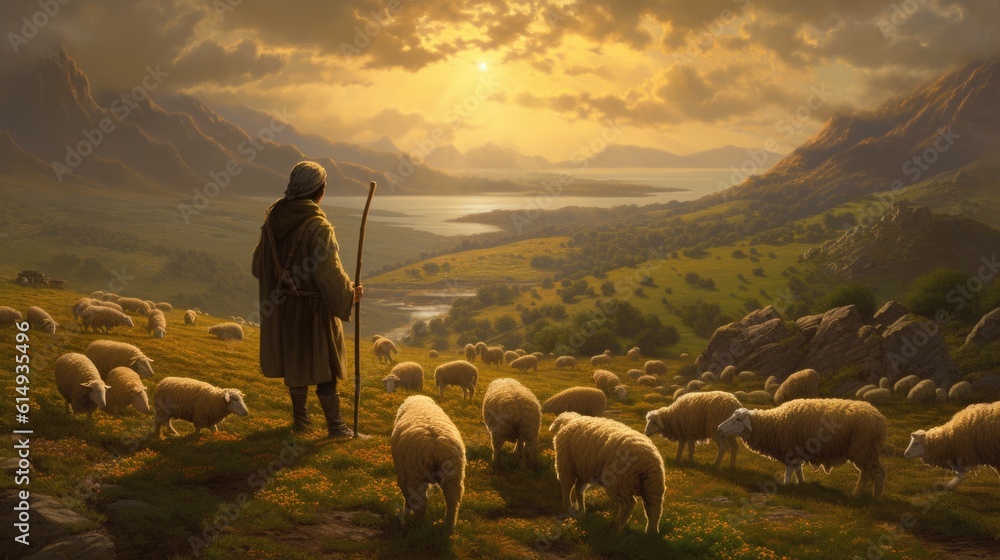
    Jesus refers to Himself as The Shepherd. Even more specifically, the Good Shepherd. What exactly does Jesus mean by this? In what ways is Jesus like a shepherd. And how are we, His followers, like sheep?

    Sheep

    To understand why Jesus likens Himself to a shepherd and us to sheep, it would help to get an understanding of what sheep are like. Here’s a handful of characteristics of sheep that as humans, we tend to resemble. Disclaimer: I found the original list here. Credit where credit is due.

    No Sense of Direction

    Sheep are notorious for wandering. Without a shepherd to guide them, the sheep will get hopelessly lost. They’ll likely go wherever the sheep ahead of them goes. If a couple of sheep wander off a cliff, the rest of the flock will probably follow. Stories of sheep doing exactly that are well documented. Here’s one such story.

    Hundreds of sheep followed their leader off a cliff in eastern Turkey, plunging to their deaths this week while shepherds looked on in dismay. Four hundred sheep fell 15 metres to their deaths in a ravine in Van province near Iran but broke the fall of another 1,100 animals who survived. Shepherds from a nearby village neglected the flock while eating breakfast, leaving the sheep to roam free. The loss to local farmers was estimated at $74,000.

    Sounds pretty dumb, right? But let’s be honest. How many people do something, follow some fad, some star just because “it’s cool.” So many people go along with the crowd because they want to be “in.” We don’t always think about the consequences. We just want people to accept us – even if it means doing dumb (or dangerous) things.

    Defenseless

    When you think about an animal who’s great at defending themselves, sheep are probably not the first one that comes to mind. Frankly, they’re terrible at it. Apart from ewes kicking when protecting their young or the fact that when frightened, the whole flock tends to run together (safety in numbers), they can’t defend themselves very well. That’s where the shepherd comes in. They defend the sheep against predators and their own stupidity.

    Similarly, we can run and maybe kick a little against small things, but when it comes to needing protection against the bigger enemies, we desperately need God’s divine protection. Without that, we will fall prey to Sin and Satan over and over again with no hope.

    Can’t Get Up

    I remember watching the VeggieTales adaptation of David and Goliath (Dave and the Giant Pickle) and thinking that the portrayal of sheep falling over and needing help to get back up was just a fun thing the creators put in. After all, there’s no way that there’s an animal incapable of standing back up when it falls over, right? Apparently, there is, it’s called a sheep. When sheep tip over (particularly on their backs), they are physically unable to stand back up. They require assistance from the shepherd to get back on their feet.

    How many times have we fallen in life and would have fizzled out or even died (whether self-inflicted or not) if we didn’t get help from God?

    Emotional and Recognizes Voices

    On a brighter note, sheep have an amazing ability to recognize the voice of the shepherd who cares for them. If a stranger’s voice tries to command them, they will more than likely run away in fear. They know who’s voice they are safe listening to. In addition, sheep are emotional creatures. They build friendships with other sheep and will even stick up for those friends in a fight. They can become anxious or distressed, and they feel sadness when a fellow sheep dies or is lost.

    I don’t think I need to explain the parallels to humans with this one. For we have all felt anxious or distressed at times and most (if not all) of us have felt the pain of a loved one passing away. We long for companionship and connection to fellow humans. And we learn from an early age, the voices of our parents. When strangers try to tell us to do something, we tend to question if we need to listen.

    Can’t Carry Burdens

    If there’s one thing that sheep were not made for, it’s carrying heavy loads. You will never see a sheep as a pack animal. They will be quickly crushed by such a burden. Similarly, God did not mean for us to carry the burdens of life like we do so often. God created us to be dependent on Him, and to give our burdens and trials of life to Him. We can’t carry it all on our own. We were never meant to.

    Settles For Less

    Sheep generally don’t know what’s good for them. If they see a dirty puddle, they’ll stop and drink from it – even though there might be clean water just a few feet away. As long as it satisfies in the moment, sheep just don’t care. Shepherds help the sheep find what’s good for them. And sadly, we are like that all too often. Rather than going after the good things of God, we settle for the things of this world which do not satisfy.

    Valuable

    Another point in favor of sheep is that they were quite valuable back in ancient times – and still are in different parts of the world. Owning large flocks of sheep indicated that one had wealth and influence. God declares us to be His special possession (1 Peter 2:9). God values humans above everything else in all of creation (Matthew 10:29-31).

    Can’t Care for Their Wounds

    Many animals lick their wounds until they heal. But not sheep. Sheep can’t do anything to help their wounds. Without treatment, sheep might die of easily treatable wounds. Shepherds are essential to the treatment of wounds. While we treat our physical wounds very well, we have no ability to treat our spiritual wounds on our own. We need help.

    Innocent

    Lastly, sheep are often associated with innocence and purity. How could you look at a sheep and blame it for anything worse than wandering away from the flock and getting lost? God calls us to be innocent and pure like sheep. Though that’s not possible without His sacrifice on the cross. Jesus washed away our sins and made us spotless as a sheep’s wool. Innocent in His sight.

    Jesus as The Good Shepherd

    Knowing now the nature of sheep, it doesn’t take much to understand the importance of a shepherd. And in John 10:11, Jesus declares himself to be the Good Shepherd. So, now I’ll describe how Jesus fits into that role of a shepherd. I’ll reference back to the list of sheep characteristics and show how Jesus fulfills these.

    Valuable, Innocent, Healed

    I’ve already mentioned how much God values us – similar to how valuable sheep have been. And I’ve also mentioned that through Jesus’ sacrifice on the cross, we are innocent and pure in God’s sight. And going along with that, the cross and resurrection provides the means through which God heals our spiritual wounds – much like the shepherd must care for the sheep’s wounds. Romans 6:8,11 (NIV), “Now if we died with Christ, we believe that we will also live with him…In the same way, count yourselves dead to sin but alive to God in Christ Jesus.” Through Jesus, God made us alive spiritually – totally healed.

    Guidance, Settling

    A shepherd leads his flock of sheep from one place to another. And he always leads them to the best pastures and waters he can find. He ensures that his flock will have everything they need and not settle for less. Psalm 23 is a fantastic passage to describe God leading us as a shepherd does his flock. “The Lord is my shepherd, I lack nothing. He makes me lie down in green pastures, he leads me beside quiet waters, he refreshes my soul. He guides me along the right paths for his name’s sake. Even though I walk through the darkest valley, I will fear no evil, for you are with me; your rod and your staff, they comfort me.” (Psalm 23:1-4, NIV).

    Falling, Carrying Burdens

    I briefly asked how many times we might have fizzled out in life if God hadn’t been there to pick us up. To put a verse to this: Psalm 145:14 (NIV), “The Lord upholds all who fall and lifts up all who are bowed down.” When times are tough, God will be there always to lift us up. And furthermore, Matthew 11:28-30 (NIV) says, “Come to me, all you who are weary and burdened, and I will give you rest. Take my yoke upon you and learn from me, for I am gentle and humble in heart, and you will find rest for your souls. For my yoke is easy and my burden is light.” Jesus carries the burdens we cannot carry on our own. He invites us to come to Him and learn from Him, because His burden is light, and it’s light because He carries it with us.

    Defenseless

    A lot of people might get offended to think that we are defenseless like sheep. And in the physical world, I can’t argue that we will defend ourselves in a variety of ways. However, in the spiritual world, we got nothing. Our only defense against the powers of Satan and our own temptations comes from God. Only through Holy Spirit living in us and enabling us to we have any sort of defense against the dark powers that operate in this world. “Put on the full armor of God, so that you can take your stand against the devil’s schemes.” Ephesians 6:11 (NIV). This verse makes it clear that we need God to stand against the devil. We can’t do it on our own.

    Hearing His Voice

    Jesus states in John 10 that sheep recognize the voice of their shepherd and He further states that His sheep know Him and know His voice (verses 3-4,14-16). A lot of people (myself included) struggle with this idea of hearing God’s voice. We wonder if we are hearing His voice or if it’s our own thoughts or if it’s the enemy trying to trick us. There is a process of learning to recognize God’s still small voice. It comes through spending time with God in prayer, worship, and reading of the Word. Simply knowing His word helps to prevent us from being deceived by other voices. After all, the Bible is the chief way by which He speaks to us.

    Wrapping Up

    Comparing people to sheep may not be the most flattering thing but praise be to God that we have a Good Shepherd to take care of us! I hope this instills more confidence, hope, and peace in your life.

    Outro

    If you enjoyed this post, please consider doing one or all of these things. First, subscribe if you haven’t. If you have, thank you! Second, spread the word. Send these to everyone you know and encourage them to read and subscribe. This blog is purely word of mouth right now. I rely on you, my readers, to help me get more readers. And third, please consider donating. It’ll enable me to continue to offer regular posts.

    Feel free to leave a comment with any questions about what I’ve written, any additional comments about the post, or if there’s a topic you’d like me to write about. Before doing that though, be sure to check out all my posts here and see if I’ve covered it already. And if you find I’ve done it already but aren’t satisfied or still have more questions, let me know!

    Thank you for reading this! I greatly appreciate each one of you. Until next time, God bless you all!