

Tag: God The Holy Spirit

  • Infinite God

    Infinite God

    Intro

    When you think of the word “infinite” what comes to mind? Outer space? The number system? An attribute of God? All too often we as Christians put God in a box. We try to put limitations on Him and then wonder why He doesn’t move in our lives. Some of us have grown up being told that God is infinite, but then being told that He doesn’t do certain things. So let’s get back to the basics. Our God is infinite. In an infinite amount of ways. And I wish to highlight some of the big ones that I know we’ve all heard. As has been the point of this entire blog, I want to go back to the basics. The simple truth of the Word of God and break it down to its core elements. So that we might have understanding and faith in it once again.

    So what are those “big” infinite attributes I wish to highlight? Ever hear these words: Omnipotent, Omnipresent, Omniscient, and Immutable? These are the ones I wish to highlight today (plus another one, but you’ll have to keep on reading to discover what it is).

    Omnipotent

    When I start talking about an infinite God, I think this is the attribute that comes to mind quickest. Omnipotent means “All-Powerful”. It means that God has the power to do whatever He wants. He created the entire universe with just His voice.

    By the word of the Lord the heavens were made, their starry host by the breath of his mouth. Psalm 33:6 (NIV)

    Some other examples of God’s omnipotence include: parting the Red Sea so Israel could walk across dry ground, giving a 100 year old man and 90 year old barren woman a son, making the sun stand still (which technically was making the earth stop rotating, but semantics), sending a global flood to wipe out everything on the earth (except those on the ark), becoming a man through a virgin birth, performing a crazy number of miracles as a man, and the list goes on. Seriously, just read through the Bible and you’ll be amazed at the number of miracles that God did. And He still does them today! All throughout history and up until the current day, there are testimonies of what God has done in people’s lives. I’ve heard some and know people who have encountered the unexplainable. Unexplainable, that is, except by an omnipotent God.

    Omnipresent

    To be omnipresent is to be everywhere all at once. The infinite presence of God is another attribute of His that readily comes to people’s minds. And the Bible makes this pretty clear.

    Because God has said, “Never will I leave you; never will I forsake you.” Hebrews 13:5b (NIV)

    And surely I am with you always, to the very end of the age. Matthew 28:20b (NIV)

    These are just two places – and the Hebrews is a quote from Deuteronomy 31:6. Doing a quick search online, there are at least 100 different verses that tell us that God is with us. Think about that for a moment, the minimum number of times the Bible states this is 100. More likely the number is higher than that, but I’m not going to try and count them all. For me personally, this has been one of my favorite attributes. One of the first times I clearly heard God was when I was going through something painful and I asked, “God where are you? Do you see me?” And He clearly spoke to me and said, “Yes”. God’s infinite presence highlights something else about God that is infinite. His love. God’s love is without limit. And His omnipresence proves that. If He didn’t love us, why stay with us?

    Omniscient

    To be omniscient is to be all-knowing. God knows literally everything. You can’t hide anything from Him. Every star that goes nova, every drop of rain that falls, every tear a person cries, every bacteria that divides to reproduce, etc. God knows it all. The Bible says that God calls each star by name and knows the number of hairs on your head. And it gets crazier. Because to be omniscient also means knowing everything from beginning to the end. God’s memory isn’t just remembering everything that has happened in the past, it’s also knowing about everything before it even happens. This breaks my brain a bit. The Bible says before the foundations of the earth were put into place, He planned to send Jesus to the cross (see 1 Peter 1:18-20).

    This one is hard to comprehend. God knew before He created anything that mankind would sin and reject Him and He would have to send His Son to die a horrible death (see my post here about how bad it was) to redeem us. And He still did it! Why? Refer back to my comment about God’s infinite love. And this also goes along with Him giving us free will, so we can choose to love and serve Him. God wants us to choose. Because of His omniscience, God knew all possible outcomes depending how He chose to create everything. Free will? Rebellion, suffering, and redemption. No free will? I don’t even know what would have actually come out of that. But I can promise you there wouldn’t be any sin, suffering, or death! If there still was, God would not be the good God the Bible says He is.

    Immutable

    Immutability is actually a little less known than the prior three. The definition of immutable is “unchanging”. To put it into terms of God, God stays infinitely the same. As He was in the past, so shall He be in the future. God will never diverge from what His Word says about Him. This is comforting to know because if we’re seeking direction from God and we hear something, sometimes we wonder “Is this God, the devil, or me?” And one of the first things we can ask is “Does this line up with the Bible?” “Is it consistent with what the Bible says about God?” If not, then discard it because God will never change. The Bible clearly states this in a few different places.

    Jesus Christ is the same yesterday and today and forever. Hebrews 13:8 (NIV)

    I the Lord do not change. So you, the descendants of Jacob, are not destroyed. Malachi 3:6 (NIV)

    The one from Malachi hints at another part of God’s immutability. When God makes a promise, He keeps it. No matter how long it takes, He will fulfill it. He is faithful even when we aren’t. Israel kept turning its back on God and rebelling against Him. But because of His covenant, God did not destroy them. Because He is immutable. Another verse that highlights God’s immutability is found in Psalm 102. And with this one, I’m going to transition to the final infinite attribute of God that I wish to highlight – since Psalm 102 also highlights it.

    But you remain the same, and your years will never end. Psalm 102:27 (NIV)

    Eternal

    The final (and bonus!) attribute is God is eternal. He has no beginning and He will have no end. Revelation contains a popular verse about this.

    I am the Alpha and the Omega, the First and the Last, the Beginning and the End. Revelation 22:13 (NIV)

    But there are many others. Another common one to quote for God’s eternal nature is found in Psalm 90.

    Before the mountains were born or you brought forth the whole world, from everlasting to everlasting you are God. Psalm 90:2 (NIV)

    I wish to highlight the phrase “from everlasting to everlasting you are God”. What does that mean exactly? It simply means what I already said, God had no beginning – from eternity past He existed – and God will have no end – He will continue to exist for eternity future.

    This is another one that kinda breaks the brain. To be sure, most of us can grasp the concept of having no end. Okay, something or someone just never dies or ceases to exist. I can get behind that. After all the Bible makes it clear that my spirit will continue to exist for all of eternity. And while it’s hard to imagine what I’ll be doing for all of eternity, I can at least grasp the concept. Grasping the idea of having no beginning is where I trip up. Bound in a world where time exists and everything around us has a beginning makes it difficult to imagine anything without one. This mindset begs the question “Where did God come from?” I’ve heard entertaining stories of children asking that question and the parents trying to explain a concept they don’t fully understand to a 4 year old.

    Wrapping Up

    So to wrap up, what does this all mean? Why talk about it at all? By knowing and understanding this, you and I can trust God with our problems. We can trust that He knows (Omniscient) what we are going through, that He is with us in the storm (Omnipresent), that He has the power to calm that storm (Omnipotent), and that He will come through when He says that He will help us (Immutable) because having been around for a while (Eternal) He is a stable God and a firm foundation upon which to build our lives. So cast your cares upon Him today and trust Him to come through for us when we need Him.

    Outro

    If you enjoyed this post, please consider doing one or all of these things. First, subscribe if you haven’t. If you have, thank you! Second, spread the word. Send these to everyone you know and encourage them to read and subscribe. This blog is purely word of mouth right now. I rely on you, my readers, to help me get more readers. And third, please consider donating. It’ll enable me to continue to offer regular posts.

    Feel free to leave a comment with any questions about what I’ve written, any additional comments about the post, or if there’s a topic you’d like me to write about. Before doing that though, be sure to check out all my posts here and see if I’ve covered it already. And if you find I’ve done it already but aren’t satisfied or still have more questions, let me know!

    Thank you for reading this! I greatly appreciate each one of you. Until next time, God bless you all!

  • Fruit of the Spirit

    Fruit of the Spirit

    Intro

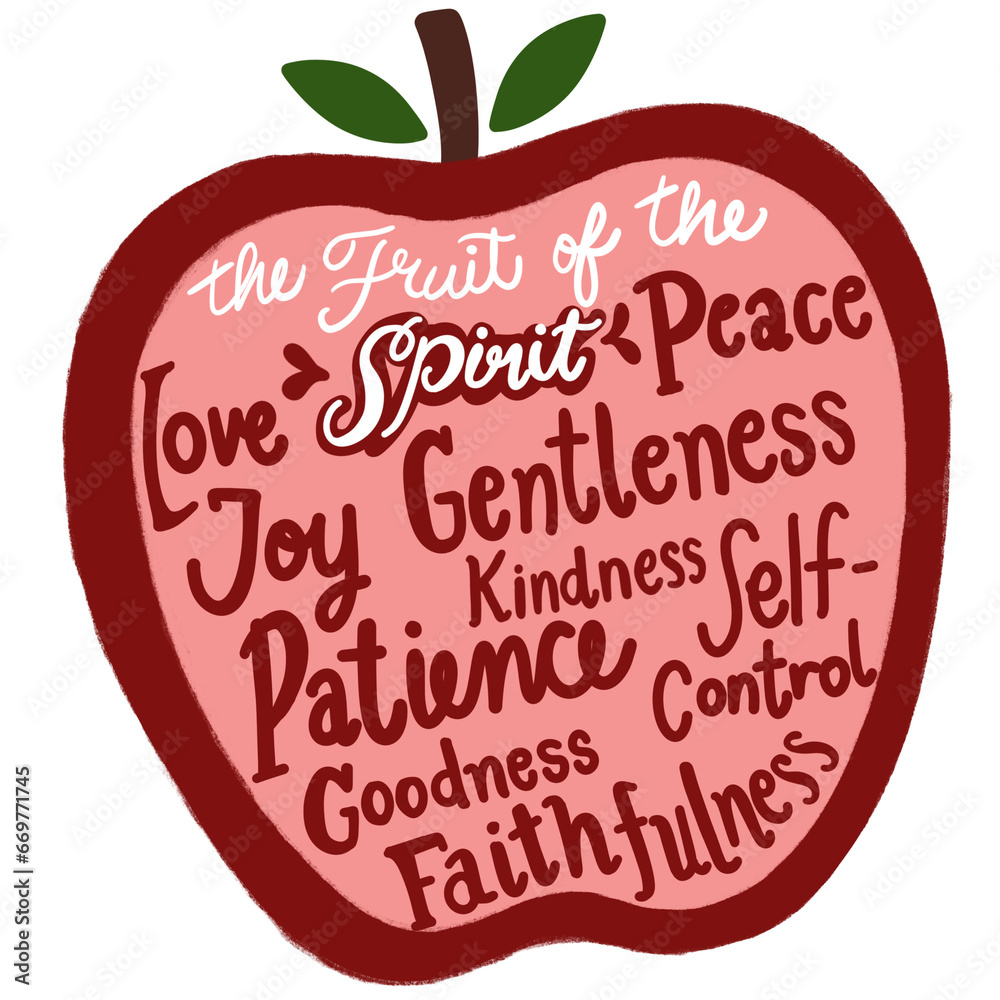
    “The fruit of the Spirit is love, joy, peace, patience, kindness, goodness, gentleness, faithfulness, and self-control.” I think we’ve all heard this before. It’s an often quoted passage from Galatians that children are taught. Sometimes I think we teach children this verse because we want them to behave that way. But that’s just a theory.

    But given that, what do these all mean? Sometimes I think we go through this list without fully grasping what each one means. Especially since the original Greek may or may not mean what we think it means. Dive in with me to see what Paul is really telling us about the Christian lifestyle here.

    My Experience

    I’ll be honest here. I haven’t always been good about giving a personal connection with each of the topics I’ve written about. And that’s a bit unfortunate. Because frankly, the best blogs and messages are the ones where the writer or speaker has a personal connection to it. Some reason or motivation that gives them a reason to truly love the topic and be passionate about it. Many of the topics I’ve written about have all been fantastic topics that I enjoy and recognize as foundational. But to put a personal touch on each, I just couldn’t do. I mentioned a few times during my series on Baptismal Regeneration that I’ve had personal encounters with people who believe that way. That made me more invested in those than in some of the others. I genuinely wonder how many of you picked up on the different tone because of that.

    But all that to say is that for this topic – the Fruit of the Spirit – I have a more interesting story and connection to it. And before jumping into talking about the Fruit, I’m going to share it.

    The French Chef

    Many years ago in high school, I volunteered at a local church’s Awana program as a junior leader for the Sparks age group – Kindergarten through 2nd grade. One semester, the topic for the kids teaching was the Fruit of the Spirit. And to help them learn it, the Sparks director – Mrs. Pat – found a fun skit to help the kids learn and remember. And she asked me to play as the titular character, a French Chef named Chef Tellzeetruth (gotta love these children’s skits, lol). As this chef, each week I would come in and talk with Mrs. Pat about a different aspect of the Fruit of the Spirit and would use a different real life fruit to symbolize the Spiritual side.

    Now, I do not remember any of the fruits used or anything I talked about specifically, but I do remember that during this time I personally grew in the very characteristics I talked about during those Wednesday evenings. Amazing how that works. Sometimes to see the growth that you desire, you must step out and teach another. I mentioned in my introductory post that I was known for my Biblical knowledge and would get asked questions periodically. And if I didn’t have the answers, I would find them. That research and searching helped me learn as well. And that’s what I’ve found with my blogs also. So, a little encouragement here is to step out and help others learn. Share your knowledge and search for ways to learn more. Volunteer like I did. Teaching kids is a great way to learn more yourself! The questions they ask, lol.

    Now that I’ve said all that, let’s dive into today’s topic. I first want to cover the context in which Paul wrote this passage before going into the individual fruits.

    The Context

    Here’s the passage from Galatians as we know it and tend to teach it.

    But the fruit of the Spirit is love, joy, peace, forbearance, kindness, goodness, faithfulness, gentleness and self-control. Against such things there is no law. Galatians 5:22-23 (NIV)

    The immediate context of this verse is Paul contrasting a life lived by the Spirit vs one lived by the flesh. The preceding verses have this to say.

    The acts of the flesh are obvious: sexual immorality, impurity and debauchery; idolatry and witchcraft; hatred, discord, jealousy, fits of rage, selfish ambition, dissensions, factions and envy; drunkenness, orgies, and the like. I warn you, as I did before, that those who live like this will not inherit the kingdom of God. Galatians 5:19-21(NIV)

    Having these two different lists to contrast is important. After all, many of the godly characteristics listed here could technically be seen in some form in non-believers. However, it’s probably not a lifestyle – and it certainly has no eternal value. So sometimes you need to look for additional fruits (good or bad) to discern if someone is living by the Spirit or gratifying the desires of the flesh.

    Paul’s whole deal here is arguing against the need for circumcision and obeying the law in order to follow Jesus and be saved. And he warns that anyone who practices any of these sinful lifestyles should not be fooled into thinking they are in Christ simply because of circumcision. And it’s only through the power of Holy Spirit that anyone can overcome these lifestyles and life the Christian lifestyle – as characterized by the Fruit of the Spirit.

    One thing I wish to mention as an aside. If you are a Christian who struggles with a sin and are actively fighting it and trusting in God to help you overcome, you do not fall into Paul’s warning. Paul’s warning only applies to those who are not even trying and feel no reason to stop. These people are most likely not even saved – no matter what prayer they may have prayed or the fact that they were baptized at some point in their life.

    The Fruit

    Moving on to break down each characteristic of the Fruit of the Spirit. Notice I said “characteristic”. Also notice that the Bible uses “fruit” singular. It’s actually one giant fruit that manifests itself in 9 distinct ways. Cool right? And to keep it in front of us, here’s the passage again.

    But the fruit of the Spirit is love, joy, peace, forbearance, kindness, goodness, faithfulness, gentleness and self-control. Against such things there is no law. Galatians 5:22-23 (NIV)

    You’ll notice that rather than “patience” the NIV uses the word “forbearance”. I will be discussing that in the section on patience. Now let’s go through each one to see what Paul meant and the expectations for us.

    Love

    We all probably think we know what love is. But did you know that the Greek had at least 8 different words for love? It’s true. And only a few show up in the New Testament. The two that most Christians are familiar with are philia – love between friends – and agape – unconditional love. Guess which one appears here in Galatians? If you guessed agape, congrats! (If you guessed eros…you might need to do some more study.) Evidence of Holy Spirit working in the lives of a Christian is that Christian having a godly, unconditional love towards people. No strings attached. We love others because God loves them.

    Joy

    When the New Testament talks about joy, it isn’t talking about a happiness dependent on our circumstances. Here in Galatians the word is chara. This word translates as joy or delight and is often accompanied with gladness. Regardless of circumstances. After all, God redeemed us and gives us grace, mercy, and His overwhelming love. Who cares what the world and the devil throw at us? We have the King of kings as our Father! “Rejoice in the Lord always. I will say it again: Rejoice!” Philippians 4:4 (NIV).

    Peace

    Biblical peace (eirene in the Greek) includes wholeness and harmony with God and other people. It includes a life free of conflict. Now that doesn’t mean that everything will be perfect and tranquil. But if you have true Biblical peace, then regardless of the circumstances, you will choose to not be at conflict. Someone might be angry with you and not want anything to do with you. But you choose to forgive and let it go and not stew about it. You are not in conflict with that person. As far as you are concerned, you are at peace with them. “In this world you will have trouble. But take heart! I have overcome the world.” John 16:33 (NIV).

    Patience

    The NIV translates the Greek word here (makrothumia) as forbearance. Because of the lack of familiarity, other translations will use patience or long-suffering – which is a bit easier to understand. Other words that fit here to help us understand the meaning would be endurance, steadfastness, and perseverance. The root of the Greek word relates to two other words meaning “long” and “passion”. The picture we get with this word is to become “long-tempered” through the circumstances and temptations we go through (as opposed to short-tempered). Holy Spirit empowers us to “forbear” through all circumstances and not give in to temptation to sin or to lie down and give up when the going gets tough.

    Kindness

    I think most us has a pretty good idea what it means to show kindness. Some words that go along with being kind are friendly, generous, and considerate towards others. Putting their needs before your own. The Greek word here – chrestotes – conveys moral goodness, integrity, usefulness, and benignity (not harmful, gentle). The Bible says that it’s God’s kindness that leads to repentance. Not yelling at people that they’re going to Hell because of X, Y, and Z. Let’s save judgment for God and just show people kindness and respect. Okay?

    Goodness

    Goodness (agathosune) means uprightness of heart and life, goodness, and kindness. And when I say goodness there, I mean in action. It’s more than just saying good things, it’s living it out in our personal lives and our public ones.

    Gentleness

    I think this is another one we know pretty well. It conveys humility and compassion towards others. The Greek word, prautes, was translated in the KJV as “meekness” (interestingly, the KJV then had “kindness” as “gentleness”). However, “meekness” became associated with “weakness” and later translators opted for “gentleness” to convey the same thing. But meekness is not weak. When applied to wild animals, the Greek word actually means “tame”. In other words, the wild animal has not lost any strength. But it knows how to control it and when to use that strength. Jesus is the perfect example of meekness. The God who created the universe became a man. With a word He could have destroyed everything, but He didn’t. That’s meekness. That’s gentleness. And we must be like that. Humble, knowing our strength, but not lording it over people.

    Faithfulness

    We all know someone who is faithful. They show up week after week to serve or to help out. Anytime you call them for anything, they answer and they will help you to the best of their abilities. Biblical faithfulness is loyalty, reliability, trustworthy, etc. The Greek word pistis encompasses all these with a dependability on God. Because without Him, we can’t do anything.

    Self-Control

    The last characteristic of the Fruit of the Spirit listed by Paul is Self-Control. The Greek word here is egkrateia. It means the ability to control one’s own body, its appetites and desires – physically and mentally. In the context of the early church in Galatia, it would have been related especially to sobriety and chastity. Today it would relate to these and so much more. I mean, do we really need to be picking up our phone every time there’s a lull in a conversation?

    If you feel overwhelmed by any one of these, just remember that this is only possible with God’s help. Apart from Him, we can’t do anything (see John 15:5). Frankly I’m glad I have Holy Spirit helping me. Because I’d fail at so many of these on my own. Praise the Lord for what He has done in my life!

    Wrapping Up

    I hope from this brief study of the Fruit of the Spirit, you feel that you have a greater understanding of what God desires for your life as well as an encouragement that you aren’t expected to accomplish this alone. Only with Holy Spirit’s help can you live this life. That’s why Paul calls it the “Fruit of the Spirit” and not “Fruit of the Christian”. God bless you all!

    Outro

    If you enjoyed this post, please consider doing one or all of these things. First, subscribe if you haven’t. If you have, thank you! Second, spread the word. Send these to everyone you know and encourage them to read and subscribe. This blog is purely word of mouth right now. I rely on you, my readers, to help me get more readers. And third, please consider donating. It’ll enable me to continue to offer regular posts.

    Feel free to leave a comment with any questions about what I’ve written, any additional comments about the post, or if there’s a topic you’d like me to write about. Before doing that though, be sure to check out all my posts here and see if I’ve covered it already. And if you find I’ve done it already but aren’t satisfied or still have more questions, let me know!

    Thank you for reading this! I greatly appreciate each one of you. Until next time, God bless you all!

  • Explaining The Trinity

    Explaining The Trinity

    Intro

    Welcome to the last post discussing the Trinity. Even though I’ve officially completed the Trinity Trilogy, explaining the Trinity warrants its own post. So, I’ll be doing my best to explain – or at least simplify – what the Trinity is and how it works. If you haven’t read any of the posts in the trilogy, catch up here: God the Father, God the Son, and God the Holy Spirit.

    What Is The Trinity?

    The Trinity, also known as the Godhead, is a concept that is difficult to explain and understand. Basically, God is a single God who exists as three persons – Father, Son (Jesus), and Holy Spirit. (Just writing “single” and “three persons” in the same sentence to describe the same noun makes the logical parts of me cringe.) These three persons are distinct yet are also each God. And the Bible demonstrates in many places just how distinct they are.

    Some examples, Jesus prays to Father God on a regular basis. God speaks affirmations over Jesus, declaring Him to be His son, on no fewer than 3 occasions (Jesus’ baptism, the transfiguration, and another time). And Jesus states that both He and Father God will send Holy Spirit and Jeus refers to Holy Spirit as “Him”. This makes it clear that Father, Son, and Holy Spirit are distinct persons. However, the Bible is also clear in referring to each of them as God. Jesus makes statements to be God (refer to my previous posts for examples) and one of the best passages that references Holy Spirit as God is in Acts 5. In this story, Peter accuses Ananias of lying to Holy Spirit and then a couple of sentences later, says that he lied to God. Clearly Peter understood Holy Spirit to be God and not just some impersonal “force”.

    All that said, many illustrations exist to try and explain – or simplify – the Trinity to make it easier to understand. I will be putting forth a handful that I have heard over the years. I leave it up to you to decide which one(s) make it easier for you to understand.

    Illustrations

    I have heard several illustrations trying to explain the Trinity from my many years of experience within the church. And this list I’m giving you probably isn’t all of them, just the ones I can remember. I will give a description of each one and how well I think it holds up to the truth. The litmus test for these will be how well the individual part can perform the job of the whole. Any member of the Godhead can perform everything that Bible says God can do. Each member is omnipotent, omniscient, omnipresent, and immutable. So for these examples, how well it holds up depends on how well the individual part can perform the job that you expect of the whole. If you have any additional ones that you like, let me know in the comments.

    The Tree

    One of the earliest illustrations I recall is the Tree. When you think of a tree, three pieces of one probably jump to your mind immediately: the leaves, the trunk, and the roots (branches as well, but I’m including that in the trunk for the sake of the illustration). These three primary parts of a tree are all distinct, but they make up a single tree. The problem here is that while each member of the Godhead is individually God, you can’t say the same about each of the three parts of the tree. The leaves can’t perform the job you expect the whole tree to do. The nicest part of this one is that it demonstrates an example of a triune God creating things with the number 3 (seriously, start examining everything God has created and you’ll be amazed at how many times the number 3 pops up).

    The Egg

    I only heard about the Egg illustration more recently. It’s one that my wife, Stacy, introduced me to. In this one, you’ve got the shell, the egg white, and the yolk. Again, they are all distinct pieces of the egg, yet it’s still a single egg. I like this one a bit better than the tree since unlike the tree, eggs really don’t have much more to them other than these three parts. It makes it easier to compare instead of nitpicking a tree apart and pointing out all the distinct parts of it. And similar to the tree, the egg is also an example of a triune God creating things with the number 3. However, the tree’s shortcoming is the same as the egg. You can’t point to the yolk and call it an egg. Without the other two parts, it’s not a complete egg.

    The Family

    Now we’re getting to my favorite illustrations. The Family unit is one of the better illustrations for the Trinity. In the Trinity you get Father, Son, and Holy Spirit. In the family unit you get Father, Mother, and Children.

    Relationships

    As an aside, I am going to briefly mention the relationships within the Trinity. In the Bible we clearly see Jesus submitting to His Father’s will time and again. Jesus says He only does what He sees the Father doing (see John 5:19). Even though Jesus is God and is equal to God, He submits to Father God. With Holy Spirit, Jesus states that He and Father God have authority to send Holy Spirit. Furthermore, Jesus declares that Holy Spirit will glorify Him, Jesus, rather than glorifying Himself. This demonstrates a submission on the part of Holy Spirit to Jesus and to Father God.

    This relationship reflects the ideal family unit that God designed (and that sin destroyed). First, you got the father in the place of Father God. Second, you got the mother submitting to the spiritual leadership of her husband as Jesus submits to Father God (the Bible makes it clear that the wife submits to the husband, though it is also clear that the husband submits to his wife as well; but that is a whole other topic). And finally, you got the children as – pretty literally – coming from the parents. And the children are meant to submit (obey) to both father and mother (Ephesians 6:1-3 is perhaps my favorite passage about this). In addition, just as Holy Spirit glorifies Father and Son, so too are children meant to bring joy and honor to their parents (Proverbs 15:20).

    The family is great to describe the relationships within the Trinity. And again, one family, but three distinct parts.

    Still Falls Short

    Unfortunately, the family example still falls short. The problem again comes down to the inability of each individual to perform the role of the whole, i.e. Jesus can do all that Father God can do, but a child cannot do all that the father can do.

    The Human

    The illustration of mankind is probably one of the most powerful. God created humans with 3 very distinct parts that together make us “human”. As humans, we are spirit, soul, and body. 3 distinct pieces making up one human. As an added bonus, the soul is also made up of 3 pieces: mind, will, and emotions. I believe this is just one of the ways in which we are created in God’s image. The Godhead is a triune being. Humans are triune beings. And God created many triune examples in the world. A lot more than I’ve mentioned!

    As Romans 1:20 says, “For since the creation of the world God’s invisible qualities – his eternal power and divine nature – have been clearly seen, being understood from what has been made, so that people are without excuse.” God put Himself into His creation in a myriad of different ways. And as humans, we are His crowning creation.

    Like the other ones, this one is also flawed. Separate the soul from the rest, and you get conscious mind with emotions and a drive, but no ability to do anything. The three parts of a human rely on each other too much to be a perfect representation of the Trinity.

    The Chord

    Of all the illustrations my personal favorite is the Chord. And of all the illustrations ever used, this one stands as probably the least flawed of them all. A triune chord – a chord made up of three distinct notes – has great advantages over the other illustrations. The three distinct sounds work together to make one beautiful sound all the while remaining distinct. Each note can work on its own to perform the job of filling up the space it’s in with sound (just like each member of the Trinity can perform all the functions of a deity). And together, they work in harmony to create something even more beautiful.

    The three notes of a triune chord are separate and distinct yet together they make up a single chord. Each note is a sound. They don’t all sound quite the same and when combined, they create yet another sound. But they retain their own unique sound. And this is why I think this is the best illustration.

    Wrapping Up

    Ultimately, understanding the Trinity will never fully happen on this side of eternity. Our finite minds just can’t fully comprehend an infinite God. And understanding the Godhead isn’t required for salvation (phew!). Still though, it’s important to have some grasp on this topic – if only to be able to have a better answer for someone else other than “I have no idea”.

    Outro

    If you enjoyed this post, please consider doing one or all of these things. First, subscribe if you haven’t. If you have, thank you! Second, spread the word. Send these to everyone you know and encourage them to read and subscribe. This blog is purely word of mouth right now. I rely on you, my readers, to help me get more readers. And third, please consider donating. It’ll enable me to continue to offer regular posts.

    Feel free to leave a comment with any questions about what I’ve written, any additional comments about the post, or if there’s a topic you’d like me to write about. Before doing that though, be sure to check out all my posts here and see if I’ve covered it already. And if you find I’ve done it already but aren’t satisfied or still have more questions, let me know!

    Thank you for reading this! I greatly appreciate each one of you. Until next time, God bless you all!

  • Trinity Trilogy – God The Holy Spirit

    Trinity Trilogy – God The Holy Spirit

    Intro

    Welcome to the third part of the Trinity Trilogy! In this final part of the trilogy, I am reviewing the third member of the Trinity: God the Holy Spirit. If you haven’t read the others, I encourage you to catch up on God the Father and God the Son.

    Who is The Holy Spirit?

    God the Holy Spirit generates more controversy and confusion within the church than the other members of the Trinity. But He is a very real and very important member. God sent Holy Spirit for a reason – well, multiple reasons. I aim to address a few of those reasons here. And as you’ll see, His primary job is to point to Jesus and God. Secondary, He works in and through us to build the church.

    Him or It?

    The first thing that to address about Holy Spirit is “Him vs It.” Some people believe that Holy Spirit is just “the spirit of God” and not a distinct person of the Godhead. According to these people, rather than a Trinity, we have a Dualinity (Dunity? Duonity? 🤷‍♂️). However, the Bible is pretty clear that Holy Spirit is a “Him”, not an “It.” How can you tell? One: masculine pronouns are used to refer to Him throughout the New Testament (including the original Greek). Two: various verses refer to Him as a separate person. Verses like Matthew 28:19 that teaches us to baptize in the name of the Father, the Son, and Holy Spirit. Or Ephesians 4:30 that tells us not grieve Him.

    From these verses and more, I believe Holy Spirit to be a distinct person within the Trinity. Given that, I choose to refer to Him as “Holy Spirit”, rather than “the Holy Spirit”. It might be semantics, but it makes Holy Spirit sound more like a true name rather than a title or description.

    The Advocate

    Jesus declares that He will “ask the Father, and he will give you another advocate to help you and be with you forever – the Spirit of truth” (John 14:16-17 NIV). Later in this chapter, Jesus says the Advocate (Holy Spirit) will “teach you all things and will remind you of everything I have said to you.” So, Holy Spirit helps us by reminding us of all Jesus’ said and teaching us the truth of it, as well as helping us to understand it. Later on, Jesus states that when Holy Spirit comes, He will “prove the world to be in the wrong about sin and righteousness and judgment” (John 16:8 NIV).

    Other translations say “convicts” rather than “prove”. And since that’s the more familiar phrasing, I’ll use that in my explanations of what each of them mean.

    Convicts of Sin

    Convicting of sin is probably the most obvious of Holy Spirit’s jobs. So, this doesn’t warrant much explanation other than stating that feeling of guilt that we get after sinning is the Holy Spirit leading us to repentance.

    It is worth mentioning that verse 9 states, “about sin, because people do not believe in me”. When I read this, I interpret it to mean that people cannot fully grasp the concept of sin if they don’t believe in God. If God doesn’t exist, then there is no moral standard and therefore no sin.

    Convicts of Righteousness

    Convicting of Righteousness is a bit trickier to understand. Verse 10 states “about righteousness, because I am going to the Father, where you can see me no longer.” I admit to not fully understanding this one until I wrote this post. The short version of what I found is that Jesus is the standard for righteousness. And no one can measure up to that standard – no matter how hard we try. What I get out of that is that Holy Spirit reminds us that without Jesus, we have no righteousness. So, conviction of righteousness becomes a conviction of our pride.

    Convicts of Judgment

    Jesus’ explains conviction of judgment in verse 11, “about judgment, because the prince of this world now stands condemned.” When Jesus died and rose again, He defeated Satan – the prince of this world. His defeat was his condemnation. And all who stand opposed to God and reject Him face the same condemnation. And Holy Spirit convicts, or reminds, people of this truth.

    God’s love for us resulted in Him sending Holy Spirit to help us. To remind us of Jesus words, to draw us closer to God, to convict us where we need it. All of it to bring us into relationship and to give us a fulfilling life.

    The Deposit

    Paul writes in Ephesians 1:13-14 that “you were marked in him with a seal, the promised Holy Spirit, who is a deposit guaranteeing our inheritance until the redemption of those who are God’s possession – to the praise of his glory.” Now, what exactly does it mean that Holy Spirit is a deposit? Think of it like you would a down payment. When buying a house, there is an initial payment made – the down payment. Just think of the indwelling of Holy Spirit as that first payment. God promises that we will receive our inheritance when we cross over. And Holy Spirit dwelling in us guarantees that God will keep His promise to give us the rest.

    The Distributer of Gifts

    1 Corinthians 12 says that Holy Spirit distributes gifts to people. Spiritual gifts are probably the most controversial aspect of Holy Spirit, at least some of them are. And some people forget that some of these gifts are actually spiritual gifts. So, what exactly are spiritual gifts? Simply put, Holy Spirit gives spiritual gifts to people to enable them to minister to others in some way. They’re a way to encourage people, to point people to God and His love, and to point people to Jesus and His sacrifice.

    Spiritual gifts can be broken down into 3 main categories: Motivation, Ministry, and Manifestation. I’m not going deep on any of them, but I will give a brief description of each.

    Motivational Gifts

    In Romans 12:6-8, Paul lists the 7 motivational gifts as prophesying, serving, teaching, encourage, giving, leading, and showing mercy. As we look at the greater context of Romans 12, it becomes clear that the purpose of these gifts is in service to God and to the Body of Christ. These people motivate other members of the body to step out and exercise their own gifts and do what God called them into.

    Ministry Gifts

    Ephesians 4:11 tells of the ministry gifts, “So Christ gave himself the apostles, the prophets, the evangelists, the pastors and teachers.” And the purpose of these gifts is helpfully stated in the next verse “to equip his people for works of service.” When reading these gifts, many people think that people with these gifts bear the responsibility for leading people to salvation, bringing people to church, praying for everyone and everything, etc. But according to this passage, their only job is to equip His people, the church, to do the works. We as individual members of the body hold responsibility for reaching the lost and ministering to the people of the world. It’s impossible for the pastoral staff of any (or all) churches to do that.

    Manifestation Gifts

    The category of manifestation Gifts is the category that has people most confused and up in arms about. They’re referred to as “manifestation” because they are the obviously supernatural ones. And people tend to fear the supernatural or not believe in it all. Or they believe in it, but fear of man prevents them from talking about them or displaying support for them. Some believe that these gifts (at least some of them) ended with the deaths of the apostles.

    Paul lists these gifts in 1 Corinthians 12:7-10, “Now to each one the manifestation of the Spirit is given for the common good. To one there is given through the Spirit a message of wisdom, to another a message of knowledge by means of the same Spirit, to another faith by means of the same Spirit, to another gifts of healing by that one Spirit, to another miraculous powers, to another prophecy, to another distinguishing between spirits, to another speaking in different kinds of tongues, and to still another the interpretation of tongues.” (NIV). Paul lists out 9 gifts here, message of wisdom, message of knowledge, faith, healing, miraculous powers, prophecy, distinguishing between spirits, speaking in tongues, and interpretation of tongues.

    The primary purpose of these gifts is for edifying and building up the church. We see that as we continue reading through chapters 12-14. Sure, we can use them as part of outreach and witnessing to people, but it’s also clear that God intended many of these gifts to be used on a regular basis within the church. And as these happen more frequently within the church, they will naturally happen outside the church as our faith and boldness grow.

    Emphasis

    It’s dangerous to downplay Holy Spirit because He’s the one who empowers you to work out your faith and do what God calls you to. By ignoring Him, you stifle yourself and make yourself virtually ineffective in serving God. On the other hand, over-emphasizing Him is also dangerous. When you over-emphasize Holy Spirit, you run the risk of becoming like those who believe that continuing revelation from Holy Spirit (a result of the Manifestation gifts) nullifies the need to have an adequate knowledge of the Bible. This leads to buying into false doctrines and a lot of deception.

    Wrapping Up

    The misconceptions of the Holy Spirit cause a lot of people to either downplay Him or over-emphasize Him. I hope and pray that this post gives you some clarity so that you don’t swing to far one way or the other.

    Well, that’s all for this post. Join me next time as I wrap up my discussion on the Trinity by doing my best to explain the concept of the Trinity itself.

    Outro

    If you enjoyed this post, please consider doing one or all of these things. First, subscribe if you haven’t. If you have, thank you! Second, spread the word. Send these to everyone you know and encourage them to read and subscribe. This blog is purely word of mouth right now. I rely on you, my readers, to help me get more readers. And third, please consider donating. It’ll enable me to continue to offer regular posts.

    Feel free to leave a comment with any questions about what I’ve written, any additional comments about the post, or if there’s a topic you’d like me to write about. Before doing that though, be sure to check out all my posts here and see if I’ve covered it already. And if you find I’ve done it already but aren’t satisfied or still have more questions, let me know!

    Thank you for reading this! I greatly appreciate each one of you. Until next time, God bless you all!