

Tag: God

  • Forgetful God?

    Forgetful God?

    Intro

    Is God capable of forgetting anything? The Bible says that God knows the beginning to end. He knows the number of hairs on my head. And He knows everything about everything. But the Bible also says that there is one area where God is forgetful. If this sounds ridiculous or impossible to you, then you’ve come to the right place. (Also if you haven’t heard this before and don’t know where I’m going, then you too have come to the right place.)

    Can God Actually Forget Anything?

    In all technicality, no, God can’t forget things in the same way we might forget to buy something or forget the name of that neighbor from 30 years ago. But it is still Biblically and dictionary accurate to say God is forgetful. No seriously. Like many words in the English language, to forget means more than just an accidental “Oops. I didn’t mean to forget about your birthday”. Think about a time when you’ve said something like, “Oh forget about it”. More often than not, in these situations you aren’t asking the person to accidentally forget that it happened, but rather intentionally overlook something. And this is the dictionary definition that we can apply to God’s forgetfulness. Intentionally overlooking something. The question now becomes, what does the Bible say God intentionally chooses to forget or overlook?

    Forgive and Forget

    Here’s a big clue: have you ever said or heard the phrase “forgive and forget”? If so, then you’ve got a handle on what it is that God is forgetful about. And that thing is sin. God chooses to forget the sins that He has forgiven. To be sure, those who do not turn to God and receive His forgiveness will still have their sins counted against them when they are cast into Hell and then the Lake of Fire at the final judgment. However, for those who turn to God and receive His forgiveness, God chooses to forget their sins.

    Here’s just a couple of verses to back this up.

    I, even I, am he who blots out your transgressions, for my own sake, and remembers your sins no more.

    Isaiah 43:25 (NIV)

    For I will forgive their wickedness and will remember their sins no more.

    Jeremiah 31:34b (NIV)

    But wait, these are both from the Old Testament and the context is forgiving the Israelites and bring them back from captivity. Absolutely. But Malachi 3:6 says “I the Lord do not change” and Hebrews 13:8 says “Jesus Christ is the same yesterday and today and forever”. So I see no problem in using these Old Testament verses to extract a piece of the nature of God – that is, how He forgives – to apply to us today. Besides take a look at Hebrews 8:12.

    For I will forgive their wickedness and will remember their sins no more.

    Gee that looks familiar. The author actually quotes a big chunk of Jeremiah 31 here in Hebrews 8 when arguing the necessity of the new covenant and how the Old Testament actually refers to it. So that passage in Jeremiah applies to us as Christians today! God is forgetful of all of your sins and mine and everyone who comes to faith in Jesus. That’s incredible news! But in the words of all the informercial narrators, “But wait, there’s more!”

    Sea of Forgetfulness

    Ever here the concept of God’s sea of forgetfulness? And that’s where all of our sins go? And that He puts up a “No Fishing” sign? Is that actually Biblical? Well, yes and no. The idea of the sea of forgetfulness comes from Micah but it doesn’t actually use this phrase.

    You will again have compassion on us; you will tread our sins underfoot and hurl all our iniquities into the depths of the sea.

    Micah 7:19 (NIV)

    From this came Jewish traditions of throwing bread into the sea to represent God removing their sin. And from that the idea of a “sea of forgetfulness” comes down. But frankly, I kind of like the picture in Micah a little bit better. The picture is that our sins are thrown into the deepest parts of the sea from which we can’t retrieve them. They are gone forever. We cannot resurrect them and God chooses to leave them there. I really want to emphasize God’s choice in this. He is a holy God and cannot be touched by sin and sin cannot enter His presence. But because God is love and He loves us so much, He makes a conscious choice to cover over our sins and pretend like they don’t exist – when we accept His offer of forgiveness.

    This is mind blowing. That He would love us that much. And it gets better, I’ve got one more verse for you that I’m sure you’re familiar with.

    East is From the West

    As far as the east is from the west, so far has he removed our transgressions from us.

    Psalm 103:12 (NIV)

    Many of you might be singing Casting Crowns right now, and I don’t blame you. It’s a good song. But I want to turn to the source here in Psalm 103. The Psalmist says that God removes our transgressions (also known as sins, see my last post) as far as the east is from the west. That’s an infinite distance. How is that infinite? Look at a globe and place your finger on it and start moving it west. At what point does it start moving east? Never. You can move that finger around and around in a circle going west and never reach a point where suddenly you are going east. And if you start going east, you get the same thing. Unlike north and south which meet at the poles, east and west don’t have such a restriction and thus there is infinite distance between them.

    This is incredible news for us because that means that God has cast our sins an infinite distance away so we literally can’t reach them anymore.

    Rabbit Trail

    My pastor says that rabbit trails are okay if you announce them in advance, so I’m announcing a rabbit trail here.

    This verse in Psalm 103 has far less impact if the earth were flat. Because in that model, there is a finite distance between east and west. You go so far east and hit the end. Turn around go west until you hit the other end. Take a measurement. Now you know just how far God will actually cast your sins. And that doesn’t jive very well with everything else the Bible has been saying (that I’ve quoted here – or not) about how God actively chooses to be forgetful about your sins. My pastor says that this verse alone is a very strong argument against the idea that the Bible teaches a flat earth model.

    “But the seas have a finite depth!” Yes they do. But they are also of the type of environment where anything you cast down there will more than likely be lost forever. Seriously, the bottoms of oceans, seas, and even lakes are nigh impossible to retrieve things from. The larger the body of water, the harder it is.

    Compared to the oceans, Lake Superior is pretty small in its depths and they are just now rediscovering shipwrecks from 200 years ago. People have searched for specific shipwrecks for decades in various lakes, rivers, etc. before finding it even though they knew roughly where it went down. The bottoms of the seas and oceans are the most unexplored places. Only God knows what’s all truly down there. And that’s the point. He knows all that we’ve done and He chooses to forget.

    But I still Sin

    But wait, if God has cast all our sins away so we can’t reach them anymore, then why do I still struggle with sin? Because the sin has become a habit. We all know what habits are and how hard it is to change them or break them. And the power of that sin has been broken and forgiven by Jesus and the Cross, but the daily (or weekly, or whatever) habit of performing the act is oftentimes still something we will have to work through with the power of Holy Spirit to strengthen us.

    It’s not easy and it’s not fun, but by the grace of God and our own perseverance, we will overcome. Hang in there.

    Wrapping Up

    Praise the Lord that He chooses to be a forgetful God when it comes to our sins! I hope this encourages you in those times when the enemy tells you that your sins are too great, too much for God to forgive. Or that He could never truly forget what you did 2 years ago and will remind you of that and punish you for it someday. Just remember these verses that I’ve shared today from Isaiah, Jeremiah, Micah, Hebrews, and Psalms. And also remember that “Therefore, there is now no condemnation for those who are in Christ Jesus.” (Romans 8:1).

    Outro

    If you enjoyed this post, please consider doing one or all of these things. First, subscribe if you haven’t. If you have, thank you! Second, spread the word. Send these to everyone you know and encourage them to read and subscribe. This blog is purely word of mouth right now. I rely on you, my readers, to help me get more readers. And third, please consider donating. It’ll enable me to continue to offer regular posts.

    Feel free to leave a comment with any questions about what I’ve written, any additional comments about the post, or if there’s a topic you’d like me to write about. Before doing that though, be sure to check out all my posts here and see if I’ve covered it already. And if you find I’ve done it already but aren’t satisfied or still have more questions, let me know!

    Thank you for reading this! I greatly appreciate each one of you. Until next time, God bless you all!


  • Infinite God

    Infinite God

    Intro

    When you think of the word “infinite” what comes to mind? Outer space? The number system? An attribute of God? All too often we as Christians put God in a box. We try to put limitations on Him and then wonder why He doesn’t move in our lives. Some of us have grown up being told that God is infinite, but then being told that He doesn’t do certain things. So let’s get back to the basics. Our God is infinite. In an infinite amount of ways. And I wish to highlight some of the big ones that I know we’ve all heard. As has been the point of this entire blog, I want to go back to the basics. The simple truth of the Word of God and break it down to its core elements. So that we might have understanding and faith in it once again.

    So what are those “big” infinite attributes I wish to highlight? Ever hear these words: Omnipotent, Omnipresent, Omniscient, and Immutable? These are the ones I wish to highlight today (plus another one, but you’ll have to keep on reading to discover what it is).

    Omnipotent

    When I start talking about an infinite God, I think this is the attribute that comes to mind quickest. Omnipotent means “All-Powerful”. It means that God has the power to do whatever He wants. He created the entire universe with just His voice.

    By the word of the Lord the heavens were made, their starry host by the breath of his mouth. Psalm 33:6 (NIV)

    Some other examples of God’s omnipotence include: parting the Red Sea so Israel could walk across dry ground, giving a 100 year old man and 90 year old barren woman a son, making the sun stand still (which technically was making the earth stop rotating, but semantics), sending a global flood to wipe out everything on the earth (except those on the ark), becoming a man through a virgin birth, performing a crazy number of miracles as a man, and the list goes on. Seriously, just read through the Bible and you’ll be amazed at the number of miracles that God did. And He still does them today! All throughout history and up until the current day, there are testimonies of what God has done in people’s lives. I’ve heard some and know people who have encountered the unexplainable. Unexplainable, that is, except by an omnipotent God.

    Omnipresent

    To be omnipresent is to be everywhere all at once. The infinite presence of God is another attribute of His that readily comes to people’s minds. And the Bible makes this pretty clear.

    Because God has said, “Never will I leave you; never will I forsake you.” Hebrews 13:5b (NIV)

    And surely I am with you always, to the very end of the age. Matthew 28:20b (NIV)

    These are just two places – and the Hebrews is a quote from Deuteronomy 31:6. Doing a quick search online, there are at least 100 different verses that tell us that God is with us. Think about that for a moment, the minimum number of times the Bible states this is 100. More likely the number is higher than that, but I’m not going to try and count them all. For me personally, this has been one of my favorite attributes. One of the first times I clearly heard God was when I was going through something painful and I asked, “God where are you? Do you see me?” And He clearly spoke to me and said, “Yes”. God’s infinite presence highlights something else about God that is infinite. His love. God’s love is without limit. And His omnipresence proves that. If He didn’t love us, why stay with us?

    Omniscient

    To be omniscient is to be all-knowing. God knows literally everything. You can’t hide anything from Him. Every star that goes nova, every drop of rain that falls, every tear a person cries, every bacteria that divides to reproduce, etc. God knows it all. The Bible says that God calls each star by name and knows the number of hairs on your head. And it gets crazier. Because to be omniscient also means knowing everything from beginning to the end. God’s memory isn’t just remembering everything that has happened in the past, it’s also knowing about everything before it even happens. This breaks my brain a bit. The Bible says before the foundations of the earth were put into place, He planned to send Jesus to the cross (see 1 Peter 1:18-20).

    This one is hard to comprehend. God knew before He created anything that mankind would sin and reject Him and He would have to send His Son to die a horrible death (see my post here about how bad it was) to redeem us. And He still did it! Why? Refer back to my comment about God’s infinite love. And this also goes along with Him giving us free will, so we can choose to love and serve Him. God wants us to choose. Because of His omniscience, God knew all possible outcomes depending how He chose to create everything. Free will? Rebellion, suffering, and redemption. No free will? I don’t even know what would have actually come out of that. But I can promise you there wouldn’t be any sin, suffering, or death! If there still was, God would not be the good God the Bible says He is.

    Immutable

    Immutability is actually a little less known than the prior three. The definition of immutable is “unchanging”. To put it into terms of God, God stays infinitely the same. As He was in the past, so shall He be in the future. God will never diverge from what His Word says about Him. This is comforting to know because if we’re seeking direction from God and we hear something, sometimes we wonder “Is this God, the devil, or me?” And one of the first things we can ask is “Does this line up with the Bible?” “Is it consistent with what the Bible says about God?” If not, then discard it because God will never change. The Bible clearly states this in a few different places.

    Jesus Christ is the same yesterday and today and forever. Hebrews 13:8 (NIV)

    I the Lord do not change. So you, the descendants of Jacob, are not destroyed. Malachi 3:6 (NIV)

    The one from Malachi hints at another part of God’s immutability. When God makes a promise, He keeps it. No matter how long it takes, He will fulfill it. He is faithful even when we aren’t. Israel kept turning its back on God and rebelling against Him. But because of His covenant, God did not destroy them. Because He is immutable. Another verse that highlights God’s immutability is found in Psalm 102. And with this one, I’m going to transition to the final infinite attribute of God that I wish to highlight – since Psalm 102 also highlights it.

    But you remain the same, and your years will never end. Psalm 102:27 (NIV)

    Eternal

    The final (and bonus!) attribute is God is eternal. He has no beginning and He will have no end. Revelation contains a popular verse about this.

    I am the Alpha and the Omega, the First and the Last, the Beginning and the End. Revelation 22:13 (NIV)

    But there are many others. Another common one to quote for God’s eternal nature is found in Psalm 90.

    Before the mountains were born or you brought forth the whole world, from everlasting to everlasting you are God. Psalm 90:2 (NIV)

    I wish to highlight the phrase “from everlasting to everlasting you are God”. What does that mean exactly? It simply means what I already said, God had no beginning – from eternity past He existed – and God will have no end – He will continue to exist for eternity future.

    This is another one that kinda breaks the brain. To be sure, most of us can grasp the concept of having no end. Okay, something or someone just never dies or ceases to exist. I can get behind that. After all the Bible makes it clear that my spirit will continue to exist for all of eternity. And while it’s hard to imagine what I’ll be doing for all of eternity, I can at least grasp the concept. Grasping the idea of having no beginning is where I trip up. Bound in a world where time exists and everything around us has a beginning makes it difficult to imagine anything without one. This mindset begs the question “Where did God come from?” I’ve heard entertaining stories of children asking that question and the parents trying to explain a concept they don’t fully understand to a 4 year old.

    Wrapping Up

    So to wrap up, what does this all mean? Why talk about it at all? By knowing and understanding this, you and I can trust God with our problems. We can trust that He knows (Omniscient) what we are going through, that He is with us in the storm (Omnipresent), that He has the power to calm that storm (Omnipotent), and that He will come through when He says that He will help us (Immutable) because having been around for a while (Eternal) He is a stable God and a firm foundation upon which to build our lives. So cast your cares upon Him today and trust Him to come through for us when we need Him.

    Outro

    If you enjoyed this post, please consider doing one or all of these things. First, subscribe if you haven’t. If you have, thank you! Second, spread the word. Send these to everyone you know and encourage them to read and subscribe. This blog is purely word of mouth right now. I rely on you, my readers, to help me get more readers. And third, please consider donating. It’ll enable me to continue to offer regular posts.

    Feel free to leave a comment with any questions about what I’ve written, any additional comments about the post, or if there’s a topic you’d like me to write about. Before doing that though, be sure to check out all my posts here and see if I’ve covered it already. And if you find I’ve done it already but aren’t satisfied or still have more questions, let me know!

    Thank you for reading this! I greatly appreciate each one of you. Until next time, God bless you all!

  • The Star of Bethlehem

    The Star of Bethlehem

    Intro

    Wait just a minute, Christmas is over, why are you talking about “The Star of Bethlehem”? I know, what a horrible thing I’m doing by talking about Christmas out of season. But I’m going to do it anyway. The reason I’m doing it is because it fits well with the themes of my other Christmas posts this year. Dates and times and prophecies, etc. Next Christmas season, I want to talk about the different characters of the holiday, and the star doesn’t really fit that. So, let’s let the Christmas season extend just a wee bit longer and answer the questions What was the Star of Bethlehem? How did it move? Why did it move? It’s quite fascinating when you get into it. So, let’s do that.

    What Was the Star of Bethlehem?

    For centuries, people have debated what the Star of Bethlehem was. One thing that everyone agrees on is that the star was not an actual star. Stars remain in a pretty fixed position and from Earth, they don’t appear to move (except over incredibly long periods of time). And yet, the Magi claimed that they were able to follow the star, and they witnessed it “rise” and “stop”.

    After they had heard the king, they went on their way, and the star they had seen when it rose went ahead of them until it stopped over the place where the child was. Matthew 2:9 (NIV)

    So, excluding a literal star, what else could this phenomenon been?

    Angel

    Something I found while researching this topic is this idea that the Star of Bethlehem was actually an angelic being, not a celestial body at all. The argument for this is that the Greek word for star is aster. This word is used 24 times in the New Testament and is mostly used to refer to a heavenly body. However, in Revelation 12:4 it’s used to describe angelic beings. So, there’s precedence to aster being used to describe angelic beings and not just celestial bodies. Furthermore, the way the star seems to move appears unnatural. Which could suggest that it was something else that can move about freely. And finally, it doesn’t appear like anybody except the Magi noticed the star. God selectively revealing an angel to specific people would explain why no one else noticed.

    It’s Weak

    Despite the evidence, the arguments are pretty weak. Every time the Greek word aster appears in the New Testament, it’s translated as “star”. Including the instance in Revelation. Using other clues, we extrapolate John saying “stars” in Revelation 12:4 is a poetic way of referring to angels. We don’t have enough clues to say the same about the Star of Bethlehem. Even the odd movement can’t save this theory. As you’ll see later, the way some heavenly bodies shift around and the way they look from Earth at different angles, etc. makes their movements seem quite bizarre. Ancient astronomers and astrologers certainly thought so. That’s why they were oftentimes attributed to signs from the gods.

    And lastly, just because the Bible makes no specific mention of it doesn’t mean that others didn’t notice it. It just means that no one thought much of it. And besides, people will not see what they don’t want to. After all, the Pharisees had access to all the Scriptures about the Messiah and missed Him. And some people are just spiritually blinded. The gospels record a time when God spoke from Heaven and some people heard words, while others said, “It’s just thunder”. So, Herod and the priests could have seen it and just said, “What an unusually bright object in the sky.” And then go on with their lives as if nothing happened.

    Celestial Phenomenon

    More probable than an angel, the Star of Bethlehem likely was a phenomenon that the Magi took note of and determined the significance of. In my first Christmas post of the season, I talked about the time period in which Jesus was born being the perfect time. Since God set the heavenly bodies up in motion, He could easily orchestrate the timing of an incredible astronomical event that would cause people to notice. Now within this theory of an astronomical event, there are two primary sub-theories I’m going to mention. If you followed along with my post about when Jesus was born, you’ll be able to quickly pick out which one I hold to.

    Jupiter and Saturn

    In this first theory, there was a series of unusual planetary conjunctions that occurred. It started on May 29, 7 B.C. with Saturn coming together with Jupiter in the constellation Pisces. (Note that Jupiter represents royalty in almost all cultures, and some say that Saturn represents Jerusalem with Pisces representing the nation of Israel – but I couldn’t find a good source for those two). Normally this conjunction would only take place every 804 years. However, this time it happened again on October 3 and December 4 of the same year! I can see why some would see that as a significant enough event for the Magi to really take notice. Especially when it happened once more in the Spring of 6 B.C.

    But then, to top it all off, in July of 5 B.C. a nova (an exploding star) lit up the sky. According to ancient Chinese astronomers, it was so bright it could be seen during the day. And if this were the Magi’s cue to start traveling, they would have arrived that fall and on October 5 of 5 B.C. the nova would have appeared as being above Bethlehem from the vantage point of Jerusalem. I understand why this theory appeals to people. Especially if they believe in the older dates of Jesus’ birth being between 7-5 B.C. However, as you might know from my earlier post, I don’t believe in those dates. So, as incredible as this series of events was, I don’t think it corresponds to the Star of Bethlehem. Although, it may have gotten the Magi’s attention to watch for something else.

    Jupiter and Venus

    The years 7-2 B.C. contained so many astronomical events that still amaze astronomers today. Case in point, after the nova in 5 B.C., another planetary conjunction occurred on August 12, 3 B.C. involving Jupiter (again) and Venus in the constellation Leo. Jupiter represents royalty, Venus has been known as the “morning star” for millennia (Jesus is called the bright and morning star in Revelation 22:16), and Leo is the lion, which fits with Jesus coming from the tribe of Judah since the lion was the symbol of Judah. Furthermore, another of Jesus’ names is the Lion of Judah. And it gets better from here. On September 14, 3 B.C. Jupiter came into conjunction with the star Regulus in the constellation Leo. Regulus was well known as the king star. Some scholars consider it to be the star of the Jewish Messiah.

    On February 17, 2 B.C. Jupiter and Regulus came together again in Leo. Then they did it again on May 8 of that same year. And then to make things better, on June 17, 2 B.C. Jupiter and Venus again came together in Leo, though this time they were so close that they would have appeared as one brilliant star. Things got a little more interesting in August. On the 27th of August, 2 B.C. four planets (Jupiter, Venus, Mars, and Mercury) came together in one brilliant display within Leo. Perhaps the Magi took their cue to start moving here. And of important note, on December 2 of 2 B.C., due to Jupiter’s retrograde movement, it would have appeared to “stop” in the sky above Bethlehem from the vantage point of Jerusalem. And not only stop but stopped inside the constellation Virgo – the Virgin – and remained there for several days.

    Coming to a Close

    Notice that in both theories, every single event involved Jupiter. As stated earlier, Jupiter represents royalty. The Messiah was to be of royal lineage. Furthermore, Jupiter in Hebrew means “righteousness” and Jesus is our righteousness. So, I do believe that the earlier ones (7-5 B.C.) caught the Magi’s attention, but not until 2 B.C. did they say “alright, it’s time to move”. After all, the four planets coming together in August is quite the event!

    Now, I want to mention that I concluded in another post that Jesus’ birth occurred in fall of 2 B.C. And I still hold to that. However, you’ll notice that none of the events described occurred in the fall of 2 B.C. In fact, the only fall-ish event would be in September of 3 B.C. Now that doesn’t negate a birth in the fall of 2 B.C. Nothing in the Bible suggests that the star first appeared on the night of Jesus’ birth. The star only guided the Magi to the place of His birth – Bethlehem. And besides, maybe I’m slightly off and his birth was late August. Perhaps when four planets joined together inside Leo. Not sure. What I am sure of, is that the event occurring on the night of Jesus’ birth is less important than the event announcing His birth in general.

    Wrapping Up

    Whether the Star of Bethlehem was an angelic being or celestial bodies doing a dance through the heavens doesn’t matter, what matters is that it guided the Magi to Bethlehem where they met the King of kings and Lord of lords. Let us all remember to seek Jesus every day of the year.

    Outro

    If you enjoyed this post, please consider doing one or all of these things. First, subscribe if you haven’t. If you have, thank you! Second, spread the word. Send these to everyone you know and encourage them to read and subscribe. This blog is purely word of mouth right now. I rely on you, my readers, to help me get more readers. And third, please consider donating. It’ll enable me to continue to offer regular posts.

    Feel free to leave a comment with any questions about what I’ve written, any additional comments about the post, or if there’s a topic you’d like me to write about. Before doing that though, be sure to check out all my posts here and see if I’ve covered it already. And if you find I’ve done it already but aren’t satisfied or still have more questions, let me know!

    Thank you for reading this! I greatly appreciate each one of you. Until next time, God bless you all!
  • Prophecies Fulfilled

    Prophecies Fulfilled

    Intro

    When most people hear the word “prophecy”, they think of foretelling the future. And when you flip through the Old Testament, that’s a pretty accurate description of the word. The Old Testament contains hundreds of prophecies. The Messianic prophecies alone number well over 300! And Jesus fulfilled most of them already. The ones about His second coming haven’t been, but we’re getting there. And speaking of prophecies fulfilled by Jesus, what did the prophets foretell of the birth of Jesus? After all, it is Christmas so why not explore some of the prophecies about the birth of the Messiah. I won’t hit all of them, just the ones that are either the most known or else ones I deem the most important. Since I am including so many Scriptures, I’m going to say this once. I took all of the Scripture from the NIV Bible.

    Genealogical Prophecies

    The Old Testament records several prophecies about the lineage of the Messiah. I’m not even sure I’ve got them all listed here. But here are the major ones.

    The People and Prophecies

    Abraham

    Genesis 22:18, “and through your offspring all nations on earth will be blessed, because you have obeyed me”. God promised Abraham that He would bless all the world through his offspring. Only the Messiah could fulfill such a calling.

    Isaac

    Genesis 26:4, “I will make your descendants as numerous as the stars in the sky and will give them all these lands, and through your offspring all nations on earth will be blessed”. Here we see God giving the same promise to Isaac that He did Abraham. This is very important, because we know that Abraham had other children. Everyone knows about Ishmael and how God chose Isaac over Ishmael. However, after the death of Sarah, Abraham took another wife (Keturah), and they had 6 sons together (Genesis 25:1-2). Thus, it was important that God affirm His promise with the one son of Abraham that He desired to bless and had already chosen.

    Bonus: One of Abraham and Keturah’s sons (Midian) became the father of the Midianites. Later we see Moses marrying a Midianite woman.

    Jacob

    Genesis 28:13-14, “There above it stood the Lord, and he said: ‘I am the Lord, the God of your father Abraham and the God of Isaac. I will give you and your descendants the land on which you are lying. Your descendants will be like the dust of the earth, and you will spread out to the west and to the east, to the north and to the south. All peoples on earth will be blessed through you and your offspring’”. Here God promises Jacob the same promise He made to his father and grandfather. Not Esau, Jacob’s older brother. Again, this is a very important thing since in those days the eldest child got the blessing and a double portion of the inheritance. But here we see God giving the promise to Jacob.

    God had to make the same promise over and over in order to narrow it down for His coming people – the Israelites. That way they could better recognize the Messiah when He finally arrived.

    Judah

    Genesis 49:10, “The scepter will not depart from Judah, nor the ruler’s staff from between his feet, until he to whom it belongs shall come and the obedience of the nations shall be his”. Here in Genesis 49, we see Jacob giving each of his sons a blessing. And these blessings are very prophetic in nature. To Judah, he prophesies that from his lineage will come a ruler that bring all nations to obedience. Jesus’ first coming fulfilled the first part, but the second part is yet to come. And now I will show that fulfillment to you.

    Jesse

    Isaiah 11:1, “A shoot will come up from the stump of Jesse; from his roots a Branch will bear fruit”. Centuries later, God spoke through Isaiah to further narrow down the lineage of the Messiah. Here God announces that Jesse would be the forefather of the promised one.

    David

    2 Samuel 7:12-16, “Your house and your kingdom will endure forever before me; your throne will be established forever”. God promises David that his kingdom and through will last forever. A very clear reference to coming Messiah. Interestingly, this promise occurs before Isaiah’s prophecy about David’s father. However, not everyone would have necessarily interpreted the promise to David as a Messianic promise. Maybe God’s just saying that his lineage will rule over Israel forever. But in a strictly natural way.

    Fulfillment

    Abraham Through Judah

    Matthew 1:1-3, “This is the genealogy of Jesus the Messiah the son of David, the son of Abraham: Abraham was the father of Isaac, Isaac the father of Jacob, Jacob the father of Judah and his brothers, Judah the father of Perez and Zerah, whose mother was Tamar, Perez the father of Hezron, Hezron the father of Ram. Right off the bat, Matthew declares that Jesus descends from Abraham – a necessary requirement to be the Messiah. Furthermore, he affirms Jesus’ descent from Issac, Jacob, and Judah. All very important to specify since all these men had other sons. But God specifically promised certain ones that the Messiah would come from them.

    Luke 3:23, 33-34, “He was the son, so it was thought, of Joseph…the son of Amminadab, the son of Ram, the son of Hezron, the son of Perez, the son of Judah, the son of Jacob, the son of Isaac, the son of Abraham, the son of Terah, the son of Nahor”. And comparing to Luke’s genealogy, we see that he too shows that Jesus descends from all these same men.

    Jesse Through David

    Matthew 1:6, “and Jesse the father of King David. David was the father of Solomon, whose mother had been Uriah’s wife.”. In order to further demonstrate the validity of Jesus’ claim as Messiah, Matthew continues in his lineage to show that Jesus comes from Jesse. And finally, we have David. Perhaps more than any other forefather, David was most important for Matthew to lay out for his Jewish audience.

    Luke 3:3132, the son of Melea, the son of Menna, the son of Mattatha, the son of Nathan, the son of David, the son of Jesse, the son of Obed, the son of Boaz, the son of Salmon, the son of Nahshon”. As you see here, Luke does the same in his own account.

    That’s it. I’m done with the genealogies. I know, they can be kind of boring to read. But the Jews find them important, so we must address it.

    And that’s it for the Genealogical Prophecies. God makes no more specific promises to any descendant of David. And as you can see from Matthew and Luke, there are two different ways to reckon Jesus’ lineage from David. This has caused some confusion and skepticism. Now, I don’t claim to know what the correct understanding is here. I have seen differing ideas on the subject and there are two that are most likely which I will briefly mention here.

    The Levirate Marriage

    In those days, if a man died without having any sons, it was tradition for the man’s brother to marry the widow and have a son who would carry on the deceased man’s name. This is known as a Levirate Marriage. In this viewpoint, Joseph’s legal father – Heli (seen in Matthew) – died without having kids and his brother, Jacob (found in Luke) married his widow and had Joseph. Thus, Matthew records the legal line of Joseph while Luke records the biological line. Now in order for this to work, Melchi (Luke) and Matthan (Matthew) would have had to been married to the same woman to get Heli and Jacob with different lineages back to David. This one is a little complicated, but it does work.

    Joseph Vs Mary

    The more modern and popular theory is that Matthew and Luke are recording the differing lineages of Jesus’ parents. In this theory, Matthew focuses on Joseph’s lineage – once again the legal lineage because Joseph was Jesus’ legal father. Luke, on the other hand, zeroed in on Mary’s lineage – again the biological lineage. Now, to make this one work, you have to explain why Luke says, “He was the son, it was thought, of Joseph” rather than saying “the son of Mary”. First off, he says “it was thought” thereby pointing out Jesus wasn’t truly the son of Joseph. Furthermore, the language of the day didn’t have a word for “son-in-law” so Luke couldn’t have said “Joseph the son-in-law of Heli”. Though that may have been Luke’s meaning all along. For that was the nature of marriage, you effectively become a child of your spouse’s parents.

    Humanity Prophecies

    Other prophecies concern the humanity of the Messiah, i.e. he wasn’t going to be some angelic being or a spirit that has no physical form.

    Born as a Child

    Prophecy

    Isaiah 9:6-7, “For to us a child is born, to us a son is given, and the government will be on his shoulders. And he will be called Wonderful Counselor, Mighty God, Everlasting Father, Prince of Peace”. I think most people know this passage. This relates to the humanity prophecies in the simple statement that ‘a child is born’. Indicating that the Messiah would be born human.

    Fulfillment

    In many ways, the genealogical prophecies I gave earlier demonstrate the fulfillment of this prophecy. One additional passage I’d like to include is Luke 1:31, “You will conceive and give birth to a son, and you are to call him Jesus.”

    His Virgin Birth

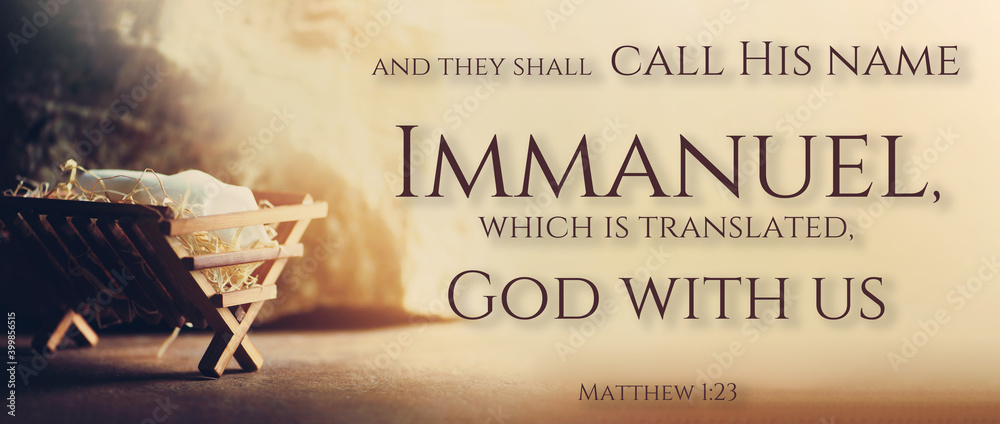
    Isaiah 7:14, “Therefore the Lord himself will give you a sign: The virgin will conceive and give birth to a son, and will call him Immanuel”. Isaiah declares that the Lord will do something that any sane person would call impossible. A virgin birth. But God is the God of the impossible. After all, He created the whole universe from nothing.

    Fulfillment

    Luke 1:26-35 contains the longest description of the fulfillment of this prophecy. For brevity’s sake, I’m not including the entire thing. The previous prophecy references Luke 1:31 and Mary responds to the angel with “How can this be since I am a virgin?” (v 34).

    Matthew 1:20-25 records the angel telling Joseph that Mary’s conception is of God. And in verse 22 we get a direct quotation of Isaiah’s prophecy. “The virgin will conceive and give birth to a son, and they will call him Immanuel” (which means “God with us”). Matthew kindly provides us with a meaning to the name “Immanuel” as well.

    Place And Time Prophecies

    Born in Bethlehem

    Prophecy

    Micah 5:2, “But you, Bethlehem Ephrathah, though you are small among the clans of Judah, out of you will come for me one who will be ruler over Israel, whose origins are from of old, from ancient times”. Here Micah makes plain that the Messiah would be born in Bethlehem. Nobody disputed this prophecy.

    Fulfillment

    Matthew 2:1, “After Jesus was born in Bethlehem in Judea, during the time of King Herod, Magi from the east came to Jerusalem”. Matthew records Jesus’ birth as occurring in Bethlehem. In fact, in verse 5 when Herod inquires of the scholars where the Messiah was to be born, they quote Micah.

    Luke 2:4-7, “So Joseph also went up from the town of Nazareth in Galilee to Judea, to Bethlehem the town of David, because he belonged to the house and line of David. He went there to register with Mary, who was pledged to be married to him and was expecting a child. While they were there, the time came for the baby to be born, and she gave birth to her firstborn, a son. She wrapped him in cloths and placed him in a manger, because there was no guest room available for them”. Luke records that Mary gave birth to Jesus while they stayed in Bethlehem during the census.

    Born During the Roman Empire

    Prophecy

    Daniel 2:40, 44, “Finally, there will be a fourth kingdom, strong as iron—for iron breaks and smashes everything—and as iron breaks things to pieces, so it will crush and break all the others….In the time of those kings, the God of heaven will set up a kingdom that will never be destroyed, nor will it be left to another people. It will crush all those kingdoms and bring them to an end, but it will itself endure forever.”

    Here we see Daniel declare that God will set up a kingdom during the time of the fourth. One that will never fade away or be destroyed. Daniel further elaborates that the first of the kingdoms is the one he writes this, Babylon. So, after Babylon, there will be three more kingdoms – and the Mesiah will come during the third one after Babylon.

    Fulfillment

    Luke 2:1, “In those days Caesar Augustus issued a decree that a census should be taken of the entire Roman world”. Luke records that Jesus’s birth occurred during the Roman occupation of Jewish homeland. And the fourth kingdom recorded by Daniel, was the Roman Empire. We see from the records in the Bible that Persia (the second) followed Babylon (the first). However, that’s where the Bible leaves off until we get to the New Testament and Rome (the fourth). That makes it a bit harder to demonstrate from the Bible alone the fulfillment of this prophecy.

    Fortunately, we can see from history outside of the Bible that Jesus came during the fourth kingdom. Daniel lived during the reign of Babylon and Persia. Greece (the third) conquered the Persian Empire. And lastly, Rome overcame Greece to become the fourth kingdom to rule over Jerusalem and the Jewish people.

    Called Out of Egypt

    Prophecy

    Hosea 11:1, “When Israel was a child, I loved him, and out of Egypt I called my son”. Now this verse has duel meaning here. God regarded Israel as a son, and He brought the Israelites out of their bondage in Egypt. So, what Hosea spoke here had a historical fact tied to it. However, there’s also a hidden Messianic prophecy here.

    Fulfillment

    Matthew 2:14-15, “So he got up, took the child and his mother during the night and left for Egypt, where he stayed until the death of Herod. And so was fulfilled what the Lord had said through the prophet: ‘Out of Egypt I called my son’”. Here in Matthew, we see that Joseph took Mary and Jesus to Egypt to escape Herod’s wrath. In addition, we see that Matthew connects that with Hosea 11:1. Few probably caught Hosea 11:1 as a Messianic prophecy until after Matthew made the connection.

    The Prophecy of the Innocent

    Prophecy

    Jeremiah 31:15, “This is what the Lord says: ‘A voice is heard in Ramah, mourning and great weeping, Rachel weeping for her children and refusing to be comforted, because they are no more’”. Jeremiah records a rather sad sounding prophecy. This idea of mourning and weeping because of the children.

    Fulfillment

    Matthew 2:16, “When Herod realized that he had been outwitted by the Magi, he was furious, and he gave orders to kill all the boys in Bethlehem and its vicinity who were two years old and under, in accordance with the time he had learned from the Magi”. If you continue reading, you find that Matthew quotes Jeremiah’s prophecy saying that this act fulfilled it.

    Probability

    During my quick research into prophecies about the Messiah’s birth, I found an interesting article about the probability of someone fulfilling 8 Messianic prophecies. I’m going to summarize the findings here and include a link to the full article.

    The story goes that a mathematics professor (Peter Stoner) conducted a class exercise on the probability of someone randomly fulfilling 8 of the 353 Messianic prophecies. The American Scientific Affiliation reviewed the work, and the processes used and concluded that everything was sound.

    The results? The students found that the probability for a person to randomly fulfill a mere eight of the prophecies was 1 in 100 quadrillion! To show off what that number looks like, that’s 1 in 100,000,000,000,000,000.

    Professor Stoner illustrated it better as such. He said that if you lay down a 100 quadrillion silver dollar coins within the state of Texas, they would cover every square inch of the state and would pile up two feet across the state.

    Then imagine if you mark only one of them with a X on it, then you blindfold a man and drop him in the middle of the state. And then you tell him to walk in any direction for as far as he wishes, the prophecy probability previously calculated is expressed here as that man selecting the one and only silver dollar with a X marking on it! With only one chance to pick it up.

    And that’s only 8 prophecies. Out of 353! Clearly the chances of this happening randomly are astronomically impossible. These types of statistics strongly demonstrate the truth of what the gospels say. And personally, gives me a greater confidence in my own faith. Oh yeah, here’s that link.

    Wrapping Up

    Wow! Imagine being able to fulfill all these prophecies. Without even trying! After all, Jesus couldn’t control the circumstances of His birth. As an adult He might be able to manipulate a few circumstances to deliberately fulfill prophecies, He couldn’t do it as an unborn or infant. I love that because it gives us greater confidence that Jesus truly is the Messiah. The Son of God. Have a very Merry Christmas and Happy New Year! And may God richly bless you each and every day as you seek Him.

    Outro

    If you enjoyed this post, please consider doing one or all of these things. First, subscribe if you haven’t. If you have, thank you! Second, spread the word. Send these to everyone you know and encourage them to read and subscribe. This blog is purely word of mouth right now. I rely on you, my readers, to help me get more readers. And third, please consider donating. It’ll enable me to continue to offer regular posts.

    Feel free to leave a comment with any questions about what I’ve written, any additional comments about the post, or if there’s a topic you’d like me to write about. Before doing that though, be sure to check out all my posts here and see if I’ve covered it already. And if you find I’ve done it already but aren’t satisfied or still have more questions, let me know!

    Thank you for reading this! I greatly appreciate each one of you. Until next time, God bless you all!

  • Birth of Jesus: The When

    Birth of Jesus: The When

    Intro

    After talking about why God chose the time He did for the birth of Jesus, I now wish to talk about the actual timing of His birth. There has been a common assumption that Jesus was born between 4-7 BC because of the prevailing belief that Herod died in 4 BC. However, I aim to demonstrate how that doesn’t actually fit the evidence. And you may ask, why talk about this? Well, it adds more evidence to the inerrancy of the Bible and shows how and where it fits in recorded history. This builds our faith in it and in everything else the Bible has to say about God and who He is.

    Roadmap

    In this post, I’m going to talk about the biggest clues to the year of Jesus’ birth. This includes the death of Herod the Great and the time that Luke says Jesus started His ministry. Another strong indicator of the timing is when the early church fathers claimed when Jesus was born. Finally, I will also mention the census that Luke talked about in order to clear up any concerns that he contradicts himself in dating Jesus’ birth.

    Early Church Fathers

    We have a lot of writings from the early church. Among those writings are a lot of claims on the year of Jesus’ birth. I’m honestly a bit impressed at the consensus among the writings. I shouldn’t be. After all they lived closer to the events and knew better when the different people reigned and occurrences of other significant events. Here’s a table adapted from Handbook of Biblical Chronology by Jack Finegan.

    Time of WritingsWriter(s)Year of Jesus’ Birth
    Late 100s/Early 200sSt. Irenaeus of Lyon2 BC or 3 BC
    Late 100s/Early 200sSt. Clement of Alexandria2 BC or 3 BC
    Late 100s/Early 200sTertullian of Carthage2 BC or 3 BC
    Late 100s/Early 200sJulius Africanus2 BC or 3 BC
    Late 100s/Early 200sSt. Hippolytus of Rome2 BC or 3 BC
    Late 100s/Early 200sOrigen of Alexandria2 BC or 3 BC
    200sThe Alogoi4 BC or AD 9
    Late 200s/Early 300sEusebius of Caesarea2 BC or 3 BC
    300sEpiphanius of Salamis2 BC or 3 BC
    354The Chronographer of the Year 354AD 1
    400sOrosius2 BC
    Late 400s/Early 500sDionysius Exiguus1 BC
    500sCassiodorus Senator3 BC
    Late 600s/Early 700s“Hippolytus of Thebes”2 BC or 3 BC

    From this table, it’s pretty easy to see that the majority of early church writers believed Jesus’ birth to be 2-3 BC. There are a few outliers, but for the most part, they all agree.

    So, if the early church writers retained that date of 2-3 BC, what about the death of Herod in 4 BC? Let’s take a look.

    Herod’s Death

    The gospel of Matthew indicates that Jesus was born during the reign of Herod the Great. Consequently, the timing of his death has been used to determine when Jesus was born. Makes sense since He would have to have been born before Herod died. We get the year 4 BC from a German scholar in the late 1800s, which caught on and went largely unchallenged since. The fact that Herod slaughtered children two years and younger means that Jesus was born no earlier than 6-7 BC. Logical, right? It is, if that date of 4 BC were correct. But before I demonstrate why that date is wrong, I’m first going to explain where it came from.

    The Reasons for 4 BC

    Advocates of the year 4 BC list several reasons why that year is correct.

    • Statements from the Jewish historian Josephus say that Herod was appointed king in 40 BC and reigned for 36 years. Simple math says 40-36=4, so he died in 4 BC.
    • Also from Josephus, Herod conquered Jerusalem in 37 BC and reigned there for 33 years. Again, this leads to 4 BC (37-33=4).
    • Once more from Josephus, Herod died between a lunar eclipse and Passover. In 4 BC there was a partial lunar eclipse 29 days before Passover.
    • Various lines of evidence suggest that Herod’s sons took over in 4 BC.

    Well, there you have it right? Herod had to have died in 4 BC based on this mountain of evidence. The fact that I already stated that 4 BC is wrong should tell you that last sentence reeked of sarcasm. Too bad I can’t make it audible, that would be fun.

    So, if Herod didn’t die in 4 BC, yet all this evidence suggests he did, then there must be some explanation for why the evidence says he did. And you’re right, there is. Let’s take a look at why these four arguments don’t hold up.

    Herod’s Appointment

    Statements made by Josephus point to Herod’s appointment in 40 BC. However, the BC/AD system hadn’t been invented so Josephus actually used other methods of dating. One of those methods was an Olympiad – a four-year period during which the Olympic Games ran. According to Josephus, Herod’s appointed occurred during the 184th Olympiad, which ran from July 1, 44 BC to June 30, 40 BC.

    However, he also states that Herod’s appointment came during the consulship of Calvinus and Pollio. These two guys began their consulship after October 2, 40 BC. That’s after the 184th Olympiad ended. In fact, that would be in the 185th Olympiad. So, what gives, Josephus? That’s not possible. One of the two statements by Josephus have to be wrong, but not necessarily both of them. Luckily, we have another source on this: the Roman historians Appian and Dio Cassius. According to them, Herod’s appointment occurred in 39 BC rather than 40 BC. This puts his appointment squarely in line with consulship of Calvinus and Pollio – just like Josephus said. If you take the aforementioned 36-year reign and do the math, you get 3 BC rather than 4 BC.

    However, Josephus would not have counted 39 BC as a full year of Herod’s reign because Josephus never counted partial first years for anyone else (political rulers, high priests, etc.). So, you’d have to count from 38 BC – which gives you 2 BC. One more thing, in a different quote from Josephus when describing Herod’s death, he claims his death was 37 years from his appointment. If you do the math here, you get 1 BC for the death of Herod.

    If you want to keep track, we now have 2 or 1 BC as strong candidates for Herod’s death.

    Jerusalem Conquered

    The second popular piece of evidence comes from Herod conquering Jerusalem in 37 BC and reigning there for 33 years. Again, going back to Josephus’s dating methods, he said it occurred in the 185th Olympiad during the consulship of Marcus Agrippa and Caninius Gallus. This strongly points to 37 BC. However, he also says that it occurred 27 years after Jerusalem fell to the Roman general Pompey. Unfortunately, that occurred in 63 BC and 27 years after that would’ve been 36 BC, not 37 BC. Furthermore, Josephus says elsewhere that Herod conquered it after it was held by the Hasmoneans for 126 years. And both the First Book of Maccabees (a historical record of the Jewish revolt against the Syrians) and Josephus say that the Hasmoneans started ruling Jerusalem in 162 BC (162-126=36). So, Josephus has another inconsistency.

    Josephus also states that Herod died 34 years after beginning his reign in Jerusalem. So, using the two dates (37/36) and keeping in mind that he did not count partial first years (which gives us 36/35), we get the dates 2 and 1 BC (36-34=2 and 35-34=1).

    Looks like we have yet even more evidence to back up a date of either 2 or 1 BC. Let’s keep going. It gets better.

    The Lunar Eclipse

    Josephus declares that Herod died between a lunar eclipse and the Passover. In 4 BC a lunar eclipse occurred 29 days before Passover. Slam dunk? I don’t think so. In 1 BC another lunar eclipse occurred 89 days before Passover. So, which one? There’s two major pieces of evidence that suggests the one in 1 BC is more likely.

    • The one in 4 BC was a partial eclipse while the one in 1 BC was a total eclipse. And Josephus’s description of the eclipse lends itself to being a full eclipse.
    • Herod did a lot of things after the eclipse and before his death that required significant travel time. Andrew E. Steinmann in his book From Abraham To Paul calculates that the minimum amount of time for everything Herod did, would be 40 days. But more likely 60-90.

    Based on that second reason alone, I’m convinced that the lunar eclipse in 1 BC was the one Josephus records.

    The evidence for Herod’s death in 1 BC has grown while 2 BC falls a bit behind (there was no lunar eclipse in 2 BC). At this point, 4 BC is on its deathbed.

    The Reigns of Herod’s Sons

    The last argument for 4 BC is that we have evidence that Herod’s sons began to rule in 4 BC. And this is all true. They did. However, this argument is perhaps the weakest. Ancient rulers frequently brought in their heirs to rule alongside them as co-regents when these rulers were aging. They knew their time of death was growing near and wanted a smooth transition of power. So, they brought in their heirs to rule with them. So, yes, Herod’s sons did begin reigning in 4 BC – alongside their still-living father.

    I now declare a year of 4 BC for the death of Herod to be dead in and of itself. RIP, you will not be missed. All hail the correct year based on the above evidence: 1 BC!

    In all seriousness, now that I’ve established the year of Herod’s death, in what year did Jesus’ birth occur?

    The Start of Jesus’ Ministry

    We can actually get a couple of strong contender years for the birth of Jesus based on Luke’s record of when Jesus started His ministry.

    In the fifteenth year of the reign of Tiberius Caesar – when Pontius Pilate was governor of Judea, Herod tetrarch of Galilee, his brother Phillip tetrarch of Iturea and Traconitis, and Lysanias tetrarch of Abilene – during the high-priesthood of Annas and Caiaphas, the word of God came to John son of Zechariah in the wilderness. Luke 3:1-2 (NIV)

    Continuing from here, you get to the story of Jesus’ baptism, after which he goes into the wilderness for 40 days and when He comes back, He starts His ministry. The fifteenth year of Tiberius is roughly AD 28/29. So, backing up 30 years (remember no year 0!) we get a year of 2/3 BC for Jesus’ birth. If you recall, these are the same dates overwhelmingly supported by early church writings. But can we get more specific than that? Actually, we can. But before I get to that, I wish to address something that people have claimed as a contradiction in Luke’s gospel as to the timing of Jesus’ birth.

    Luke’s Contradiction?

    Luke opens up his second chapter with an interesting bit of history.

    In those days Caesar Agustus issued a decree that a census should be taken of the entire Roman world. (This was the first census that took place while Quirinius was governor of Syria.) Luke 2:1-2 (NIV)

    There’s a bit of a problem here. Quirinius didn’t become governor of Syria until AD 6 after the son of Herod the Great, Archelaus, is removed as ruler of Judea. And Luke had already established that Jesus was born during the rule of Herod the Great (Luke 1:5). Scholars long looked for a solution to this apparent contradiction. And behold! A solution was found. To quote Anglican bishop N. T Wright:

    “The question of Quirinius and his census is an old chestnut, requiring a good knowledge of Greek. It depends on the meaning of the word protos, which usually means ‘first’.
     
    Thus most translations of Luke 2:2 read ‘this was the first [protos] census, when Quirinius was governor of Syria’, or something like that.
     
    But in the Greek of the time, as the standard major Greek lexicons point out, the word protos came sometimes to be used to mean ‘before’, when followed (as this is) by the genitive case.”

    Wright gives a couple of examples of where ‘protos’ is translated as ‘before’ in John 1:15 and 1:30.

    Wright then goes on to say that:

    “I suggest, therefore, that actually the most natural reading of the verse is: ‘This census took place before the time when Quirinius was governor of Syria.’”

    Why Bring it Up?

    Of course, the question is, why did Luke bring it up at all? There are at least three good reasons why.

    • The first I already mentioned, Luke later associates the start of Jesus ministry with the fifteenth year of the reign of Tiberius. Anyone at that time could do the math and figure it out. So, Luke wanted to be sure that there was no confusion.
    • Reason two was probably to avoid confusion of which census. The census of Quirinius was famous and Luke would’ve wanted his audience to know that was not the census he’s referring to. It was a different one that we don’t have historical records for unfortunately.
    • Lastly, Luke already established that Jesus’ birth occurred during the reign of Herod the Great, so (again) he wanted to prevent confusion among his readers.

    Given all that, I think we can all agree that rather than contradicting himself, Luke was taking extra care to eliminate any confusion about the timing of Jesus’ birth.

    Now we’re back to 2 BC vs 3 BC. We’ve seen lots of evidence that these two years are the best candidates. But there is one final piece of evidence that I neglected to mention I’d be covering. And I think this one nails down the year perfectly.

    Daniel’s Prophecy

    This last bit of evidence to nail down the birth of Jesus is the prophecy of Daniel mentioned in my last post (take a look here!). Though in that post, I used it in conjunction with the general idea of Him being on Earth during this timeframe. However, it can also be used to date the birth of Jesus.

    In that post, I mentioned that Daniel’s prophecy of the 69 weeks ended just days before the death of Jesus. The most accurate calculations of the year of Jesus’ death using that prophecy come out to spring of AD 33. (Jesus died during Passover, which is springtime.) And we know that Jesus’ ministry lasted roughly 3.5 years. So, if Jesus were 33.5 when he died, and keeping in mind there’s no year 0, we end up with the fall of 2 BC. Doing the math 33-33=0, but there’s no year 0, so 1 BC (the year of Herod’s death – incidentally shortly before Passover), then back up 6 months and you get 2 BC – since Jesus died in the spring (Passover), going back 6 months puts you in the fall of the previous year.

    Therefore, I declare that between the years 2 and 3 BC for Jesus’ birth, 2 BC has the better evidence. This puts Jesus’ time on Earth from 2 BC – AD 33.

    Wrapping Up

    Even though something like this isn’t necessary to fully understand to be a good Christian, it can be beneficial to demonstrate how much evidence there really is and how specific we can get with pinpointing the day of His birth. It makes the Bible more real and alive.

    I wish to give credit to where credit is due, most of my research here comes from four articles which I link here. If you choose to read them for the additional information given, read them in the order I have them linked. A lot of what I wrote is based on these, though in a more concise way.

    Final note: I do plan on releasing a post around Christmas. Rather than on Christmas day, it might be on Christmas Eve. Not sure yet but stay tuned! Merry Christmas one and all!

    Outro

    If you enjoyed this post, please consider doing one or all of these things. First, subscribe if you haven’t. If you have, thank you! Second, spread the word. Send these to everyone you know and encourage them to read and subscribe. This blog is purely word of mouth right now. I rely on you, my readers, to help me get more readers. And third, please consider donating. It’ll enable me to continue to offer regular posts.

    Feel free to leave a comment with any questions about what I’ve written, any additional comments about the post, or if there’s a topic you’d like me to write about. Before doing that though, be sure to check out all my posts here and see if I’ve covered it already. And if you find I’ve done it already but aren’t satisfied or still have more questions, let me know!

    Thank you for reading this! I greatly appreciate each one of you. Until next time, God bless you all!