

Tag: God

  • The Fullness of Time

    The Fullness of Time

    Intro

    Galatians 4:4 says, “But when the fullness of time had come, God sent forth his Son, born of woman, born under the law” (ESV). In this first post of the Christmas season (I know, I know, Thanksgiving isn’t done yet), I want to focus on that phrase “fullness of time”. What exactly does that mean? The NIV Bible puts it this way “But when the set time had fully come”. You could also say “When the perfect time set by God had come” (CLV, Cory Lewis Version 😉). When I read that, I think to myself, “Why was this the right time? Why did God select that period of time?” If you ever asked those questions, you’re in the right place. Turns out there’s a lot of great reasons, both from a human perspective and Biblical.

    The Roman Empire

    You read that right. The Roman Empire turned out to be one of the best reasons for this time being the perfect time for Jesus to come. Here are some of the reasons why.

    Peaceful Travel

    The Roman Empire conquered so much of the world at that time, that within its borders there was a sense of peace. In addition, the ruthlessness of the Romans when it came to criminals helped keep that peace. Crucifixion was no joke. Furthermore, the Romans built an extensive network of roads and ports that allowed for great ease of travel across the Empire. This allowed the gospel to spread to places it otherwise couldn’t have.

    Assimilation

    The Roman Army was fairly unique in how it recruited soldiers from among the provinces that it conquered. The recruits were taught about Roman history and culture and a great number of people were effectively assimilated. This allowed for a greater understanding of cultures across the world which made communicating ideas much easier. In fact, the gospel came to Britain largely because of soldiers stationed there.

    In addition, Rome allowed people of other nations to become Roman citizens. It wasn’t necessarily easy – or cheap (see Acts 22:28) – but it was possible. Paul benefitted from this multiple times. He avoided beatings, unfair trials, and could get into places he wouldn’t have been able to any other way. And lastly, he got the opportunity to speak before the emperor himself.

    Jewish Oppression and Hopes

    The Jews struggled under the Roman Empire. That created an intense longing and anticipation of the long-awaited Messiah prophesied hundreds of years beforehand. Many women of that day had high hopes of being the one to give birth to the Messiah. This hope and desire made Jesus more accepted and drew larger crowds than He otherwise might have.

    The Greek Language

    Perhaps one of the greatest reasons for this being the perfect time is the unified language that existed. The Greek language dominated the Roman Empire. Many people were bilingual at the very least (their own native language plus Greek). This allowed for a greater ease of communication than in times previous. Christians could travel from one place to another without having to wonder if they would find someone who could interpret for them. To be sure, not everyone spoke Greek, but there was a large enough number that finding an interpreter wasn’t difficult. It’s a lot easier to find someone to interpret from a common language to a local language than from one local language to another local language.

    The Spiritual Culture

    The Spiritual culture of the day provided yet another way that made people receptive to the gospel.

    Idols and Cults

    When the Romans came conquering, many people groups turned to their gods and idols for protection and salvation. However, when these gods failed to deliver, many people abandoned worship of them and began to seek alternatives. This created a greater spiritual hunger in people than if Rome had not touched their nations.

    Furthermore, many cults and mystery religions of the day emphasized a savior-god and bloody sacrifices to worship them. This made a gospel that included one ultimate sacrifice much more believable to them. In addition, many of these cults required baptism of some sort – often in the blood of animals – so the early church emphasizing baptism after repentance didn’t sound unusual to them. A little bit cleaner perhaps, but not strange. Finally, the belief of an immortal soul was also prevalent in this time. This made the message of Christ even more understandable.

    Greek Philosophy

    On the flip side, the Greek philosophy/science of the time left a lot of people feeling spiritually empty and void. People wondered if there was anything more to life than just this natural world. This is much like how modern day atheistic communist governments did in the 20th century and continue to do today. And even how the prevalent atheistic and evolutionist thought leaves people searching for truth and fulfillment in America today.

    Jewish System

    God laid the Jewish religious system and Law as a foundation for the coming of Jesus. The entire system was designed to demonstrate to mankind their sinfulness and their inability to stop sinning in their own power. God set it up so that they would recognize the depth of their sin and wickedness and thus more readily accept the salvation that Jesus as their Messiah offered.

    In addition, the Law and the prophets laid out many prophecies concerning the coming of Jesus and what He would do so that the Jews would recognize Him when He came. And the sacrificial system painted the picture of the sacrifice of Jesus on the cross – as well as just the necessity of a blood sacrifice to pay for sin.

    Lastly, their feasts and festivals that God ordained in the Old Testament all point to Jesus in some form. Going through just a couple of them quick: Feast of Tabernacles points to the birth of Jesus because it recognizes God dwelling with man (one of Jesus’ names is Immanuel – God with us) and Passover points to the death of Christ (and not just because that’s when Jesus died) because the Passover lamb that each household had to slaughter had to be pure and without blemish and not one of its bones could be broken – Jesus became the ultimate Passover lamb, being pure and without blemish and not a single bone was broken.

    There is so much more in the Jewish system that points to Jesus and the New Covenant. But that’ll have to wait for another day.

    The Fullness of Sin

    This might sound like an odd one but hear me out. Some scholars believe that part of the “Fullness of Time” means that sin reached its fruition under the law as well. Paul suggests such a thing in Romans.

    The law was brought in so that the trespass might increase. Romans 5:20 (NIV)

    I would not have known what sin was had it not been for the law. Romans 7:7 (NIV)

    The introduction of the law allowed people to see how sinful they really were. And it demonstrated their need for a savior. Not just a savior from their natural enemies, but a savior from the sin within them. And when things had progressed to a certain point, it became time to send that savior because God will only tolerate so much sin before He acts.

    This idea we can see all the way back in Genesis 15 when God told Abraham about his descendants’ captivity in Egypt.

    In the fourth generation your descendants will come back here, for the sin of the Amorites has not yet reached its full measure. Genesis 15:16 (NIV)

    It took another 400+ years before the sin of the Amorites reached its full! And that’s on top of however many centuries they were already sinning. Makes sense it would take a few thousand years for things to build up before God chose to send Jesus.

    Daniel’s Prophecy

    The last thing I want to mention is that Jesus came at the time He did to fulfill the prophecy of Daniel. Which prophecy? The “Seventy weeks” or “Seventy sevens” found in Daniel 9:24-27. We know from studying history that 69 of these “weeks” have already been fulfilled with the last one still coming. The countdown of these started with the command to rebuild Jerusalem (verse 25). This occurred in 444 B.C. Verse 26 tells us that after 69 of these “weeks” “the Annointed One will be put to death”.

    Many people have done the calendar math and used historical and astronomical clues to determine when the 69 weeks began and end. It’s largely agreed that they began at the end of February 444 B.C. (some say beginning of March) with the command to rebuild Jerusalem and ended in March A.D. 33 just days before Jesus’ death. (Even though I read a few different articles about this in my research, this one I believe to be the most accurate: Link).

    So, Jesus came when He did in order to fulfill this very specific piece of prophecy from Daniel – and the religious leaders missed it.

    Wrapping Up

    From this, I hope you can see God’s guiding hand on the course of history. This should give you hope for your own life. No matter where you’re at, God can redeem what looks hopeless and can bring you back into His will for your life. With God there are no disqualifying paths, only detours.

    Outro

    If you enjoyed this post, please consider doing one or all of these things. First, subscribe if you haven’t. If you have, thank you! Second, spread the word. Send these to everyone you know and encourage them to read and subscribe. This blog is purely word of mouth right now. I rely on you, my readers, to help me get more readers. And third, please consider donating. It’ll enable me to continue to offer regular posts.

    Feel free to leave a comment with any questions about what I’ve written, any additional comments about the post, or if there’s a topic you’d like me to write about. Before doing that though, be sure to check out all my posts here and see if I’ve covered it already. And if you find I’ve done it already but aren’t satisfied or still have more questions, let me know!

    Thank you for reading this! I greatly appreciate each one of you. Until next time, God bless you all!
  • Heaven: Home

    Heaven: Home

    Intro

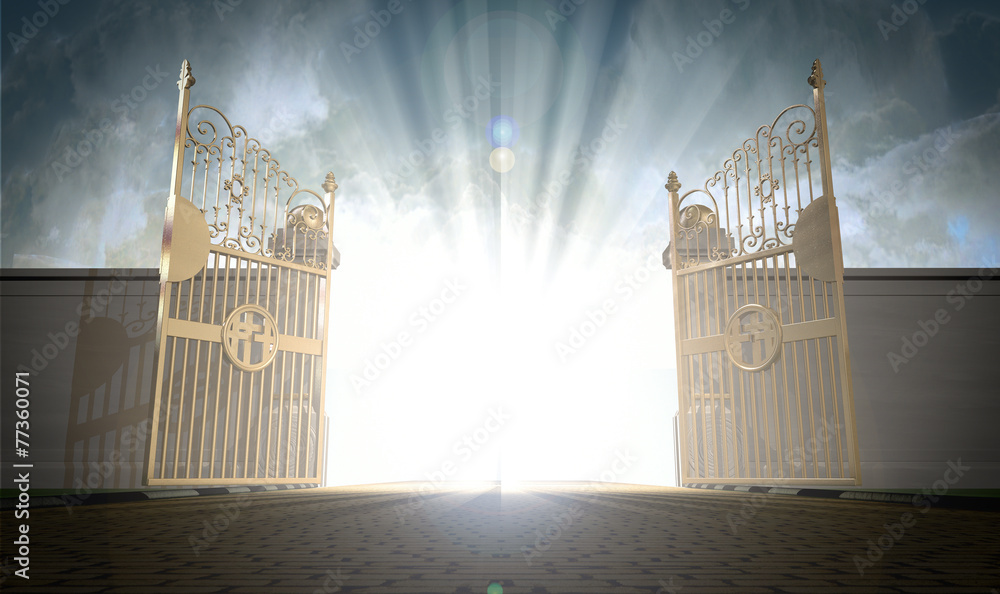
    Heaven is generally thought of as the place where God dwells and where Christians go when they die. And while this is true, it’s so much more. Jesus describes Heaven as a paradise to the thief on the cross. In Revelation, John describes a sea of glass. He also mentions that Heaven has its own temple and ark of the covenant. And this only scratches the surface. Let’s discover the majesty of God’s dwelling place together.

    Which Heaven?

    This might surprise some of you, but the Bible talks about multiple heavens. Crazy right? Because of that, I’m going to briefly cover all three heavens and then get on with the main event.

    The First Heaven

    The first heaven (not called that specifically in the Bible, but a good label for clarity) is what we call the sky, or atmosphere. James 5:17-18 contains a great example of the Bible calling the atmosphere “heaven”.

    Elijah was a human being, even as we are. He prayed earnestly that it would not rain, and it did not rain on the land for three and a half years. Again he prayed, and the heavens gave rain, and the earth produced its crops. James 5:17-18 (NIV)

    The Second Heaven

    As we move up the list, we also move “up” in a more literal sense. What we call outer space – or the cosmos – is also referred to as “heaven” by the Bible.

    And when you look up to the sky and see the sun, the moon, and the stars – all the heavenly array – do not be enticed into bowing down and worshipping things the Lord your God has apportioned to all the nations under heaven. Deuteronomy 4:19 (NIV)

    The second heaven consists of all the stars, galaxies, planets, and everything else that exists in the cosmos. There is far more majesty here than in the first. And that pattern continues when we move on to the third – and final – heaven.

    The Third Heaven

    When we get here, we have now entered God’s dwelling place. God sits enthroned above the universe from the third heaven. This is the only one of the three that is explicitly referred to by the name “the third heaven”. Found in 2 Corinthians 12, Paul tells the story of “a man” that he knew that had been caught up to the third heaven. Many scholars believe this man was Paul himself, but because of all the things he couldn’t talk about, avoided questions by not naming himself.

    I know a man in Christ who fourteen years ago was caught up to the third heaven. Whether it was in the body or out of the body I do not know – God knows. (NIV)

    After laying all this groundwork, I’m now going to turn my attention to describing what the Bible has to say about this third heaven and what it means for Christians.

    The Descriptions

    The Bible records various things about heaven including physical descriptions, what life will be like, who will all be there, etc. I’m going to cover some of these and try to show you through these passages the incredible home we have to look forward to.

    What Does Heaven Look Like?

    Humans are visual people. That’s why pictures are so popular. And if you lived before the invention of the camera, it would be paintings – though you had to be fairly wealthy to get one of those. So, it’s no surprise that one of the first questions people have about Heaven is “What does it look like?” And while the Bible doesn’t give details about every aspect, there is some pretty powerful imagery to give us a glimpse of the majesty and beauty of our future home.

    Heaven’s Throne Room

    The throne room of God Almighty is a sight to behold according to John in Revelation 4. Look at the descriptions he gives it. “A rainbow that shone like an emerald encircled the throne…From the throne came flashes of lighting, rumblings and peals of thunder. In front of the throne, seven lamps were blazing…Also in front of the throne was what looked like a sea of glass, clear as crystal.” Wow! I’m trying to picture this concept of a rainbow shining like an emerald, and I admit, I have questions. But what I can picture is amazing. And I know that it falls short of the truth.

    The New Jerusalem

    Revelation also gives a description of the New Jerusalem, the city that comes down from Heaven to be the home of the saints for all of eternity. Now you could argue that this is the future home and not the current home. I say, so what? Whether the New Jerusalem will be current Heaven brought to Earth or something God creates (or has created and is currently waiting) as separate, is entirely irrelevant because they have the same designer and are going to have similar majesty and beauty. This gives me confidence that many of the features of this city reflect what Heaven is like today.

    And those descriptions include walls made of jasper, streets made of gold, foundations made of various precious stones, and the gates made of pearls (Revelation 21). Talk about incredible! Talk about majestic! I can’t wait to live there for all of eternity. The majesty of it is only topped by the majesty of God Himself – who will be living there among us.

    What Will We Do In Heaven?

    For some reason, an idea got started and circulated that living in Heaven will be boring because all we will do is sit on clouds, play harps, and maybe fly around and talk to other people. There is so much more than that! Ever hear of the marriage supper of the Lamb? That’s right, there’s food in Heaven! As my pastor likes to say, “If you’re looking for me, I’ll be over by the chocolate fountain.” So, we’ll be chatting with friends and family over food. Coming from the Midwest, this will be both fun and normal.

    Incredible People

    And speaking of talking to others, what’s so boring about that? Being able to hang out with people who have died before you and talking to them. Talking to people in your family tree whom you’ve never met or hardly knew. Or how about talking to Biblical characters? Abraham, Moses, David, Peter, Paul, etc. Or other people throughout history. The Bible indicates that we will see them and be able to interact with them. Talk about all the stories we don’t have written in the Bible. And if you’re worried about seeing someone you had a rough relationship with here on Earth, don’t worry, all things are made new – even relationships.

    Worship In Heaven

    But more importantly, we will worship God. Again, in Revelation, John describes numerous scenes of worship around the throne. Look at Chapters 4, 5, 7, 13, 15, and 19 to see incredible scenes of worship to God and to the Lamb. There will be no end to the worship of God. Does that mean that all we will do is fall on our face and sing to Him? No, how can you eat and sing at the same time? What it does show is that there will always be someone singing in worship. And further, it also shows that worship is more than just singing. It’s a lifestyle. And once we get to Heaven, we will be perfect so everything we say and do will be a form of worship to the one who created us.

    Learning New Things

    The Bible hints that all throughout eternity we will continue to learn and discover new things. New things about God and new things about all that He has created. That’s a lot of discovery and I’m excited about it.

    Who Will Be In Heaven?

    And now, perhaps the most controversial question: Who will be in Heaven? What are the criteria to spend eternity in this incredible place? The reason this is controversial is because no one wants to spend eternity in the alternative to Heaven. Consequently, various religions put up very lax requirements to get to their version of Heaven. Even within Christianity, there are some differences on who goes to Heaven and how you are saved. This post is not about the criteria for salvation – though I’ll get to that at some point since I’ve been covering a lot of the basics since I started blogging – so I won’t go into the details about that.

    Those Included

    That said, here’s some verses that tell us exactly who gets to go to Heaven.

    And you also were included in Christ when you heard the message of truth, the gospel of your salvation. When you believed, you were marked in him with a seal, the promised Holy Spirit, who is a deposit guaranteeing our inheritance until the redemption of those who are God’s possession — to the praise of his glory. Ephesians 1:13-14 (NIV)

    Yet to all who did receive him, to those who believed in his name, he gave the right to become children of God. John 1:12 (NIV)

    Jesus replied, “Very truly I tell you, no one can see the kingdom of God unless they are born again.” John 3:3 (NIV)

    A good summary of these verses is that only those who are children of God, or born again, will be in Heaven. Again, I’m not going to define all that it means to be born again, or saved, or even “what about the Old Testament saints” question. I’ll address those at a later time.

    Those Excluded

    Equally important to know is who won’t make it into Heaven. People you see here will not enjoy God’s presence for eternity and will instead suffer for that same period.

    Outside are the dogs, those who practice magic arts, the sexually immoral, the murderers, the idolaters and everyone who loves and practices falsehood. Revelation 22:15 (NIV)

    Anyone who loves and practices these things (and this isn’t a comprehensive list) will not be enjoying the marriage supper of the Lamb. Of note, it says those who love and practice these things. If you are someone who struggles with it and are praying through it and fighting to be free, be rest assured that this verse does not apply to you. It applies only to those who do it, love it, and have no intent or desire to change.

    And I bring to you a warning as well. A warning found in Matthew 7:21 “Not everyone who says to me, ‘Lord, Lord,’ will enter the kingdom of heaven, but only the one who does the will of my Father who is in heaven.” Beware that you do not fool yourself into believing you are good just because you “do good works for God”. It may be good. But is it what God asked you to do? Are you in His will? Do you truly know Jesus? Or are you trying to earn your way into Heaven?

    Not everyone who says to me, ‘Lord, Lord,’ will enter the kingdom of heaven, but only the one who does the will of my Father who is in heaven. Matthew 7:21 (NIV)

    Wrapping Up

    While we’ll never fully comprehend heaven here on earth, the Bible gives us a glimpse that gives me assurance that no matter how bad it gets here, this world is not our ultimate home. Take confidence in that, my brothers and sisters. Let that knowledge fill you with hope today.

    Outro

    If you enjoyed this post, please consider doing one or all of these things. First, subscribe if you haven’t. If you have, thank you! Second, spread the word. Send these to everyone you know and encourage them to read and subscribe. This blog is purely word of mouth right now. I rely on you, my readers, to help me get more readers. And third, please consider donating. It’ll enable me to continue to offer regular posts.

    Feel free to leave a comment with any questions about what I’ve written, any additional comments about the post, or if there’s a topic you’d like me to write about. Before doing that though, be sure to check out all my posts here and see if I’ve covered it already. And if you find I’ve done it already but aren’t satisfied or still have more questions, let me know!

    Thank you for reading this! I greatly appreciate each one of you. Until next time, God bless you all!

  • God’s Sovereignty

    God’s Sovereignty

    Intro

    God’s sovereignty is undisputed amongst Christians. However, what they do dispute about is how that sovereignty translates to the world we live in. In other words, how much of what we see in the world (the good and the bad) is a part of God’s will to happen? And how much is because we have free will? I only briefly mentioned God’s sovereignty in my post about God the Father and I aim to expand upon that today. In addition, I actually can’t fully talk about sovereignty without comparing it to God’s goodness, which I’ve already established in both the Trinity Trilogy post and my last one, Good Good Father.

    Good Vs Sovereign

    Admit it, you weren’t expecting that as a heading. It’s Good vs Evil right? In this case, when people ask the question “If there is truly a good and loving God, why is there evil in the world?”, they are questioning God’s sovereignty. Therefore, when talking about His sovereignty, I need to balance it out with His goodness. And believe it or not, the truth is simpler than people make it out to be. And it’s easier to figure out than people realize as well. When I first heard what I’m about to tell you, I was blown away by its simplicity. And it brought a greater measure of peace and confidence in my life. Enough teasing let’s get started.

    Simple Vs Complicated

    As I mentioned, I need to balance out God’s sovereignty with His goodness. Putting these two together is the only way to make sense of how God’s sovereignty works in the world and can explain why evil exists. And when performing this balancing act, I also need to introduce two other factors: simple vs complicated. You see, when people try to explain evil in the world in light of God’s goodness and sovereignty, they also (often unknowingly) describe one or both of these attributes as simple or complicated.

    After defining these, I am going to mix and match them to get four types of worlds that we could be living in based on God’s goodness vs sovereignty. I’ll describe these four worlds and then use what the Bible says about God and the world as well as real-life experience to determine which of the four worlds we live in. Let’s get started.

    Simple Goodness

    When I say God’s goodness is simple, I’m saying that God wants only good all the time. He will never want nor use evil to get good. He will not use an “Ends justifies the means” approach to how He operates in the world.

    Complicated Goodness

    To put this simply, a complicated goodness means God ultimately wants good things and will always circle back to good but might trudge through some evil to get there. In this world, God might reach inside my body and mess with it to ensure I end up with some disease just so He could do something in my life that is good.

    Simple Sovereignty

    This is also pretty simple to define, it means God’s will occurs all the time. Everything that happens is from God and is His will. Literally nothing happens in the world that God did not plan out and say, “I want this to happen.”

    Complicated Sovereignty

    With a complicated sovereignty, God is supreme, but His will won’t always occur. Instead, He is working to establish His will in our world. I teased this concept in a previous post with an analogy, I’ll repost it here to refresh your memory (or introduce for the first time if you haven’t read that post).

    The monarchs of old Europe were sovereign over their kingdoms. But not all their subjects obeyed the laws or did what the monarch would’ve like them to. Criminals ran around doing as they pleased disregarding what the king desired. It’s the same with God and our world. God is sovereign over all, but not everyone chooses to live their lives by His standards or do what He desires them to.

    Four Worlds

    Now that I’ve defined each of these terms, I’m going to mix and match to get the four worlds I mentioned earlier. Each world will have a basic list of attributes that would be true of that world.

    Simple G.Complicated G.
    Simple S.Cosmic Utopia
    -Perfection.
    -No sickness, death, crimes, etc.
    -No free will.
    Cosmic Blueprint
    -Two nations fighting, God is playing both sides. That means only one will, one rule, and one kingdom.
    -Satan and demons are puppets of God.
    -No free will.
    Complicated S.Cosmic Battle
    -God is good all the time.
    -Two kingdoms, two wills fighting.
    -Free will plays a role.
    Cosmic Mystery
    -No clue what is and is not of God.
    -God is unknowable.
    -There is no anchor point to know God.
    -Free will plays a role.

    Let’s go through each of these and see what works and what doesn’t based on the Bible and reality.

    Cosmic Utopia

    I’m going to say little to nothing about this one because it’s so obviously not what we see in the world and the Bible is all about how broken man and the world are and how God is working to restore everything. So, it’s pretty safe to say that God’s goodness and His sovereignty can’t both be simple.

    Cosmic Mystery

    I know, I’m not going in order, but I want to show both ends of the extreme since there are rare times when an extreme is the truth in life. With Cosmic Mystery, we can’t just look at the world and say if it is reality like we could with Cosmic Utopia. However, when we read the Bible, we can. The Bible is very clear that we can know God. Jesus is the anchor point for knowing God. John 14:9 (NIV), “Jesus answered: “Don’t you know me, Philip, even after I have been among you such a long time? Anyone who has seen me has seen the Father. How can you say, ‘Show us the Father’?””

    The Bible also repeatedly calls us to grow in our knowledge of God. How can we if He is unknowable? Given that, I can confidently say that God’s goodness and sovereignty also cannot both be complicated.

    Cosmic Blueprint

    Ever hear the phrase “God works in mysterious ways”? Or “Everything happens for a reason”? Both of these are great descriptions of this world, the Cosmic Blueprint. In this world, God’s goodness is complicated, while His sovereignty is simple. So, everything that happens is in God’s will and He is willing to use evil to ultimately accomplish good in the lives of people. As humans, we have no free will, no choice. God determines all our choices for us. Satan and his horde are mere puppets. Unable to do anything without God’s permission.

    I see multiple problems here. First, the Bible puts blame on Satan for various things such as deceiving Eve (2 Corinthians 11:3), being a murderer and a liar (John 8:44) and snatching the truth from people’s hearts (Matthew 13:19). Expanding on that, Revelation 20 describes the punishment Satan will receive for his deeds. But if Satan can’t do anything without God’s permission, then everything Satan has ever done and will do are basically his marching orders. And that means that the Bible is unjustly blaming Satan and using Him as a scapegoat.

    Secondly, the Bible is also clear that as humans we make pretty rotten choices. The entire book of Judges is all about Israel rejecting God, getting punished, crying out to Him for help, and God sending someone to rescue them. Again, Israel would be unjustly punished if they didn’t have free will. Without free will, we are a bunch of fleshy robots only able to do what we are programmed to do. In this world, God is playing a one-player game. And He controls everything in it.

    So based on this, there’s no way that the correct combo is Simple Sovereignty with Complicated Goodness. This leaves one more.

    Cosmic Battle

    The final one is the combination of Simple Goodness and Complicated Sovereignty. I already gave an example of old Europe for how sovereignty doesn’t immediately equate to everything happening in accordance with the will of the sovereign. In addition, the New Testament uses multi-kingdom analogies all over. We see phrases such as “Kingdom of God”, “Kingdom of Light”, “Kingdom of Darkness”, etc. Revelation talks about a war between Satan and his angels against Micheal and his angels. And Ephesians chapter 6 is all about preparing to go to war against Satan.

    And to demonstrate from the Bible the simple goodness of God, “Every good and perfect gift is from above, coming down from the Father of the heavenly lights, who does not change like shifting shadows.” James 1:17 and “This is the message we have heard from him and declare to you: God is light; in him there is no darkness at all.” 1 John 1:5 (NIV). Furthermore, Jesus says that He came that “they may have life” while it is the thief that “comes to steal and kill and destroy” (John 10:10). And since Jesus is the anchor point for knowing God, we can be confident that this applies to God as well.

    In this world, even though God doesn’t cause evil in order to bring good, He most certainly takes the evil and turns it around to bring something good from it.

    What’s Left

    It’s pretty clear to me that the Bible points to Simple Goodness and Complicated Sovereignty. Now, this actually doesn’t answer all the questions. For example, what about the Old Testament with all of the punishments attributed to God? Wouldn’t that point to a complicated goodness? Not necessarily. In short, God established a covenant with Israel that said “If you obey me and follow me, I will give you blessings. If you turn your back on me, I will punish you.” So, God promised to punish the people should they turn their back on God. And God always keeps His promises (an attribute closely related to His goodness). Granted, it is still a little confusing and deserves its own future post.

    One final thing I’d like to say about how God’s kingdom operates. God chooses to limit Himself and work through people and angels to accomplish His will. Could God just snap His fingers and get it all done? Yep. But He doesn’t. He chooses to use finite beings who screw up to get things done. Why? Because He wants us to choose Him of our own volition. Free choice is one way we are made in the image of God. God desires us to follow and obey Him, but He wants us to choose Him, not just be a bunch of robots programmed to do that.

    Wrapping Up

    By now I hope I’ve done justice to God’s sovereignty and His goodness. They are two key aspects of God, and it wouldn’t be good to treat them flippantly. And it’s important to remember that God is on the throne, He is sovereign, and all things will be made new and put right. And we all need to remember that we are in a war. We live in a world of two kingdoms duking it out. But we have nothing to fear. For God will work it all out in the end. That is our hope as Christians that we can hold onto.

    Outro

    If you enjoyed this post, please consider doing one or all of these things. First, subscribe if you haven’t. If you have, thank you! Second, spread the word. Send these to everyone you know and encourage them to read and subscribe. This blog is purely word of mouth right now. I rely on you, my readers, to help me get more readers. And third, please consider donating. It’ll enable me to continue to offer regular posts.

    Feel free to leave a comment with any questions about what I’ve written, any additional comments about the post, or if there’s a topic you’d like me to write about. Before doing that though, be sure to check out all my posts here and see if I’ve covered it already. And if you find I’ve done it already but aren’t satisfied or still have more questions, let me know!

    Thank you for reading this! I greatly appreciate each one of you. Until next time, God bless you all!

  • Good Good Father

    Good Good Father

    Intro

    I’m sure many of you have heard the song Good Good Father by Chris Tomlin. The song does a good job capturing the heart of God as a loving Father. I’ve already briefly touched on God as Father in my post God the Father. I didn’t have time to go in depth on that, but now I’m ready to dive a little deeper into what it means for God to be our Father. In addition, I aim to hit upon another of His characteristics that I only briefly mentioned – His goodness. It’s hard to talk about God as Father without also talking about His goodness.

    Fatherhood

    The Bible refers to God as our father on a number of occasions. While the Old Testament tends to demonstrate the distance between man and God, there are still several references to God as the Father of the Jewish nation. For example, Isaiah 64:8 (NIV) says, “Yet you, Lord, are our Father. We are the clay, you are the potter; we are all the work of your hand.” The Israelites certainly had this understanding, but the relationship wasn’t intimate. To many of them, He was more of a distant Father. Someone you see or talk to occasionally and dare not disappoint or upset in any way. Someone you respected with fear and trembling.

    However, the distance between Israel and God was Israel’s doing. God had a more intimate view of their relationship. The first few verses of Hosea chapter 11 records God saying He “loved him [Israel] and out of Egypt I called my son”, “taught Ephraim to walk”, “healed them”, “led them with cords of human kindness, with ties of love”, and He “bent down to feed them”. Jeremiah 31:9 (NIV) says, “I am Israel’s father, and Ephraim is my firstborn son.” God declared Himself to be Israel’s father – and a very loving father at that – even though Israel itself didn’t share the same view. Hosea 11 also notes how Israel kept going astray and didn’t acknowledge what God was doing in their midst. And yet God kept loving them. And that’s how God treats us as Christians. With perfect love.

    Abba Father

    And when Jesus came, He doubled down on God as father. He called God His Father on numerous occasions using the deeply intimate word “Abba” (Daddy). One such example is in Mark 14:36 (NIV), “‘Abba, Father,’ he said, “everything is possible for you. Take this cup from me. Yet not what I will, but what you will.” In one of Jesus’ most difficult moments, He cries out to God with the most intimate word. But even when all was going well, Jesus used that same term. And taking it a step farther, Jesus taught His disciples to pray to God using the phrase “Our Father…”. I’m sure you are all now mentally reciting the Lord’s prayer. In addition, Jesus says multiple times throughout the Sermon on the Mount (Matthew 5-7) the phrase “your Father” when referring to God. Clearly Jesus wanted us to understand and know God as our Father.

    And not just any father. A good father. Matthew 7:11, “If you, then, though you are evil, know how to give good gifts to your children, how much more will your Father in heaven give good gifts to those who ask him!” (NIV). Matthew 6 gives two other examples about our “Father in heaven” caring about our basic needs – clothing and food. He tells us not be worried about those things because God will take care of us. And this is the perfect segway into the second half of this post.

    Goodness

    There’s a phrase I remember hearing as a kid and later as a young adult when I would go to Lifest, the MC of the festival (Peder Eide) would say “God is good” and wait for the crowed to respond, “All the time”, then “All the time”, “God is good.” Numerous songs talk about how good God is and people will say the phrase “God is good” over and over again.

    And yet, there are people who doubt that. Does the Bible really claim that God is good? Yes! I referenced the Sermon on the Mount where Jesus says that God will supply our needs and gives good gifts to His children. But even more than that, we find it all over the Psalms. Here are a couple of examples from the NIV: Psalm 34:8, “Taste and see that the Lord is good; blessed is the one who takes refuge in him.” and Psalm 31:19, “I remain confident of this: I will see the goodness of the Lord in the land of the living.”

    In addition to the Psalms, when King David appointed Levites to minister before the Ark, he gave them words to praise the Lord with. And the entire passage 1 Chronicles 16:8-36 is just praising the Lord for how good He is and how He is worthy of praise and is their deliverer, etc. The Israelites knew what it meant for God to be deliverer. Just read the account of the Exodus and the worship service that occurred after the crossing at the Red Sea. And as mentioned before, the Psalms are loaded with similar songs of praise to God for His goodness. Not just all the good things He has done for the people, but simply for His goodness.

    God’s Nature

    God doesn’t just do good deeds. Goodness is a part of the nature of God. God is good. It’s impossible for God to do anything evil. I do recognize that there is lots of evil in the world. But I also firmly believe that God did not, does not, and will not cause any of that evil. But there are many people who question the existence of evil, “If God is so good, why is there evil in the world?” And this is a good question that deserves a thorough answer. Which I cannot give here in this post. I plan on covering that question when I address the related question of evil and the sovereignty of God. As you’ll see there, the issues of God’s goodness, His sovereignty, and the existence of evil in the world, are all tightly related.

    Wrapping Up

    I sure hope and pray that you see how much God loves you as a good father loves his children. I know that earthly fathers disappoint us, and some are downright terrible to their children. My goal with this post was to encourage you that God isn’t and will never be that kind of father. He perfectly loves you and has been and always will be good to you.

    A Time to Remember

    Earlier in this post I mentioned Peder Eide, the MC of the Lifest Grandstand. As I was working on this post, I needed to confirm the spelling of Peder’s name and discovered that he passed away April 26, 2024 (this is a very good read on the kind of man Peder was – the image of him on stage is from Lifest). It’s a very sad thing to hear and Lifest will never be the same. Peder was fun to listen to as a MC, but he was also a musician. Two of his songs that I know are both songs that fit right in with this post’s twin themes of God’s goodness and His fatherhood: “Taste and See” (based on Psalm 34:8) and “Abba, I belong to You”. Because of that, I’m dedicating this post to Peder Eide, I know that you are in Heaven worshipping before Abba, Father God.

    Outro

    If you enjoyed this post, please consider doing one or all of these things. First, subscribe if you haven’t. If you have, thank you! Second, spread the word. Send these to everyone you know and encourage them to read and subscribe. This blog is purely word of mouth right now. I rely on you, my readers, to help me get more readers. And third, please consider donating. It’ll enable me to continue to offer regular posts.

    Feel free to leave a comment with any questions about what I’ve written, any additional comments about the post, or if there’s a topic you’d like me to write about. Before doing that though, be sure to check out all my posts here and see if I’ve covered it already. And if you find I’ve done it already but aren’t satisfied or still have more questions, let me know!

    Thank you for reading this! I greatly appreciate each one of you. Until next time, God bless you all!

  • Explaining The Trinity

    Explaining The Trinity

    Intro

    Welcome to the last post discussing the Trinity. Even though I’ve officially completed the Trinity Trilogy, explaining the Trinity warrants its own post. So, I’ll be doing my best to explain – or at least simplify – what the Trinity is and how it works. If you haven’t read any of the posts in the trilogy, catch up here: God the Father, God the Son, and God the Holy Spirit.

    What Is The Trinity?

    The Trinity, also known as the Godhead, is a concept that is difficult to explain and understand. Basically, God is a single God who exists as three persons – Father, Son (Jesus), and Holy Spirit. (Just writing “single” and “three persons” in the same sentence to describe the same noun makes the logical parts of me cringe.) These three persons are distinct yet are also each God. And the Bible demonstrates in many places just how distinct they are.

    Some examples, Jesus prays to Father God on a regular basis. God speaks affirmations over Jesus, declaring Him to be His son, on no fewer than 3 occasions (Jesus’ baptism, the transfiguration, and another time). And Jesus states that both He and Father God will send Holy Spirit and Jeus refers to Holy Spirit as “Him”. This makes it clear that Father, Son, and Holy Spirit are distinct persons. However, the Bible is also clear in referring to each of them as God. Jesus makes statements to be God (refer to my previous posts for examples) and one of the best passages that references Holy Spirit as God is in Acts 5. In this story, Peter accuses Ananias of lying to Holy Spirit and then a couple of sentences later, says that he lied to God. Clearly Peter understood Holy Spirit to be God and not just some impersonal “force”.

    All that said, many illustrations exist to try and explain – or simplify – the Trinity to make it easier to understand. I will be putting forth a handful that I have heard over the years. I leave it up to you to decide which one(s) make it easier for you to understand.

    Illustrations

    I have heard several illustrations trying to explain the Trinity from my many years of experience within the church. And this list I’m giving you probably isn’t all of them, just the ones I can remember. I will give a description of each one and how well I think it holds up to the truth. The litmus test for these will be how well the individual part can perform the job of the whole. Any member of the Godhead can perform everything that Bible says God can do. Each member is omnipotent, omniscient, omnipresent, and immutable. So for these examples, how well it holds up depends on how well the individual part can perform the job that you expect of the whole. If you have any additional ones that you like, let me know in the comments.

    The Tree

    One of the earliest illustrations I recall is the Tree. When you think of a tree, three pieces of one probably jump to your mind immediately: the leaves, the trunk, and the roots (branches as well, but I’m including that in the trunk for the sake of the illustration). These three primary parts of a tree are all distinct, but they make up a single tree. The problem here is that while each member of the Godhead is individually God, you can’t say the same about each of the three parts of the tree. The leaves can’t perform the job you expect the whole tree to do. The nicest part of this one is that it demonstrates an example of a triune God creating things with the number 3 (seriously, start examining everything God has created and you’ll be amazed at how many times the number 3 pops up).

    The Egg

    I only heard about the Egg illustration more recently. It’s one that my wife, Stacy, introduced me to. In this one, you’ve got the shell, the egg white, and the yolk. Again, they are all distinct pieces of the egg, yet it’s still a single egg. I like this one a bit better than the tree since unlike the tree, eggs really don’t have much more to them other than these three parts. It makes it easier to compare instead of nitpicking a tree apart and pointing out all the distinct parts of it. And similar to the tree, the egg is also an example of a triune God creating things with the number 3. However, the tree’s shortcoming is the same as the egg. You can’t point to the yolk and call it an egg. Without the other two parts, it’s not a complete egg.

    The Family

    Now we’re getting to my favorite illustrations. The Family unit is one of the better illustrations for the Trinity. In the Trinity you get Father, Son, and Holy Spirit. In the family unit you get Father, Mother, and Children.

    Relationships

    As an aside, I am going to briefly mention the relationships within the Trinity. In the Bible we clearly see Jesus submitting to His Father’s will time and again. Jesus says He only does what He sees the Father doing (see John 5:19). Even though Jesus is God and is equal to God, He submits to Father God. With Holy Spirit, Jesus states that He and Father God have authority to send Holy Spirit. Furthermore, Jesus declares that Holy Spirit will glorify Him, Jesus, rather than glorifying Himself. This demonstrates a submission on the part of Holy Spirit to Jesus and to Father God.

    This relationship reflects the ideal family unit that God designed (and that sin destroyed). First, you got the father in the place of Father God. Second, you got the mother submitting to the spiritual leadership of her husband as Jesus submits to Father God (the Bible makes it clear that the wife submits to the husband, though it is also clear that the husband submits to his wife as well; but that is a whole other topic). And finally, you got the children as – pretty literally – coming from the parents. And the children are meant to submit (obey) to both father and mother (Ephesians 6:1-3 is perhaps my favorite passage about this). In addition, just as Holy Spirit glorifies Father and Son, so too are children meant to bring joy and honor to their parents (Proverbs 15:20).

    The family is great to describe the relationships within the Trinity. And again, one family, but three distinct parts.

    Still Falls Short

    Unfortunately, the family example still falls short. The problem again comes down to the inability of each individual to perform the role of the whole, i.e. Jesus can do all that Father God can do, but a child cannot do all that the father can do.

    The Human

    The illustration of mankind is probably one of the most powerful. God created humans with 3 very distinct parts that together make us “human”. As humans, we are spirit, soul, and body. 3 distinct pieces making up one human. As an added bonus, the soul is also made up of 3 pieces: mind, will, and emotions. I believe this is just one of the ways in which we are created in God’s image. The Godhead is a triune being. Humans are triune beings. And God created many triune examples in the world. A lot more than I’ve mentioned!

    As Romans 1:20 says, “For since the creation of the world God’s invisible qualities – his eternal power and divine nature – have been clearly seen, being understood from what has been made, so that people are without excuse.” God put Himself into His creation in a myriad of different ways. And as humans, we are His crowning creation.

    Like the other ones, this one is also flawed. Separate the soul from the rest, and you get conscious mind with emotions and a drive, but no ability to do anything. The three parts of a human rely on each other too much to be a perfect representation of the Trinity.

    The Chord

    Of all the illustrations my personal favorite is the Chord. And of all the illustrations ever used, this one stands as probably the least flawed of them all. A triune chord – a chord made up of three distinct notes – has great advantages over the other illustrations. The three distinct sounds work together to make one beautiful sound all the while remaining distinct. Each note can work on its own to perform the job of filling up the space it’s in with sound (just like each member of the Trinity can perform all the functions of a deity). And together, they work in harmony to create something even more beautiful.

    The three notes of a triune chord are separate and distinct yet together they make up a single chord. Each note is a sound. They don’t all sound quite the same and when combined, they create yet another sound. But they retain their own unique sound. And this is why I think this is the best illustration.

    Wrapping Up

    Ultimately, understanding the Trinity will never fully happen on this side of eternity. Our finite minds just can’t fully comprehend an infinite God. And understanding the Godhead isn’t required for salvation (phew!). Still though, it’s important to have some grasp on this topic – if only to be able to have a better answer for someone else other than “I have no idea”.

    Outro

    If you enjoyed this post, please consider doing one or all of these things. First, subscribe if you haven’t. If you have, thank you! Second, spread the word. Send these to everyone you know and encourage them to read and subscribe. This blog is purely word of mouth right now. I rely on you, my readers, to help me get more readers. And third, please consider donating. It’ll enable me to continue to offer regular posts.

    Feel free to leave a comment with any questions about what I’ve written, any additional comments about the post, or if there’s a topic you’d like me to write about. Before doing that though, be sure to check out all my posts here and see if I’ve covered it already. And if you find I’ve done it already but aren’t satisfied or still have more questions, let me know!

    Thank you for reading this! I greatly appreciate each one of you. Until next time, God bless you all!