

Tag: Resurrection

  • Firstfruits of Many

    Firstfruits of Many

    Intro

    I’m on a roll now with Jewish holidays. I’ve talked about Passover and the connection to the Crucifixion and I’ve talked about Pentecost/Feast of Weeks (Shavuot) and the connection to the outpouring of Holy Spirit and the harvest of souls that came immediately after. Now I wish to talk about the Feast of Firstfruits (Yom HaBikkurim) and the connection to the resurrection. Side note: I’m kind of bouncing around with the holidays in terms of when they occur on the calendar, but that’s okay. I’m kind of doing it as I feel.

    The Feast

    In the book of Leviticus, God institutes the Feast of Firstfruits as such.

    The Lord said to Moses, “Speak to the Israelites and say to them: ‘When you enter the land I am going to give you and you reap its harvest, bring to the priest a sheaf of the first grain you harvest. He is to wave the sheaf before the Lord so it will be accepted on your behalf; the priest is to wave it on the day after the Sabbath. On the day you wave the sheaf, you must sacrifice as a burnt offering to the Lord a lamb a year old without defect, together with its grain offering of two-tenths of an ephah of the finest flour mixed with olive oil—a food offering presented to the Lord, a pleasing aroma—and its drink offering of a quarter of a hin of wine. You must not eat any bread, or roasted or new grain, until the very day you bring this offering to your God. This is to be a lasting ordinance for the generations to come, wherever you live.

    Leviticus 23:9-14 (NIV)

    So what was the point of this one? Similar to the Feast of Weeks, this feast celebrated a harvest and was a time of thanksgiving to God for His provision. The difference between this one and the Feast of Weeks is that the Feast of Weeks celebrated the wheat harvest while the Feast of Firstfruits celebrated the barley harvest. The priest would take a sheaf of barley and wave it before the Lord as an offering. Then all Israelites sacrificed a lamb as a burnt offering to God. No one was allowed to eat of the crop until the first portion had been brought to the priest. This acknowledged that the firstfruits belonged to God and He was the source of it all.

    The timing of this feast was right in line with Passover and the Feast of Unleavened Bread (stay tuned for this one!). In fact the exact time of when it should be celebrated has been in dispute. Leviticus says the waving of the first sheaf must occur the day after the Sabbath. However, the Pharisees and Sadducees disagreed on whether that meant the regular weekly Sabbath (favored by the Sadducees) – which would put the sheaf waving on our Saturday evening/Sunday morning – or if it was the special Sabbath of the first day of the Feast of Unleavened Bread – which could change from year to year and was favored by the Pharisees. And this disagreement continues among scholars today.

    The Fulfilment

    I already mentioned that this feast connects to the resurrection of Jesus. So how does it do that? First, let me back up a bit, I feel like I haven’t explained something rather important very well. God in His wisdom and forethought instituted various festivals for the Israelites to observe – 7 in all. And God designed each one of them to point to Jesus and the New Covenant in some way. I already went through Passover (the Crucifixion) and the Feast of Weeks/Pentecost (outpouring of Holy Spirit) and now I’m onto the Feast of Firstfruits. Make sense? Cool, let’s move on.

    The first thing to note is that despite the disagreement on when the sheaf should be waved, it seems clear from the Bible that this day fell on a Sunday – after the regular Sabbath’s day of rest. This means that Jesus rose from the dead on the day that the priest waved the sheaf as an offering to the Lord. Already this is significant. The wave offering signified that what was waved belonged to the Lord but then He released it to be used by others. Jesus presented Himself as an offering to God and the atonement that Jesus achieved was released by God to be received by us.

    Furthermore, Paul uses the word “firstfruits” to refer to Jesus and His resurrection.

    But Christ has indeed been raised from the dead, the firstfruits of those who have fallen asleep. For since death came through a man, the resurrection of the dead comes also through a man. For as in Adam all die, so in Christ all will be made alive. But each in turn: Christ, the firstfruits; then, when he comes, those who belong to him.

    1 Corinthians 15:20-23 (NIV)

    Paul refers to Jesus’ resurrection as the firstfruits. Basically saying, “Just as God raised Jesus from the dead, so shall you be.” Similarly in Romans 8:23, Paul writes that the indwelling of the Spirit is a firstfruit of the redemption of all creation (specifically our bodies).

    When God instituted the Feast of Firstfruits, He looked ahead to the day His Son would fulfill it by becoming the firstfruits of the New Covenant and redemption of all creation.

    Wrapping Up

    Praise God for the resurrection! Am I right? As Paul wrote in 1 Corinthians, without the resurrection our faith is useless (see 1 Corinthians 15:13-17). Don’t gloss over the power of Jesus’ resurrection. We tend to put a lot of emphasis on the Cross and the weight of the sin He carried. But the resurrection demonstrated that God accepted Jesus’ sacrifice on the cross. I love it.

    I also love the amount of care God put into the holidays He gave the Israelites in the Old Testament. Every one of them a picture of Jesus and the New Covenant. Most people missed it when Jesus walked the earth and most people don’t recognize it today. That’s why I’m taking the time to go through them all. The connections amaze me. Some more than others. So stay tuned for the next one: The Feast of Unleavened Bread!

    Outro

    If you enjoyed this post, please consider doing one or all of these things. First, subscribe if you haven’t. If you have, thank you! Second, spread the word. Send these to everyone you know and encourage them to read and subscribe. This blog is purely word of mouth right now. I rely on you, my readers, to help me get more readers. And third, please consider donating. It’ll enable me to continue to offer regular posts.

    Feel free to leave a comment with any questions about what I’ve written, any additional comments about the post, or if there’s a topic you’d like me to write about. Before doing that though, be sure to check out all my posts here and see if I’ve covered it already. And if you find I’ve done it already but aren’t satisfied or still have more questions, let me know!

    Thank you for reading this! I greatly appreciate each one of you. Until next time, God bless you all!
  • Jesus’ Triumph

    Jesus’ Triumph

    Intro

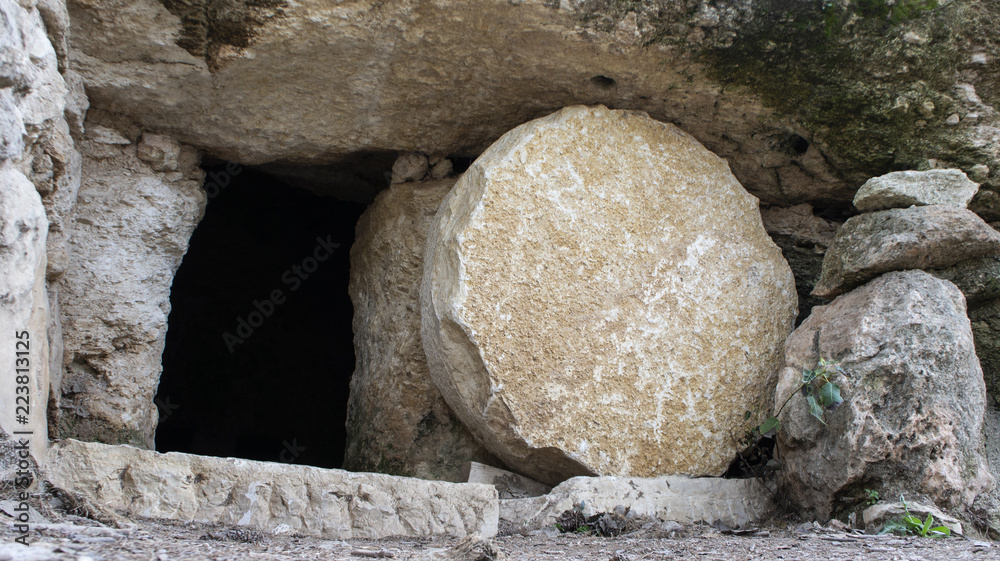
    After my last post I wouldn’t blame you if you felt a little depressed or defeated. The Son of God betrayed, beaten, crucified, died, and buried in a borrowed tomb. That’s rough. The disciples certainly felt depressed and defeated. They scattered while Jesus hung on the cross. Fearful for their lives, they dared not stick around. What they didn’t seem to recognize (despite Jesus’ predictions) was that Jesus was supposed to die, but that His death was not the end. In fact, with Jesus’ death came the greatest triumph in all of human history. Come explore Jesus’ triumph over death with me. (I realize Easter is over, but there’s much more to talk about.)

    Importance of Resurrection

    Thinking about the resurrection, what makes it so important? After all, Jesus’ death accomplished the sacrifice needed to pay for all our sins and satisfy the wrath of God. Furthermore, none of the animals from any sacrifices came back to life, they all stayed dead. So, why should Jesus come back? What makes His resurrection so necessary? While many reasons can be given, I’ll only present four here.

    Proof of Sufficient Sacrifice

    Jesus’ triumph over the grave by coming back to life was proof given by God that He accepted Jesus’ sacrifice as sufficient to cover our sins. God vindicated Jesus by bringing Him back to life because “the wages of sin is death” and Jesus lived a sinless life, therefore He didn’t deserve to die in the first place. And to make this argument stronger, Paul relates that without the resurrection, our faith is useless and in fact, we are still in our sins.

    And if Christ has not been raised, our preaching is useless and so is your faith….And if Christ has not been raised, your faith is futile; you are still in your sins. 1 Corinthians 15:14, 17 (NIV)

    So, Paul saw the connection between the resurrection and the forgiveness of our sins. That’s a pretty big argument for the resurrections importance!

    Proof of Deity

    In addition to proving the sufficiency of His sacrifice, Jesus’ resurrection also proved His deity. Psalm 16:10 claims that God’s Holy One would never see corruption (or decay). By rising again, Jesus’ body never saw that corruption. Thus proving that He is God’s Holy One. Time and again, Jesus declared Himself the “Son of God” and equated Himself with God (don’t believe Jesus ever claimed that? check out my post on who Jesus is). And to take it a step further, Jesus predicted His own death and resurrection. So by rising again, He proved to everyone that He was indeed the Son of God. The long-awaited Messiah and Savior of the world.

    Death Has No Power

    Here’s a fun reason. When Jesus rose from the grave, death lost it’s power and was forever defeated. As Peter proclaimed in his sermon on the Day of Pentecost:

    But God raised him from the dead, freeing him from the agony of death, because it was impossible for death to keep its hold on him. Acts 2:24 (NIV)

    Notice he said that “it was impossible for death to keep its hold on him”. This actually goes back to the fact that Jesus lived a sinless life and death had no right to hold Jesus.

    To make this even better, Jesus’ triumph over death extends to us as well. As His followers, He defeated death for us too! Hallelujah! If you keep reading Paul’s discourse in 1 Corinthians 15, he says that because Christ was raised, we too shall be raised from the dead. Now all believers who die a physical death will immediately go to be with the Lord in Heaven, but someday God will raise these physical bodies and recreate them into something glorious.

    So hold on, sickness, suffering, and death do not have the final word. Jesus does. And He defeated all those things on the cross and through His resurrection.

    Matter Matters

    This might sound confusing but let me explain. The resurrection means that this physical world (matter) matters to Him. And this is hugely important since just a few decades later, something called Gnosticism would start spreading. This teaching claims what we do in the physical doesn’t matter. Our spirits are perfect so we can live how we want and we’ll still go to Heaven. However, by rising again in a physical body, Jesus refutes this by proclaiming that the physical creation matters. It’s important to Him. This also gives us hope that creation itself which groans under the weight of sin (Romans 8:22) will be redeemed (Revelation 21).

    Resurrection Foretold

    The triumph of Jesus recorded in the New Testament as His resurrection was prophesied a number of times. Most people recognize that Jesus prophesied His own death and resurrection on several occasions (I’ll cover some of those later), but not everyone realizes that the Old Testament records prophesies of Jesus’ resurrection as well. They acknowledge OT prophesies of His death, but don’t always recognize the resurrection ones as well. I wish to open up your eyes to these prophesies and show you yet more evidence that Jesus was who He claimed to be.

    Old Testament Prophecies

    David utters a line in Psalm 16 that really makes no sense at the time he wrote it. I imagine it confused a lot of people. At least until more prophets started prophesying about a coming Messiah, then people might’ve started connecting it to the Messiah.

    because you will not abandon me to the realm of the dead, nor will you let your faithful one see decay. Psalm 16:10 (NIV)

    I referenced this verse earlier and noted that the Messiah would not see any physical decay. Nor was His spirit left in the realm of the dead (called Sheol by the Jews). A pretty clear picture of rising from the dead here. And Peter in his Pentecost sermon makes reference to this very Psalm.

    Less specific than this one are simply various prophecies about the Messiah that demand His resurrection. What do I mean by that? Various prophecies place the Messiah as sitting on the throne of David, ruling the world, establishing peace and justice throughout the ages. He can’t do that if He’s still in the grave. Zechariah, for example, offers different images picture of a suffering Messiah who comes in humility and lowliness (think riding on a donkey) who is pierced and a Kingly, Ruling Messiah. These differing images demand a resurrection takes place between piercing and ruling.

    I don’t have time to go into all the prophecies of Zechariah, Isaiah, Jeremiah, or the other prophets, but they are all littered with these contrasting images of suffering Messiah and conquering Messiah that demand a resurrection.

    Jesus’ Prophecies

    As I mentioned already, you may be more familiar with Jesus’ prophecies about His own triumph over the grave by rising again. Real quickly I’m going to list some of them out here.

    From that time on Jesus began to explain to his disciples that he must go to Jerusalem and suffer many things at the hands of the elders, the chief priests and the teachers of the law, and that he must be killed and on the third day be raised to life. Matthew 16:21 (NIV)

    When they came together in Galilee, he said to them, “The Son of Man is going to be delivered into the hands of men. They will kill him, and on the third day he will be raised to life.” And the disciples were filled with grief. Matthew 17:22-23 (NIV)

    “We are going up to Jerusalem,” he said, “and the Son of Man will be delivered over to the chief priests and the teachers of the law. They will condemn him to death and will hand him over to the Gentiles, who will mock him and spit on him, flog him and kill him. Three days later he will rise.” Mark 10:33-34 (NIV)

    Jesus saw that they wanted to ask him about this, so he said to them, “Are you asking one another what I meant when I said, ‘In a little while you will see me no more, and then after a little while you will see me’? Very truly I tell you, you will weep and mourn while the world rejoices. You will grieve, but your grief will turn to joy. A woman giving birth to a child has pain because her time has come; but when her baby is born she forgets the anguish because of her joy that a child is born into the world. So with you: Now is your time of grief, but I will see you again and you will rejoice, and no one will take away your joy. John 16:19-22 (NIV)

    Jesus answered them, “Destroy this temple, and I will raise it again in three days.”

    They replied, “It has taken forty-six years to build this temple, and you are going to raise it in three days?” But the temple he had spoken of was his body. After he was raised from the dead, his disciples recalled what he had said. Then they believed the scripture and the words that Jesus had spoken. John 2:19-22 (NIV)

    Wow, that’s quite a few times Jesus states that He’s going to die and rise again! And this isn’t even all of them! Makes me wonder how the disciples missed it. But sometimes when we get certain ideas in our heads, everything else just flies right over our heads. The disciples had the Kingly, conquering Messiah image in mind and thus couldn’t comprehend a suffering, dying Messiah.

    I’m going to go in a different direction for the next section. Get a little more apologetic if you don’t mind. And even if you do mind, I’m still going to do it.

    Contradictory Accounts?

    One of the greatest criticisms from skeptics of the Bible and the resurrection is the stark differences between the resurrection accounts found in the 4 gospels. None of them are identical and they even appear to contradict each other on some of the details. While I noticed the differences, I also inherently understood that the different writers recorded different pieces that they had available. Maybe they talked to different people or at the time of their writing only certain people were available (or alive) to get their account. Or perhaps the gospel writers wanted to focus on specific people or aspects of the resurrection. As you can see, just off the top of my head I listed several possibilities to explain the inconsistencies. And I’m sure there’s more.

    Harmonizing the Accounts

    However, this isn’t good enough for the skeptic. So, I found a harmonization of the 4 accounts. I can’t take credit for this so here’s a link to the original article.

    In Summation

    As you can see, we have a pretty strong example of a consistent, non-contradictory series of events that make up one cohesive resurrection story. And it’s very likely that this isn’t the only one out there. But regardless, what’s important is that despite the inconsistencies between the 4 gospels, it can’t be proven that the accounts contradict.

    Wrapping Up

    From everything I’ve said in these last couple of posts, it’s pretty clear that Jesus’ suffering had to occur in order for His triumph – the greatest in human history – to take place. Let us keep these things in mind with gratitude and rejoicing all year long – not just during this season.

    Outro

    If you enjoyed this post, please consider doing one or all of these things. First, subscribe if you haven’t. If you have, thank you! Second, spread the word. Send these to everyone you know and encourage them to read and subscribe. This blog is purely word of mouth right now. I rely on you, my readers, to help me get more readers. And third, please consider donating. It’ll enable me to continue to offer regular posts.

    Feel free to leave a comment with any questions about what I’ve written, any additional comments about the post, or if there’s a topic you’d like me to write about. Before doing that though, be sure to check out all my posts here and see if I’ve covered it already. And if you find I’ve done it already but aren’t satisfied or still have more questions, let me know!

    Thank you for reading this! I greatly appreciate each one of you. Until next time, God bless you all!