Author: Cory Lewis

  • Unleavened Bread?

    Unleavened Bread?

    Intro

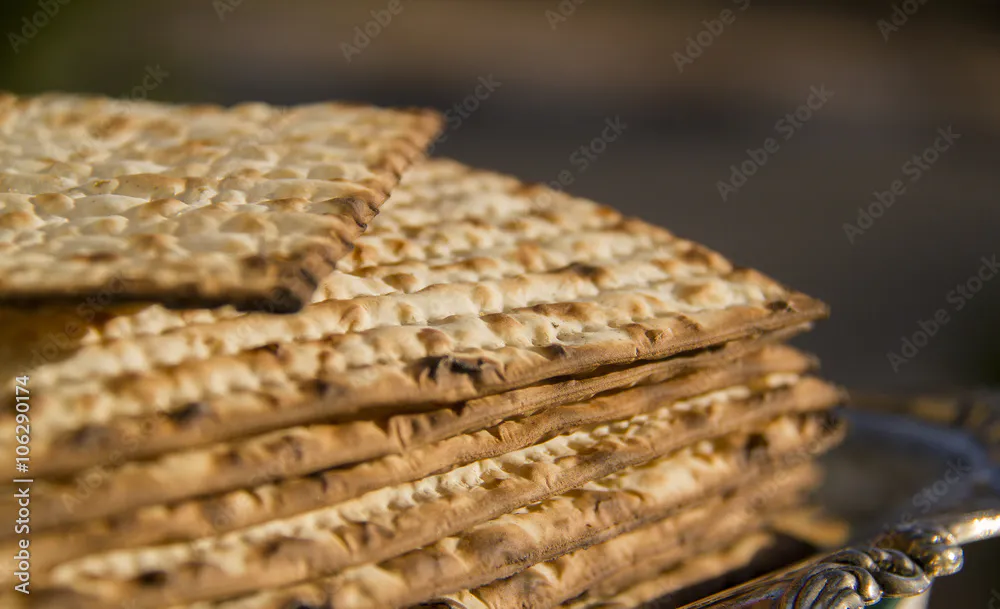
    Here’s post number four discussing a Jewish holiday. In case you missed it, I’ve covered 3 of the 7 holidays (or feasts) instituted by God in the Old Testament (catch up here for Passover, here for Pentecost, and here for Firstfruits). I’ll confess that I didn’t plan this out so I’m doing them in a weird order. But oh well. Now onto the topic of this week’s post, the Feast of Unleavened Bread. What is unleavened bread, you ask? That’s a great question since, unless you’re familiar with the process of bread-making, you don’t have much reason to know what leaven is. And yet, Jesus uses it as a negative illustration multiple times. Given that, I think it important to know what leaven is and the reason behind the feast.

    The Basics on Leaven

    Okay, first question to answer: what is leaven? In a word: fungus. But not just any kind of fungus. Leaven is a fungus that ferments sugars and is used to cause dough to rise. You may have also heard it by its arguably more common name, yeast. For those of you familiar with bread making, you know how important yeast is to the process. But you also know that you don’t need a lot! Put too much in and you’ll probably end up with a loaf that collapses shortly after baking and is gummy or spongy, etc. Not good. A little goes a long way here.

    Now before you get all excited about the possible sermon illustrations that compare leaven to how Christians ought to live out there lives (i.e., don’t shove it down people’s throats), that’s more what Jesus’ illustration with salt is about. Jesus called us the salt of the earth (see Matthew 5:13). And similar to leaven, a little salt goes a long way. However, Jesus does not call us the leaven of the world. In fact, He warns against the leaven of the Pharisees, Sadducees, and Herod. Plus Paul warns against the leaven of immorality (1 Corinthians 5:7) and legalism (Galatians 5:2-11). So what was Jesus and Paul comparing leaven to that makes it a negative? Before I answer that question, I’m going to take as step back and first talk about the Feast of Unleavened Bread.

    The Feast

    “This is a day you are to commemorate; for the generations to come you shall celebrate it as a festival to the Lord—a lasting ordinance. For seven days you are to eat bread made without yeast. On the first day remove the yeast from your houses, for whoever eats anything with yeast in it from the first day through the seventh must be cut off from Israel. On the first day hold a sacred assembly, and another one on the seventh day. Do no work at all on these days, except to prepare food for everyone to eat; that is all you may do.

    “Celebrate the Festival of Unleavened Bread, because it was on this very day that I brought your divisions out of Egypt. Celebrate this day as a lasting ordinance for the generations to come. In the first month you are to eat bread made without yeast, from the evening of the fourteenth day until the evening of the twenty-first day. For seven days no yeast is to be found in your houses. And anyone, whether foreigner or native-born, who eats anything with yeast in it must be cut off from the community of Israel. Eat nothing made with yeast. Wherever you live, you must eat unleavened bread.”

    Exodus 12:14-20 (NIV)

    Here in Exodus 12 we see a detailed outline of the Feast of Unleavened Bread. This feast begins the day after Passover – as seen in Leviticus 23:5-8. The Jews observed it for 7 days in accordance to God’s command. It was part of the commemoration of the Jews’ departure from Egypt. And as the name implies, the big deal of the festival was leaven – specifically the removal of leaven from their food and homes. No leaven could be found in their homes for the duration of the 7 day feast. And all their bread had to be made without it.

    In fact, some days before Passover, the search for leaven in the house began. By the time the Passover came, the Jews had cleared the house of even the smallest speck of leaven. And I’m getting a little ahead of myself, but here’s an interesting thought about that practice. What did Jesus do at the temple a few days before Passover? Cleared the temple. Jesus accused them of turning His Father’s house into a “den of thieves”. Given what leaven represents in the Bible, Jesus literally fulfilled one aspect of this feast by doing that. More on that in the next section.

    No Leaven in Jesus

    Going back to the question of what leaven represents, the answer is sin. Because, like sin, it only takes a little leaven to work its way through an entire batch. And when we’re talking about sin, that batch may be an individual, or an entire church community. Because of that representation, Jesus does not compare His followers to leaven. Rather He uses leaven in conjunction with the religious and political leaders.

    With this in mind, it becomes easy to see Christ in the Feast of Unleavened Bread. Jesus was sinless. No sin, no leaven. And He called Himself the “bread of life”. So this feast could be named the Feast of Jesus Christ, because being without sin and being the bread of life makes Him Unleavened Bread. Simple deductive reasoning there. This festival and Passover are very easy to find Jesus in. John the Baptist called Jesus the Lamb of God and He died during Passover when the sacrificial lambs were being slaughtered. And with this one – done around the same time as Passover – we can recognize that just as the bread used in the feast had no leaven in it, Jesus also was without sin and therefore made the perfect sacrifice for mankind’s sin and redemption.

    Back to the clearing of the temple, can you see how Jesus fulfilled the practice of cleaning a house of leaven? If leaven is sin, and the temple market made it a “den of thieves” – i.e., sinners – then Jesus cleared His Fathers house of leaven (sin). Pretty incredible when you think about it.

    Wrapping Up

    Jesus our Passover Lamb – perfect and spotless. Jesus our Unleavened Bread of Life – sinless. The Firstfruits of the Resurrection. The one who sends Holy Spirit to Reap a Harvest. Praise God. And that’s just 4 of the 7 festivals instituted by God Almighty that all point to Jesus and His plan of redemption for mankind. Incredible. Let us all remember this and be grateful for all He has done. For His great love, grace, and mercy shown to us. Amen.

    Join me next time as I find Jesus in the Feast of Tabernacles (Sukkot).

    Outro

    If you enjoyed this post, please consider doing one or all of these things. First, subscribe if you haven’t. If you have, thank you! Second, spread the word. Send these to everyone you know and encourage them to read and subscribe. This blog is purely word of mouth right now. I rely on you, my readers, to help me get more readers. And third, please consider donating. It’ll enable me to continue to offer regular posts.

    Feel free to leave a comment with any questions about what I’ve written, any additional comments about the post, or if there’s a topic you’d like me to write about. Before doing that though, be sure to check out all my posts here and see if I’ve covered it already. And if you find I’ve done it already but aren’t satisfied or still have more questions, let me know!

    Thank you for reading this! I greatly appreciate each one of you. Until next time, God bless you all!

  • Firstfruits of Many

    Firstfruits of Many

    Intro

    I’m on a roll now with Jewish holidays. I’ve talked about Passover and the connection to the Crucifixion and I’ve talked about Pentecost/Feast of Weeks (Shavuot) and the connection to the outpouring of Holy Spirit and the harvest of souls that came immediately after. Now I wish to talk about the Feast of Firstfruits (Yom HaBikkurim) and the connection to the resurrection. Side note: I’m kind of bouncing around with the holidays in terms of when they occur on the calendar, but that’s okay. I’m kind of doing it as I feel.

    The Feast

    In the book of Leviticus, God institutes the Feast of Firstfruits as such.

    The Lord said to Moses, “Speak to the Israelites and say to them: ‘When you enter the land I am going to give you and you reap its harvest, bring to the priest a sheaf of the first grain you harvest. He is to wave the sheaf before the Lord so it will be accepted on your behalf; the priest is to wave it on the day after the Sabbath. On the day you wave the sheaf, you must sacrifice as a burnt offering to the Lord a lamb a year old without defect, together with its grain offering of two-tenths of an ephah of the finest flour mixed with olive oil—a food offering presented to the Lord, a pleasing aroma—and its drink offering of a quarter of a hin of wine. You must not eat any bread, or roasted or new grain, until the very day you bring this offering to your God. This is to be a lasting ordinance for the generations to come, wherever you live.

    Leviticus 23:9-14 (NIV)

    So what was the point of this one? Similar to the Feast of Weeks, this feast celebrated a harvest and was a time of thanksgiving to God for His provision. The difference between this one and the Feast of Weeks is that the Feast of Weeks celebrated the wheat harvest while the Feast of Firstfruits celebrated the barley harvest. The priest would take a sheaf of barley and wave it before the Lord as an offering. Then all Israelites sacrificed a lamb as a burnt offering to God. No one was allowed to eat of the crop until the first portion had been brought to the priest. This acknowledged that the firstfruits belonged to God and He was the source of it all.

    The timing of this feast was right in line with Passover and the Feast of Unleavened Bread (stay tuned for this one!). In fact the exact time of when it should be celebrated has been in dispute. Leviticus says the waving of the first sheaf must occur the day after the Sabbath. However, the Pharisees and Sadducees disagreed on whether that meant the regular weekly Sabbath (favored by the Sadducees) – which would put the sheaf waving on our Saturday evening/Sunday morning – or if it was the special Sabbath of the first day of the Feast of Unleavened Bread – which could change from year to year and was favored by the Pharisees. And this disagreement continues among scholars today.

    The Fulfilment

    I already mentioned that this feast connects to the resurrection of Jesus. So how does it do that? First, let me back up a bit, I feel like I haven’t explained something rather important very well. God in His wisdom and forethought instituted various festivals for the Israelites to observe – 7 in all. And God designed each one of them to point to Jesus and the New Covenant in some way. I already went through Passover (the Crucifixion) and the Feast of Weeks/Pentecost (outpouring of Holy Spirit) and now I’m onto the Feast of Firstfruits. Make sense? Cool, let’s move on.

    The first thing to note is that despite the disagreement on when the sheaf should be waved, it seems clear from the Bible that this day fell on a Sunday – after the regular Sabbath’s day of rest. This means that Jesus rose from the dead on the day that the priest waved the sheaf as an offering to the Lord. Already this is significant. The wave offering signified that what was waved belonged to the Lord but then He released it to be used by others. Jesus presented Himself as an offering to God and the atonement that Jesus achieved was released by God to be received by us.

    Furthermore, Paul uses the word “firstfruits” to refer to Jesus and His resurrection.

    But Christ has indeed been raised from the dead, the firstfruits of those who have fallen asleep. For since death came through a man, the resurrection of the dead comes also through a man. For as in Adam all die, so in Christ all will be made alive. But each in turn: Christ, the firstfruits; then, when he comes, those who belong to him.

    1 Corinthians 15:20-23 (NIV)

    Paul refers to Jesus’ resurrection as the firstfruits. Basically saying, “Just as God raised Jesus from the dead, so shall you be.” Similarly in Romans 8:23, Paul writes that the indwelling of the Spirit is a firstfruit of the redemption of all creation (specifically our bodies).

    When God instituted the Feast of Firstfruits, He looked ahead to the day His Son would fulfill it by becoming the firstfruits of the New Covenant and redemption of all creation.

    Wrapping Up

    Praise God for the resurrection! Am I right? As Paul wrote in 1 Corinthians, without the resurrection our faith is useless (see 1 Corinthians 15:13-17). Don’t gloss over the power of Jesus’ resurrection. We tend to put a lot of emphasis on the Cross and the weight of the sin He carried. But the resurrection demonstrated that God accepted Jesus’ sacrifice on the cross. I love it.

    I also love the amount of care God put into the holidays He gave the Israelites in the Old Testament. Every one of them a picture of Jesus and the New Covenant. Most people missed it when Jesus walked the earth and most people don’t recognize it today. That’s why I’m taking the time to go through them all. The connections amaze me. Some more than others. So stay tuned for the next one: The Feast of Unleavened Bread!

    Outro

    If you enjoyed this post, please consider doing one or all of these things. First, subscribe if you haven’t. If you have, thank you! Second, spread the word. Send these to everyone you know and encourage them to read and subscribe. This blog is purely word of mouth right now. I rely on you, my readers, to help me get more readers. And third, please consider donating. It’ll enable me to continue to offer regular posts.

    Feel free to leave a comment with any questions about what I’ve written, any additional comments about the post, or if there’s a topic you’d like me to write about. Before doing that though, be sure to check out all my posts here and see if I’ve covered it already. And if you find I’ve done it already but aren’t satisfied or still have more questions, let me know!

    Thank you for reading this! I greatly appreciate each one of you. Until next time, God bless you all!

  • The Pentecost Harvest

    The Pentecost Harvest

    Intro

    Easter is now over. And with that the next major Christian holiday is Pentecost Sunday. Pentecost Sunday occurs 7 weeks after Easter. And while I probably don’t have to tell you what occurred on that day in Christian history (though if you are new to the faith I will be sure to explain it for you), I’m willing to bet you aren’t fully aware of the Old Testament origins of Pentecost as a Jewish harvest festival. And if you want to be technical, part of what we as Christians recognize as happening on Pentecost is a harvest of sorts. Just not in the agricultural sense.

    Shavuot

    You might be thinking, “What did I just read?”, “What is Shavuot?”. Shavuot is the Hebrew word for the festival that occurs on the day we call “Pentecost”. It is Biblically called the Feast of Weeks. In terms of timing, the Israelites celebrated Passover, counted 49 days – or 7 weeks, hence the name – and then on the 50th day, celebrated this feast (see Leviticus 23:15-16 and Deuteronomy 16:9-10). Because it occurs on the 50th day after Passover, it also got the Greek name, Pentecost (which means “fiftieth”) – as we see in Acts 2:1.

    Shavuot is an agricultural festival related to the first fruits of the wheat harvest happening at this time of year. Consequently, part of the offerings brought to God included two loaves of bread baked with the first fruits of the harvest. In addition, they offered a bull, rams, lambs, a goat for a sin offering and more lambs for a peace offering (Leviticus 23:17-19). It was also one of the festivals that required mass pilgrimage to Jerusalem. So the city would be packed year after year on this day.

    As tends to happen, Shavuot also became associated with something else important from Jewish history. The giving of the law. Some Jewish traditions hold that 50 days after the first Passover in Egypt, the Israelites arrived at Mt. Sinai. And in fact, the Bible does say “in the third month” after leaving Egypt they arrived at Mt. Sinai. And 50 days after Passover – middle of the first month – would have been “in the third month” (third month of the Jewish year, not third month after leaving Egypt, just to be clear). Whether that’s true or not, Pentecost became a holiday not only for the wheat harvest, but also to remember the giving of the law at Mt. Sinai.

    Bonus: The Jubilee Year Connection

    One quick note, is that Pentecost and the Jewish year of Jubilee both had the number 50 attached to them. Pentecost was celebrated 50 days after Passover and every 50th year was the year of Jubilee. During this year, debts were cancelled, enslaved Israelites were set free, and the land was not worked. No sowing, plowing, reaping, etc. Consequently, the number 50 itself had connotations with freedom and rest.

    And as you’ll see later, all these things I mention here become reflected on the day God poured out Holy Spirit on the disciples.

    Pentecost of Fire

    Jumping ahead to the New Testament, 50 days after the Passover at which Jesus was crucified, all the disciples (120 in all) were in an upper room praying. And they were expectant. How do I know they were expectant? Take a look at what Jesus said before He ascended.

    On one occasion, while he was eating with them, he gave them this command: “Do not leave Jerusalem, but wait for the gift my Father promised, which you have heard me speak about. For John baptized with water, but in a few days you will be baptized with the Holy Spirit.”

    Acts 1:4-5 (NIV – italics added)

    At this time, it was probably around 9 days since Jesus said these words to them. Perhaps less. So they were all eagerly awaiting this promised gift of Holy Spirit to be poured out upon them. They were probably planning on taking advantage of all the pilgrims who were in Jerusalem for Pentecost and witnessing – seems logical. Then God did something amazing. Take a look at what Luke writes in Acts 2.

    When the day of Pentecost came, they were all together in one place. Suddenly a sound like the blowing of a violent wind came from heaven and filled the whole house where they were sitting. They saw what seemed to be tongues of fire that separated and came to rest on each of them. All of them were filled with the Holy Spirit and began to speak in other tongues as the Spirit enabled them.

    Acts 2:1-4 (NIV)

    The very thing they’d been waiting for that Jesus told them would come finally came! Filled with Holy Spirit they preached (in all the languages represented by all the pilgrims) to all who would listen and 3,000 people got saved that day.

    This is the Pentecost that Christians remember and celebrate. But what’s interesting are all the little connections between Pentecost the harvest festival and Pentecost the day Holy Spirit was poured out.

    From Wheat to Fire

    Why did God choose Pentecost to pour out Holy Spirit? Well, here’s a few ideas that show how the Christian Pentecost fulfills the Old Testament Shavuot.

    The Waiting Period

    In the Feast of Weeks, there’s this period of anticipation, a waiting between Passover and this feast. This symbolized the period from the Exodus from Egypt to the entering of Canaan when they could offer God the first fruits of their land. Similarly, in the NT the disciples had to wait for the promise of Holy Spirit to come upon them before they went out to fulfill the Great Commission.

    The First Fruits

    The Jews offered God the first fruits of their wheat harvest on the day of Pentecost. They witnessed to the fact that all of it belongs to God. And in a twist, the NT Pentecost is about God giving the church the first fruits of Holy Spirit (see Romans 8:23Ephesians 1:13-14) rather than us bringing anything to Him. In His love, God bears witness to us that we belong to Him.

    Fire and Speech

    At Sinai, God spoke to the Israelites “out of the fire” (Deuteronomy 4:12) that His presence created on the mountain. The Bible describes thunder, lightning, a thick cloud of smoke, and blazing fire. What a sight! And then to hear the voice of God come out of that…no wonder the Israelites trembled.

    In the NT, Holy Spirit descended and separated as “tongues of fire” (Acts 2:3) and rested upon each on of them. And at that time they became empowered to speak in tongues. Do you see the similarities? The presence of God made manifest as fire and supernatural, divine, speech coming forth as a result. The biggest difference is that at Sinai God spoke directly from the fire whereas in the upper room, God spoke through the disciples. That’s next level!

    Covenants

    This one is pretty quick and simple. The Jewish people associated Pentecost with the giving of the law, the covenant, at Mt. Sinai. Similarly the outpouring of Holy Spirit marked the beginning of the New Covenant.

    The Jubilee Connection

    I’m back to the Year of Jubilee. I told you that everything I referenced would come back. Jubilee represented freedom from bondage, rest from labor, and the gift of the Holy Land. When Jesus poured out Holy Spirit, that brought with it freedom from Spiritual bondage, rest in Jesus, and the gift of the Kingdom of God. Pretty remarkable, don’t you think?

    The Harvest

    The last, but not least, connection I want to point out is the Harvest. I’ve said it multiple times that the Feast of Weeks is a feast of harvest. And on this day of Pentecost when God poured out Holy Spirit, a harvest of souls happened. 3,000 to be exact. And you know what? That number 3,000 has an Old Testament connection also. When Moses came down from the mountain carrying the Ten Commandments the first time, he found a lot of the people worshipping a golden calf. Look at what happened as a result of that.

    Then he said to them, “This is what the Lord, the God of Israel, says: ‘Each man strap a sword to his side. Go back and forth through the camp from one end to the other, each killing his brother and friend and neighbor.’” The Levites did as Moses commanded, and that day about three thousand of the people died.

    Exodus 32:27-28 (NIV)

    Did you catch the number? 3,000 Israelites died because they worshipped the golden calf. How many Jewish people received Jesus on the day of Pentecost? 3,000. Talk about redemption. These numbers aren’t by accident. 3,000 rejected God and perished at Mt. Sinai but God made sure there was 3,000 who were ready to receive Him on the day Holy Spirit was poured out. What a God we serve!

    Wrapping Up

    I said this in my post about Passover and I’ll say it again. God knew what He was doing when He instituted the Feast of Weeks. He knew the Israelites would connect it with the giving of the law and He deliberately set it up with 50 days to create the connection to the Year of Jubilee. God doesn’t do these things by accident. He plans them out.

    I think our takeaway from this is that any seed that God sows in you and through you will bear a harvest. Maybe not right away, but it will come. Just keep waiting and being patient.

    Outro

    If you enjoyed this post, please consider doing one or all of these things. First, subscribe if you haven’t. If you have, thank you! Second, spread the word. Send these to everyone you know and encourage them to read and subscribe. This blog is purely word of mouth right now. I rely on you, my readers, to help me get more readers. And third, please consider donating. It’ll enable me to continue to offer regular posts.

    Feel free to leave a comment with any questions about what I’ve written, any additional comments about the post, or if there’s a topic you’d like me to write about. Before doing that though, be sure to check out all my posts here and see if I’ve covered it already. And if you find I’ve done it already but aren’t satisfied or still have more questions, let me know!

    Thank you for reading this! I greatly appreciate each one of you. Until next time, God bless you all!

  • Jesus The Passover Lamb

    Jesus The Passover Lamb

    Intro

    Easter has just passed us by. During this time we remember His death and resurrection. We remember that, much like the sacrifices of the Old Testament were made to pay for sin, Jesus’ sacrifice was made to pay for our sin. In this, I remember John the Baptist calling Jesus “The Lamb of God who takes away the sin of the world.” (John 1:29). And this fits with the idea of Jesus being a sacrifice like the sacrifices that the Jews were required to do. But this begs the question: Why a lamb? Why not a bull or any of the other animals? As my title kind of indicates, it all has to do with a particular Jewish holiday. So today I’m going to show the parallels between Passover and the Crucifixion and show how Jesus is the ultimate Passover Lamb.

    Passover Summary

    Before I dive into the parallels, I’m going to give a quick summary of the start of Passover found in Exodus 12. That’ll give a clearer picture of why Jesus is the ultimate Passover lamb. The Egyptians enslaved the Israelites and after a handful of generations of oppression, God raised up Moses to lead them out. But Pharaoh was stubborn and refused. Consequently, God sent a series of plagues. After the first 9, God sent a warning to the Israelites. Unlike the other 9 plagues, the 10th – the death of the firstborn – would sweep through both the Egyptian and Israelite households. However, in His great mercy, God provided a way for His people to avoid the final plague. They were to take a lamb, kill it, and spread its blood on the doorposts of their homes and the angel of death would pass over their house.

    Parallels

    Just by reading my summary, I’m sure you can draw a pretty obvious parallel in that in both scenarios you’ve got guilty people (Israelites who were no saints and then all of humanity who are also terrible sinners) who are under a penalty and yet God provides a means of salvation because of His great love and mercy. So, that snippet alone demonstrates an important aspect to Jesus being the Passover lamb for all of humanity. But there is so much more. Let’s dive in.

    Mature Male

    According to Exodus, the lamb must be a 1 year old male. For a lamb, this is the age of maturity.

    The animals you choose must be year-old males without defect, and you may take them from the sheep or the goats.

    Exodus 12:5 (NIV)

    Likewise, Jesus was born as a man and was fully mature when He was crucified – Luke records Jesus was about 30 when He started (Luke 3:23) and had a ministry of about 3.5 years, which made Him about 33.5 years of age when He died.

    No Broken Bones

    As soon as you read this heading, you’re probably thinking of how you know none of Jesus’ bones were broken. That’s a pretty common thing to hear when talking about the crucifixion.

    These things happened so that the scripture would be fulfilled: “Not one of his bones will be broken,”

    John 19:36 (NIV)

    But did you know that the Passover lamb also could not have any of its bones broken?

    Do not break any of the bones.

    Exodus 12:46b (NIV)

    Admittedly this is one I forgot about. What’s great is the specificity God used and then He ensured that Jesus fulfilled all that specificity.

    Spotless

    If you reference Exodus 12:5 again (I have it above under “Mature Male”), you’ll see that it also states the lamb must be “without defect”. A couple other very common ways to describe this is “without blemish” or “spotless”. God required perfection for the Passover lamb. And not just for this one instance, but every year when the Jews celebrate it. It represented salvation.

    What about Jesus? Based on that paragraph you can say that Jesus’ sacrifice was for salvation. And we’ve also heard all the time that He was a sinless, perfect human being.

    “He committed no sin, and no deceit was found in his mouth.”

    1 Peter 2:22 (NIV)

    To take this parallel even further, the priests were required to carefully examine every single lamb brought into the temple for the sacrifices. And what happened to Jesus before His crucifixion? Pilate and Herod both examined Jesus and found no cause for Him to be sentenced to death.

    Then Pilate announced to the chief priests and the crowd, “I find no basis for a charge against this man.”

    Luke 23:4 (NIV)

    Pilate called together the chief priests, the rulers and the people, and said to them, “You brought me this man as one who was inciting the people to rebellion. I have examined him in your presence and have found no basis for your charges against him. Neither has Herod, for he sent him back to us; as you can see, he has done nothing to deserve death. Therefore, I will punish him and then release him.”

    Luke 23:13-16 (NIV)

    For the third time he spoke to them: “Why? What crime has this man committed? I have found in him no grounds for the death penalty. Therefore I will have him punished and then release him.”

    Luke 23:22 (NIV)

    And this is just Luke’s account. Matthew’s account in Matthew 27 records that Pilate washed his hands declaring that he was innocent of Jesus’ blood. Jesus clearly fulfilled the requirement that the Passover lamb be perfect.

    Substitution

    In the story of the first Passover, the Israelites killed the lamb as a substitute for the lives of their firstborn. Jesus died as a substitute for us. We all deserve death and separation from God for eternity. But Jesus took that punishment upon Himself when He died on that Cross.

    The Blood on the Doorposts

    Even the placement of the blood on the doorposts has a parallel.

    Take a bunch of hyssop, dip it into the blood in the basin and put some of the blood on the top and on both sides of the doorframe. None of you shall go out of the door of your house until morning.

    Exodus 12:22 (NIV)

    Applying the blood to the top and sides of the door frame forms the sign of the cross. And not only that, but you also get the sign of the cross when the blood is dripping from the top and down the sides.

    An additional thing found in this verse is the hyssop plant. Look at what John says in his gospel.

    A jar of wine vinegar was there, so they soaked a sponge in it, put the sponge on a stalk of the hyssop plant, and lifted it to Jesus’ lips.

    John 19:29 (NIV)

    Even the plant used to apply the blood to the doorposts had a parallel in the crucifixion!

    Freedom From Slavery

    The death of the firstborn convinced Pharaoh to let the Israelites go. That first Passover led to their freedom from physical enslavement. Likewise, Jesus death leads to our freedom from spiritual enslavement.

    Therefore, there is now no condemnation for those who are in Christ Jesus, because through Christ Jesus the law of the Spirit who gives life has set you free from the law of sin and death.

    Romans 8:1-2 (NIV)

    Timing

    As if all this wasn’t enough, do you know when Jesus died? During the time that the lambs were slaughtered for Passover. Talk about divine timing! In addition, he entered Jerusalem on the donkey the same day that the lambs were brought into the city in preparation for the Passover. For Passover, the Jews brought the lamb into their home for a few days before killing it. Likewise, Jesus entered the city a few days before His death. On the same day. Crazy right?

    Wrapping Up

    This is a little bit of a shorter post, but it’s a powerful one. There are so many parallels between the Passover and Jesus’ Crucifixion. It just goes to show how much thought God put into it all and how much He wants His chosen people to see all the parallels and recognize Jesus as the promised Messiah – the conquering King, yes, but more importantly, the ultimate Passover Lamb – the one who saves from sin and sets us free for all eternity.

    So today – though Easter is over – let us remember Jesus’ sacrifice as the ultimate Passover Lamb.

    Outro

    If you enjoyed this post, please consider doing one or all of these things. First, subscribe if you haven’t. If you have, thank you! Second, spread the word. Send these to everyone you know and encourage them to read and subscribe. This blog is purely word of mouth right now. I rely on you, my readers, to help me get more readers. And third, please consider donating. It’ll enable me to continue to offer regular posts.

    Feel free to leave a comment with any questions about what I’ve written, any additional comments about the post, or if there’s a topic you’d like me to write about. Before doing that though, be sure to check out all my posts here and see if I’ve covered it already. And if you find I’ve done it already but aren’t satisfied or still have more questions, let me know!

    Thank you for reading this! I greatly appreciate each one of you. Until next time, God bless you all!
  • Saved – or not?

    Saved – or not?

    Intro

    I’m hitting on a long debated question with no end in sight. That question being “Can a person lose their salvation?” It’s also known as the “Once saved always saved” question. And I’m going to be up front with you. I don’t think anyone can actually know for sure the answer to this question. In the end, I believe only God knows the whole truth. But that’s okay. So long as we trust in Him and seek Him, we can become sure of our own personal salvation. And God doesn’t call us to ensure the salvation of others, He calls us to bring the gospel to others and let Him work the salvation in them. We are not the judges of another’s salvation, God is.

    With all that, the structure for this post will be to put forth the question in greater detail and then present both sides of the debate. I will be as objective as possible and will wait until the end to present my personal opinion. But I will again be up front and say that I could be wrong. I am not so prideful that I believe I have all the right answers – though that has been a struggle of mine, see my post about that very topic. Now that I’ve got all the fun disclaimers out of the way, let’s get started.

    The Question

    First I’m going to elaborate on the question “Can a person lose their salvation?”. It often starts out something like this. A person has an encounter with God and answers a call to salvation. They pray and are now thought to be saved. However, in time they abandon their faith and walk a road diametrically opposed to God and His Word. By the fruit they are producing people who never knew their story would not assume they are a Christian at all. And as far as the Christians who do know them, they wonder if this person will spend eternity in Heaven or Hell. This is a tricky situation to navigate – especially when talking to any loved ones of such a person.

    Now the question becomes, was this person truly saved at that moment they prayed? And if so, are they still saved and going to Heaven despite their lifestyle and wanting nothing to do with God? Or did they lose their salvation and are now on their way to Hell for eternity?

    Now that I’ve set the stage, I’m going to present the arguments of both sides with their strengths and their weaknesses. The opposing doctrines are called Eternal Security (once saved always saved) and Conditional Security (can lose salvation). When referring to people who hold to these viewpoints, I’m going to use the terms Eternalists and Conditionalists – just for simplicity’s sake. Okay, here we go.

    Eternal Security

    To expand a bit on the doctrine of Eternal Security, it claims that once a person receives salvation through faith in Jesus, they are eternally secure and destined for Heaven. I’m going to go over the key points and related Scripture passages in an objective manner. Everything I write here that’s not Scripture will be paraphrases and summaries of the arguments I found in my research.

    All Scripture is from the NIV.

    Biblical Foundation

    My sheep listen to my voice; I know them, and they follow me. I give them eternal life, and they shall never perish; no one will snatch them out of my hand. My Father, who has given them to me, is greater than all; no one can snatch them out of my Father’s hand.

    John 10:27-29

    To the Eternalist, once a person has been saved, they cannot lose that salvation because no one can overcome the Father to remove them from His hand.

    For I am convinced that neither death nor life, neither angels nor demons, neither the present nor the future, nor any powers, neither height nor depth, nor anything else in all creation, will be able to separate us from the love of God that is in Christ Jesus our Lord.

    Romans 8:38-39

    Bolstering the argument made for previous verse, Paul emphasizes that nothing can separate us from the love of God.

    And you also were included in Christ when you heard the message of truth, the gospel of your salvation. When you believed, you were marked in him with a seal, the promised Holy Spirit, who is a deposit guaranteeing our inheritance until the redemption of those who are God’s possession—to the praise of his glory.

    Ephesians 1:13-14

    A couple arguments I found about this passage. Only an authorized person can break a seal. So if God places Holy Spirit as a seal, then God alone is the one who can break it, not us. In addition, a deposit in this passage is like the earnest money when buying a house. It’s a guarantee that I will purchase the house at full price. For the believer the guarantee is for the rewards they will receive.

    Being confident of this, that he who began a good work in you will carry it on to completion until the day of Christ Jesus.

    Philippians 1:6

    God is the one who initiates and finishes our salvation. This gives believers confidence that He will do what He said He will do.

    To him who is able to keep you from stumbling and to present you before his glorious presence without fault and with great joy

    Jude 24

    It is up to Jesus, not us, to present us before God. Believers are eternally secure because of His ability to keep us, not in our ability to maintain our own salvation.

    Arguments and Explanations

    In this section, I’ll lay out some arguments and explanations from Eternalists as to what they believe.

    “”

    This position points to the promises found in Scripture and testifies that those who are genuinely in Christ have a secure standing before God. This view rests on passages declaring the irrevocable nature of God’s gift of salvation, the sealing work of the Holy Spirit, and the believer’s eternal position in Christ.

    Salvation stands on God’s sovereign initiative, rooted in grace. By grace, believers are forgiven and granted life in Christ (Ephesians 2:8-9). This gift is not earned; it is received through faith. Because God is the origin of that work, the outcome ultimately rests in His hands rather than on shifting human merit or performance.

    However, humans must respond in faith. True faith produces transformation over time, yet the anchor of one’s security remains in the finished work of Christ on the cross (Romans 5:1-2). Through ongoing trust that aligns with obedience, believers experience assurance-not because they never stumble, but because Christ’s atoning sacrifice is sufficient to cover sin’s penalty.

    “”

    “Does the Bible support eternal security?” BibleHub.com
    https://biblehub.com/q/does_the_bible_support_eternal_security.htm Accessed March 22, 2026

    “”

    Ephesians 4:30 tells us that believers are “sealed for the day of redemption.” If believers did not have eternal security, the sealing could not truly be unto the day of redemption, but only to the day of sinning, apostasy, or disbelief. John 3:15-16 tells us that whoever believes in Jesus Christ will “have eternal life.” If a person were to be promised eternal life, but then have it taken away, it was never “eternal” to begin with. If eternal security is not true, the promises of eternal life in the Bible would be in error.

    “”

    “Eternal security – is it biblical?” GotQuestions.org
    https://www.gotquestions.org/eternal-security.html Accessed March 22, 2026

    “”

    Salvation depends upon God to bring it to pass, not us. Nothing, not even our sin, can frustrate the eternal and sovereign purpose of God who determined to save us by grace through faith in His Son. Since God’s holiness has been satisfied by the death of Christ, He can be just and the justifier of those who receive His Son by faith.

    Sin does not change our relationship to God as His children though it does affect our fellowship, the intimacy of our walk with God, our ability to serve Him, and the rewards we will receive in the future kingdom.

    Regeneration refers to the impartation of spiritual and eternal life which makes us new creatures in Christ. This can never change. First, it is based on the work of the Son, not our works. And second, as physical birth makes one a child of his parents forever, so spiritual birth does the same.

    This argument is simply this. The New Testament plainly states we are saved by grace through faith in the person and work of Christ, and that salvation is not of human works or works of righteousness which we have done. If, however, having put our trust in the person and work of Christ, we can lose our salvation by what we do or do not do, then in the final analysis, we are saved by works.

    “”

    “Assurance of Eternal Security” Bible.org
    https://bible.org/seriespage/14-assurance-eternal-security Accessed March 22, 2026

    Conditional Security

    To expand a bit on the doctrine of Conditional Security, it claims that a person who receives salvation through faith in Jesus, can lose it through unbelief and rebellion against God. I’m going to go over the key points and related Scripture passages in an objective manner. Everything I write here that’s not Scripture will be paraphrases and summaries of the arguments I found in my research.

    All Scripture is from the NIV.

    Biblical Foundation

    There are several passages warning against falling away from the faith.

    See to it, brothers and sisters, that none of you has a sinful, unbelieving heart that turns away from the living God. But encourage one another daily, as long as it is called “Today,” so that none of you may be hardened by sin’s deceitfulness.

    Hebrews 3:12-13

     My brothers and sisters, if one of you should wander from the truth and someone should bring that person back, remember this: Whoever turns a sinner from the error of their way will save them from death and cover over a multitude of sins.

    James 5:19-20

    Extra argument I found about the James 5 passage, bringing a person back into the fold saves them from death. This is not a physical death, but a death of the spirit/soul implying that a soul made alive by salvation can experience death.

    There are other passages that indicate that salvation remains only by continuing to persevere in faith and obedience (take note of the conditional “if” statements in these passages).

    Once you were alienated from God and were enemies in your minds because of your evil behavior. But now he has reconciled you by Christ’s physical body through death to present you holy in his sight, without blemish and free from accusation— if you continue in your faith, established and firm, and do not move from the hope held out in the gospel. This is the gospel that you heard and that has been proclaimed to every creature under heaven, and of which I, Paul, have become a servant.

    Colossians 1:21-23

    But Christ is faithful as the Son over God’s house. And we are his house, if indeed we hold firmly to our confidence and the hope in which we glory.

    Hebrews 3:6

    We have come to share in Christ, if indeed we hold our original conviction firmly to the very end.

    Hebrews 3:14

    Other passages contain exhortations to examine oneself to ensure your own salvation.

    Examine yourselves to see whether you are in the faith; test yourselves. Do you not realize that Christ Jesus is in you—unless, of course, you fail the test?

    2 Corinthians 13:5

    Therefore, my brothers and sisters, make every effort to confirm your calling and election. For if you do these things, you will never stumble

    2 Peter 1:10

    Watch your life and doctrine closely. Persevere in them, because if you do, you will save both yourself and your hearers.

    1 Timothy 4:16

    The Conditionalist points out that such warnings, conditional statements, and exhortations make no sense if it were not possible to fall away and lose salvation.

    Arguments and Explanations

    In this section, I’ll lay out some arguments and explanations from Conditionalists as to what they believe.

    “”

    Perhaps more mis-understood and mis-represented than Calvinism is the theological belief and the Biblical teaching that a Believer is Secure in Christ based on a condition.  What is the condition?  Is it get saved, sin, then lose your salvation everyday?  Certainly not!  This truly would be a miserable condition wouldn’t it?  Some claim that the focus turns from Christ to yourself in examining every last detail of your performance thus making you fall into the trap of some sort of works salvation.  Does this sound like the ‘good news’ to you?  Not me!  I should go ahead and tell you that I too am a Conditional Security Believer and I affirm that I am saved by grace through faith alone.  I have become a recipient of God’s grace through my faith in the work of Christ alone and I remain in God’s grace through this same faith alone.  It is Christ plus nothing.

    Arminians believe that “It is abundantly evident from the Scriptures that the believer is secure.” Furthermore, believers have assurance in knowing there is no external power or circumstance that can separate them from the love of God they enjoy in union with Christ. Nevertheless, Arminians see numerous warnings in Scripture directed to genuine believers about the possibility of falling away in unbelief and thereby becoming severed from their saving union with God through Christ. Arminians hold that if a believer becomes an unbeliever (commits apostasy), they necessarily cease to partake of the promises of salvation and eternal life made to believers who continue in faith and remain united to Christ. Therefore, Arminians recognize the importance of warning believers about the danger of apostasy and exhorting them to persevere in faith as a means of building them up in their faith and encouraging them to mature spiritually, which is a sure and biblical way to avoid apostasy.

    Marshall concludes: “The New Testament contains too many warnings about the danger of sin and apostasy for us to be complacent about these possibilities…. These dangers are real and not ‘hypothetical.’” Methodist scholar Ben Witherington would add: “The New Testament suggests that one is not eternally secure until one is securely in eternity. Short of that, there is the possibility of apostasy or rebellion against God by one who has believed in Christ. Apostasy, however, is not to be confused with the notion of accidentally or unconsciously “falling away.” Apostasy is a conscious, wilful rebellion against God . . . . Unless one commits such an act of apostasy or rebellion, one need not worry about one’s salvation, for God has a firm grip on the believer.”

    “”

    “Conditional Security of the Believer” Drews2CentsForYou
    https://drews2centsforyou.wordpress.com/2011/05/17/conditional-security-of-the-believer/ Accessed March 22, 2026

    “”

    Additionally, believers can “fall away from the faith:”

    But the Spirit explicitly says that in later times some will fall away from the faith, paying attention to deceitful spirits and doctrines of demons. (1 Tim 4:1)

    One cannot fall away from something without first having it, just as one cannot leave a place to which they have never been. Only Christians can fall away from faith. This departure from faith (that Hebrews 6 and other passages warn us against) must be man’s choice since God has promised not to change His mind. God will never stop believing. Only we can do so.

    Faith is like a bucket placed under a faucet that freely pours out the living water of grace. The bucket does not conjure up the water; it simply receives. Still, if the bucket departs from its position that benefits from the water’s flow, it will no longer receive. Those who depart from the faith forfeit the salvation that is only received by faith.

    The conclusion of this is that if one in good standing rebels, stubbornly persisting in a disobedient lifestyle, they are no longer part of the faith and no longer Christians. They have “fallen away from the faith” (1 Timothy 4:1). They have departed from Christianity. Please note that this involves much more than occasional falling. Falling away is a much more grievous thing than occasional falling. It is a stubborn, hardened, rebellion against God.

    “”

    “Is Eternal Security Conditional or Unconditional?” Apologetics Index
    https://www.apologeticsindex.org/3046-conditional-security Accessed March 22, 2026

    Criticisms

    Now in this section I bring up a couple popular criticisms of both positions and responses to those criticisms.

    Eternal Security

    1. Some people feel that Eternal Security gives people a license to sin.
      • Response from aforementioned reference to BibleHub article.
      • “Scripture counters that those who truly love Christ demonstrate obedience (John 14:15). Moreover, the Holy Spirit convicts of sin (John 16:8). A believer who deliberately and unrepentantly pursues sin calls into question whether they experienced genuine conversion (1 John 2:19).”
    2. Why else would there be warnings against apostasy if it were not possible to lose salvation?
      • Response from GotQuestions.org https://www.gotquestions.org/apostasy-salvation.html
      • “The passages warning against apostasy serve two primary purposes. First, they exhort everyone to be sure of their salvation. One’s eternal destiny is not a trifling matter…The second purpose for the Bible’s warnings against apostasy is to equip the church to identify apostates. They can be known by their rejection of Christ, acceptance of heresy, and carnal nature (2 Peter 2:1–3).”

    Conditional Security

    1. Risk of works-based salvation
      • In my research, Conditionalists time and again acknowledge that we cannot perform works to achieve salvation and the only reason we can lose salvation is by abandoning faith – they surmise that one needs faith to receive salvation, so by abandoning faith it logically follows that you can lose that salvation.
    2. Undermines assurance
      • I referenced this one earlier.
      • “Arminians believe that “It is abundantly evident from the Scriptures that the believer is secure.” Furthermore, believers have assurance in knowing there is no external power or circumstance that can separate them from the love of God they enjoy in union with Christ.” Drews2Cents

    Additional Information

    There is so much out there I can’t squeeze into this. I’m going to summarize some more stuff I found.

    1. Both believe God orchestrated salvation and that the believer receives it by faith through grace alone.
    2. Conditionalists define those who commit apostasy as those who received in faith and then turned their backs on God and rejected their faith – thus losing their salvation.
    3. Eternalists define those who commit apostasy as those who merely pretended to be believers. They talked the talk, but never received salvation by faith. So when they fall away from the faith, they are merely showing their true colors.
    4. Both acknowledge backsliding as different than apostasy in that it’s occasional sinning and not permanent rejection.
    5. Conditionalists do not believe that occasional backsliding causes one to lose salvation, only rebellion and rejecting their faith (this answers another common criticism of Conditional Security – Which sin will end salvation?).
    6. The people who cry “Lord, Lord, did we not…” are people who never had relationship or faith as indicated by Jesus’ response “I never knew you.” So this cannot be used to support Conditional Security.
    7. Conditionalists say that people receive salvation by faith and through faith they continue to walk with God. So when a person rejects that faith and rejects that relationship with God, how can they still be saved?
    8. Eternalists believe God holds our salvation and perseverance of faith no matter our choices. Conditionalists believe that God holds our salvation no matter our choices, unless our choice is to stop letting God into our lives and reject Him and His salvation.
    9. Both sides claim to have eternal assurance of salvation. For the Conditionalist, willful rejection negates that assurance.
    10. Eternalists focus on God’s ability to hold us. Conditionalists focus on that and our ability to choose/reject God.

    My Opinion

    I promised at the beginning I would give my opinion – with the caveat that I could be wrong. In the end, I lean a bit more towards Conditional Security.

    On the one hand, the idea of Eternal Security sounds really nice. Not having to fear losing salvation or your place in Heaven – no matter what. And the arguments that those who fall away never received salvation through faith to begin with makes sense (see 1 John 1:19 for a passage that supports this position).

    However, the arguments that this can lead to people being morally lax is valid. By the same token, though, the arguments that Conditional Security can lead to a works-based salvation is also valid.

    And Conditional Security answers the question of why so many passages exist regarding the perseverance of faith and warnings against falling away.

    And God shows us time and again that He will not override our free will. He gave us choice and He gave us the ability to choose to have faith. So if we choose to have faith (“without faith it is impossible to please God” Hebrews 11:6) and receive salvation, He comes right into that relationship. But what should happen if we choose to abandon that faith? Will God say, “Sorry you’re stuck with me for eternity”? That doesn’t mesh with my understanding of Scripture.

    My Conclusion

    In conclusion, I lean toward Conditional Security. But regardless of which is true, I know I received my salvation by faith through the grace of God by the work of Jesus on the cross and did nothing to earn it. I am personally secure in Christ and choose to follow Him every day, seeking to draw closer in my relationship with Him. And no external power has the ability to separate me from God.

    I also acknowledge that the church houses people who have a profession of faith and yet no heart change. And many of these people probably believe they are saved when they are not.

    Final Statements

    Both sides agree with the statements I just made in my conclusion. In fact, these two viewpoints agree on more than they disagree. The ultimate question surrounds apostasy and whether that exclusively belongs to people who profess faith without true heart change, or if truly saved people can reject their faith and lose their salvation. And in either case, only God knows their hearts. It’s not my place to say if a person lost their salvation or were never saved to begin with. In either case, God calls me to bring that person back into the fold if possible.

    The other major difference surrounds responsibility. Both sides acknowledge that God holds us securely in His hand when we come to salvation. For the Eternalist, that’s it. Now God holds us for all of eternity and nothing changes that – because if we commit apostasy than that shows we never received salvation in the first place. However, the Conditionalist claims we have a responsibility to continue to have faith and allow God to hold us. By rejecting His hold, we reject the eternal security He offers us. To be sure, if this happens God will pursue us relentlessly – perhaps more than He did before we received salvation. And praise God He pursues us – even those of us still in the faith. He never stops that pursuit.

    Wrapping Up

    Hoo boy. This has been quite the ride. Admittedly I hadn’t known a whole lot beyond the surface-level arguments of either side until I started working on this blog. And I highly encourage you to read the articles I posted. Be forewarned, some are a bit dense. And please remember, do not try and judge another person’s salvation. Only God can do that. Pray for other’s whose salvation you may be uncertain of. If given the opportunity, lovingly correct and point people to Jesus. Even those who commit apostasy can be brought back into the faith – James 5:19-20 makes that clear.

    As I said at the beginning, ultimately only God knows the whole truth about this topic. I don’t think it’s black and white enough to come down hard on one side or the other. And the most godly position any of us can take on anything that isn’t clearly laid out in Scripture is being humble enough to admit we might be wrong on whichever side we agree with. Though if you genuinely don’t know which to believe, that’s okay too. Admit that. Honesty is the best policy. Until next time, God Bless.

    Outro

    If you enjoyed this post, please consider doing one or all of these things. First, subscribe if you haven’t. If you have, thank you! Second, spread the word. Send these to everyone you know and encourage them to read and subscribe. This blog is purely word of mouth right now. I rely on you, my readers, to help me get more readers. And third, please consider donating. It’ll enable me to continue to offer regular posts.

    Feel free to leave a comment with any questions about what I’ve written, any additional comments about the post, or if there’s a topic you’d like me to write about. Before doing that though, be sure to check out all my posts here and see if I’ve covered it already. And if you find I’ve done it already but aren’t satisfied or still have more questions, let me know!

    Thank you for reading this! I greatly appreciate each one of you. Until next time, God bless you all!