

Intro
I’m on a roll now with Jewish holidays. I’ve talked about Passover and the connection to the Crucifixion and I’ve talked about Pentecost/Feast of Weeks (Shavuot) and the connection to the outpouring of Holy Spirit and the harvest of souls that came immediately after. Now I wish to talk about the Feast of Firstfruits (Yom HaBikkurim) and the connection to the resurrection. Side note: I’m kind of bouncing around with the holidays in terms of when they occur on the calendar, but that’s okay. I’m kind of doing it as I feel.
The Feast
In the book of Leviticus, God institutes the Feast of Firstfruits as such.
The Lord said to Moses, “Speak to the Israelites and say to them: ‘When you enter the land I am going to give you and you reap its harvest, bring to the priest a sheaf of the first grain you harvest. He is to wave the sheaf before the Lord so it will be accepted on your behalf; the priest is to wave it on the day after the Sabbath. On the day you wave the sheaf, you must sacrifice as a burnt offering to the Lord a lamb a year old without defect, together with its grain offering of two-tenths of an ephah of the finest flour mixed with olive oil—a food offering presented to the Lord, a pleasing aroma—and its drink offering of a quarter of a hin of wine. You must not eat any bread, or roasted or new grain, until the very day you bring this offering to your God. This is to be a lasting ordinance for the generations to come, wherever you live.
Leviticus 23:9-14 (NIV)
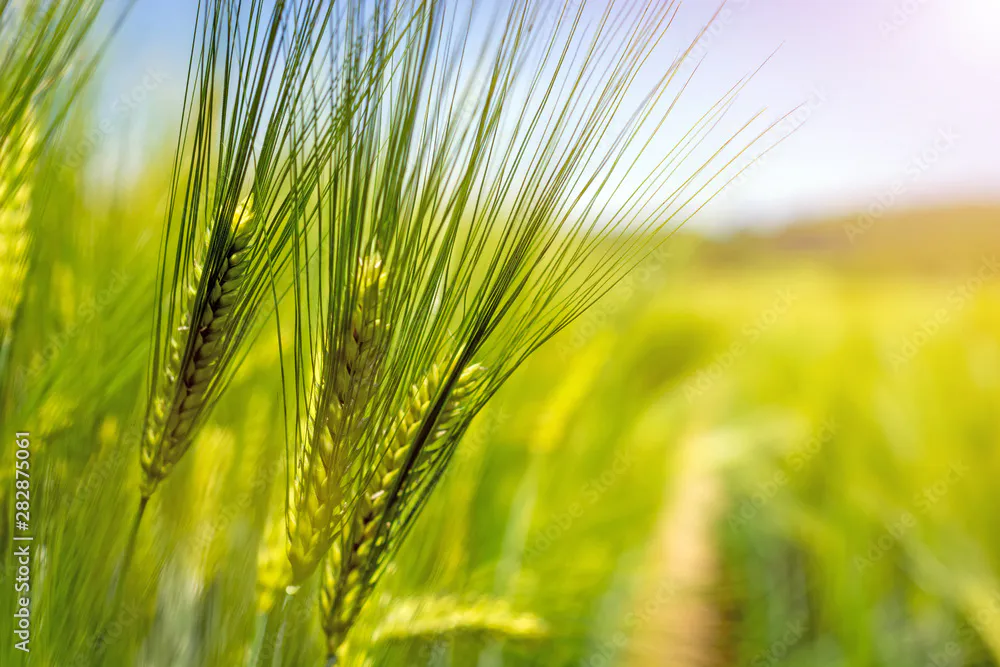
So what was the point of this one? Similar to the Feast of Weeks, this feast celebrated a harvest and was a time of thanksgiving to God for His provision. The difference between this one and the Feast of Weeks is that the Feast of Weeks celebrated the wheat harvest while the Feast of Firstfruits celebrated the barley harvest. The priest would take a sheaf of barley and wave it before the Lord as an offering. Then all Israelites sacrificed a lamb as a burnt offering to God. No one was allowed to eat of the crop until the first portion had been brought to the priest. This acknowledged that the firstfruits belonged to God and He was the source of it all.
The timing of this feast was right in line with Passover and the Feast of Unleavened Bread (stay tuned for this one!). In fact the exact time of when it should be celebrated has been in dispute. Leviticus says the waving of the first sheaf must occur the day after the Sabbath. However, the Pharisees and Sadducees disagreed on whether that meant the regular weekly Sabbath (favored by the Sadducees) – which would put the sheaf waving on our Saturday evening/Sunday morning – or if it was the special Sabbath of the first day of the Feast of Unleavened Bread – which could change from year to year and was favored by the Pharisees. And this disagreement continues among scholars today.
The Fulfilment
I already mentioned that this feast connects to the resurrection of Jesus. So how does it do that? First, let me back up a bit, I feel like I haven’t explained something rather important very well. God in His wisdom and forethought instituted various festivals for the Israelites to observe – 7 in all. And God designed each one of them to point to Jesus and the New Covenant in some way. I already went through Passover (the Crucifixion) and the Feast of Weeks/Pentecost (outpouring of Holy Spirit) and now I’m onto the Feast of Firstfruits. Make sense? Cool, let’s move on.
The first thing to note is that despite the disagreement on when the sheaf should be waved, it seems clear from the Bible that this day fell on a Sunday – after the regular Sabbath’s day of rest. This means that Jesus rose from the dead on the day that the priest waved the sheaf as an offering to the Lord. Already this is significant. The wave offering signified that what was waved belonged to the Lord but then He released it to be used by others. Jesus presented Himself as an offering to God and the atonement that Jesus achieved was released by God to be received by us.
Furthermore, Paul uses the word “firstfruits” to refer to Jesus and His resurrection.
But Christ has indeed been raised from the dead, the firstfruits of those who have fallen asleep. For since death came through a man, the resurrection of the dead comes also through a man. For as in Adam all die, so in Christ all will be made alive. But each in turn: Christ, the firstfruits; then, when he comes, those who belong to him.
1 Corinthians 15:20-23 (NIV)
Paul refers to Jesus’ resurrection as the firstfruits. Basically saying, “Just as God raised Jesus from the dead, so shall you be.” Similarly in Romans 8:23, Paul writes that the indwelling of the Spirit is a firstfruit of the redemption of all creation (specifically our bodies).
When God instituted the Feast of Firstfruits, He looked ahead to the day His Son would fulfill it by becoming the firstfruits of the New Covenant and redemption of all creation.
Wrapping Up
Praise God for the resurrection! Am I right? As Paul wrote in 1 Corinthians, without the resurrection our faith is useless (see 1 Corinthians 15:13-17). Don’t gloss over the power of Jesus’ resurrection. We tend to put a lot of emphasis on the Cross and the weight of the sin He carried. But the resurrection demonstrated that God accepted Jesus’ sacrifice on the cross. I love it.
I also love the amount of care God put into the holidays He gave the Israelites in the Old Testament. Every one of them a picture of Jesus and the New Covenant. Most people missed it when Jesus walked the earth and most people don’t recognize it today. That’s why I’m taking the time to go through them all. The connections amaze me. Some more than others. So stay tuned for the next one: The Feast of Unleavened Bread!
Outro
If you enjoyed this post, please consider doing one or all of these things. First, subscribe if you haven’t. If you have, thank you! Second, spread the word. Send these to everyone you know and encourage them to read and subscribe. This blog is purely word of mouth right now. I rely on you, my readers, to help me get more readers. And third, please consider donating. It’ll enable me to continue to offer regular posts.
Feel free to leave a comment with any questions about what I’ve written, any additional comments about the post, or if there’s a topic you’d like me to write about. Before doing that though, be sure to check out all my posts here and see if I’ve covered it already. And if you find I’ve done it already but aren’t satisfied or still have more questions, let me know!
Thank you for reading this! I greatly appreciate each one of you. Until next time, God bless you all!

Leave a Reply