

Intro
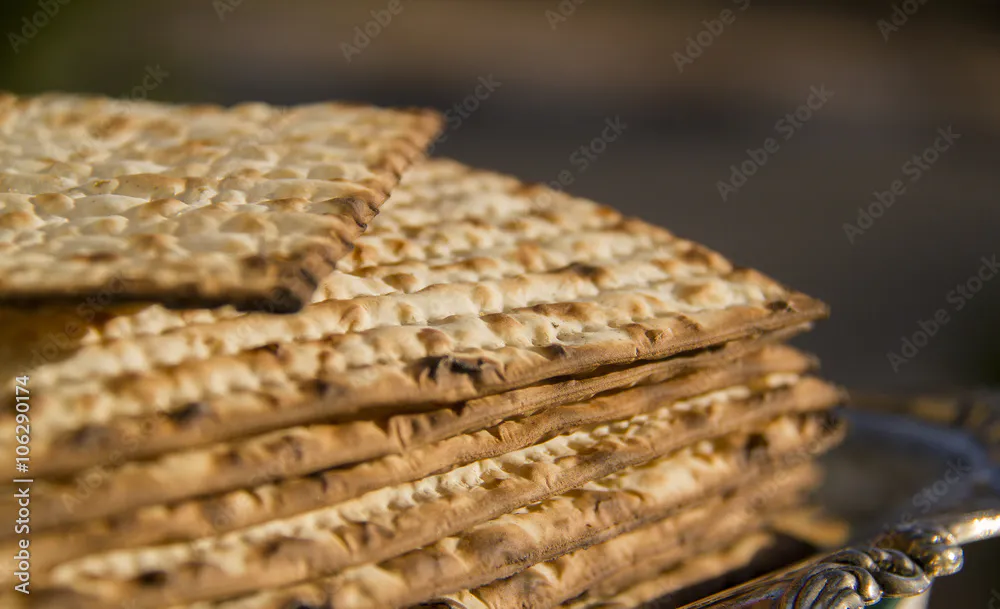
Here’s post number four discussing a Jewish holiday. In case you missed it, I’ve covered 3 of the 7 holidays (or feasts) instituted by God in the Old Testament (catch up here for Passover, here for Pentecost, and here for Firstfruits). I’ll confess that I didn’t plan this out so I’m doing them in a weird order. But oh well. Now onto the topic of this week’s post, the Feast of Unleavened Bread. What is unleavened bread, you ask? That’s a great question since, unless you’re familiar with the process of bread-making, you don’t have much reason to know what leaven is. And yet, Jesus uses it as a negative illustration multiple times. Given that, I think it important to know what leaven is and the reason behind the feast.
The Basics on Leaven
Okay, first question to answer: what is leaven? In a word: fungus. But not just any kind of fungus. Leaven is a fungus that ferments sugars and is used to cause dough to rise. You may have also heard it by its arguably more common name, yeast. For those of you familiar with bread making, you know how important yeast is to the process. But you also know that you don’t need a lot! Put too much in and you’ll probably end up with a loaf that collapses shortly after baking and is gummy or spongy, etc. Not good. A little goes a long way here.
Now before you get all excited about the possible sermon illustrations that compare leaven to how Christians ought to live out there lives (i.e., don’t shove it down people’s throats), that’s more what Jesus’ illustration with salt is about. Jesus called us the salt of the earth (see Matthew 5:13). And similar to leaven, a little salt goes a long way. However, Jesus does not call us the leaven of the world. In fact, He warns against the leaven of the Pharisees, Sadducees, and Herod. Plus Paul warns against the leaven of immorality (1 Corinthians 5:7) and legalism (Galatians 5:2-11). So what was Jesus and Paul comparing leaven to that makes it a negative? Before I answer that question, I’m going to take as step back and first talk about the Feast of Unleavened Bread.
The Feast
“This is a day you are to commemorate; for the generations to come you shall celebrate it as a festival to the Lord—a lasting ordinance. For seven days you are to eat bread made without yeast. On the first day remove the yeast from your houses, for whoever eats anything with yeast in it from the first day through the seventh must be cut off from Israel. On the first day hold a sacred assembly, and another one on the seventh day. Do no work at all on these days, except to prepare food for everyone to eat; that is all you may do.
“Celebrate the Festival of Unleavened Bread, because it was on this very day that I brought your divisions out of Egypt. Celebrate this day as a lasting ordinance for the generations to come. In the first month you are to eat bread made without yeast, from the evening of the fourteenth day until the evening of the twenty-first day. For seven days no yeast is to be found in your houses. And anyone, whether foreigner or native-born, who eats anything with yeast in it must be cut off from the community of Israel. Eat nothing made with yeast. Wherever you live, you must eat unleavened bread.”
Exodus 12:14-20 (NIV)
Here in Exodus 12 we see a detailed outline of the Feast of Unleavened Bread. This feast begins the day after Passover – as seen in Leviticus 23:5-8. The Jews observed it for 7 days in accordance to God’s command. It was part of the commemoration of the Jews’ departure from Egypt. And as the name implies, the big deal of the festival was leaven – specifically the removal of leaven from their food and homes. No leaven could be found in their homes for the duration of the 7 day feast. And all their bread had to be made without it.
In fact, some days before Passover, the search for leaven in the house began. By the time the Passover came, the Jews had cleared the house of even the smallest speck of leaven. And I’m getting a little ahead of myself, but here’s an interesting thought about that practice. What did Jesus do at the temple a few days before Passover? Cleared the temple. Jesus accused them of turning His Father’s house into a “den of thieves”. Given what leaven represents in the Bible, Jesus literally fulfilled one aspect of this feast by doing that. More on that in the next section.
No Leaven in Jesus
Going back to the question of what leaven represents, the answer is sin. Because, like sin, it only takes a little leaven to work its way through an entire batch. And when we’re talking about sin, that batch may be an individual, or an entire church community. Because of that representation, Jesus does not compare His followers to leaven. Rather He uses leaven in conjunction with the religious and political leaders.
With this in mind, it becomes easy to see Christ in the Feast of Unleavened Bread. Jesus was sinless. No sin, no leaven. And He called Himself the “bread of life”. So this feast could be named the Feast of Jesus Christ, because being without sin and being the bread of life makes Him Unleavened Bread. Simple deductive reasoning there. This festival and Passover are very easy to find Jesus in. John the Baptist called Jesus the Lamb of God and He died during Passover when the sacrificial lambs were being slaughtered. And with this one – done around the same time as Passover – we can recognize that just as the bread used in the feast had no leaven in it, Jesus also was without sin and therefore made the perfect sacrifice for mankind’s sin and redemption.
Back to the clearing of the temple, can you see how Jesus fulfilled the practice of cleaning a house of leaven? If leaven is sin, and the temple market made it a “den of thieves” – i.e., sinners – then Jesus cleared His Fathers house of leaven (sin). Pretty incredible when you think about it.
Wrapping Up
Jesus our Passover Lamb – perfect and spotless. Jesus our Unleavened Bread of Life – sinless. The Firstfruits of the Resurrection. The one who sends Holy Spirit to Reap a Harvest. Praise God. And that’s just 4 of the 7 festivals instituted by God Almighty that all point to Jesus and His plan of redemption for mankind. Incredible. Let us all remember this and be grateful for all He has done. For His great love, grace, and mercy shown to us. Amen.
Join me next time as I find Jesus in the Feast of Tabernacles (Sukkot).
Outro
If you enjoyed this post, please consider doing one or all of these things. First, subscribe if you haven’t. If you have, thank you! Second, spread the word. Send these to everyone you know and encourage them to read and subscribe. This blog is purely word of mouth right now. I rely on you, my readers, to help me get more readers. And third, please consider donating. It’ll enable me to continue to offer regular posts.
Feel free to leave a comment with any questions about what I’ve written, any additional comments about the post, or if there’s a topic you’d like me to write about. Before doing that though, be sure to check out all my posts here and see if I’ve covered it already. And if you find I’ve done it already but aren’t satisfied or still have more questions, let me know! You can also contact me through this form.
Thank you for reading this! I greatly appreciate each one of you. Until next time, God bless you all!

Leave a Reply