

Intro
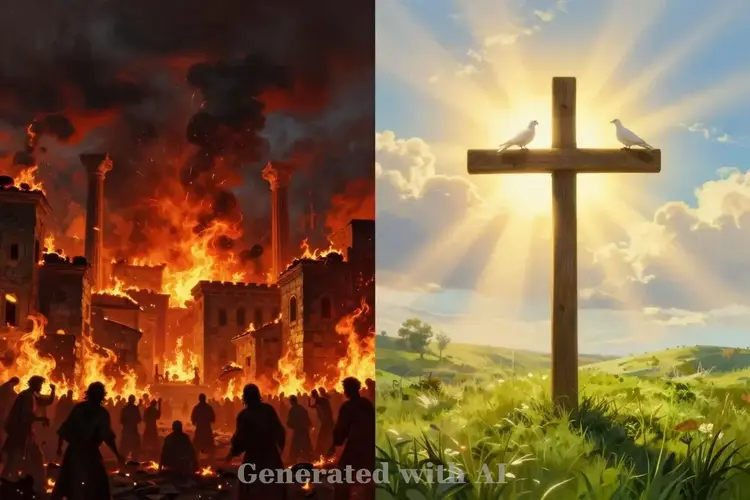
Hello! As promised, here’s part two of my two-part blog on the subtle belief that can cause people to accuse us of believing in two different gods. That belief being how God is all judgment and wrath in the Old Testament and all love and mercy in the New. I talked last time about God’s judgment and how it’s consistent between Old and New Testaments – even though we only ever hear about it in relation to the Old Testament (Revelation being the exception). Now I aim to show you how God’s love and mercy not only triumphed in the New Testament, but comes up again and again all throughout the Old Testament – again to showcase that there aren’t two gods, just one.
Just like last time, I wish for you to keep these two verses in mind.
Jesus Christ is the same yesterday and today and forever.
Hebrews 13:8 (NIV)
I the Lord do not change.
Malachi 3:6a (NIV)
By the way, have you memorized these? If not, I encourage you to. And since they’re quite short, it’s a bit easier. Alright, let’s get started.
God’s Love and Mercy
People talk about God’s love and mercy most often when talking about Jesus and the crucifixion/resurrection and the salvation He brought us. And for good reason! Jesus’ sacrifice on the cross was the ultimate display of God’s love and mercy. And the New Testament writers talk about that over and over again. But the Old Testament displays God’s love and mercy time and time again as well. People just don’t talk about it as much – except for perhaps a few of the more popular stories. And I aim to show you as many of those instances as well and put to bed this notion of two gods.
New Testament
I’m starting with the New Testament because we’re all more familiar with God’s love and mercy in the New. After all the four Gospels talk about them a lot. Jesus spoke about them and He lived out God’s love. And we know Jesus exemplifies God the Father. Here’s a verse to support this.
Philip said, “Lord, show us the Father and that will be enough for us.”
9 Jesus answered: “Don’t you know me, Philip, even after I have been among you such a long time? Anyone who has seen me has seen the Father. How can you say, ‘Show us the Father’?
John 14:8-9 (NIV)
Elsewhere Jesus says that He only does what He sees the Father doing.
19 Jesus gave them this answer: “Very truly I tell you, the Son can do nothing by himself; he can do only what he sees his Father doing, because whatever the Father does the Son also does.
John 5:19 (NIV)
So, from these two passages, we see that Jesus connects the God the Israelites knew in the Old Testament with the God that Jesus is putting on display – a God of love, grace, and mercy. Jesus sought to reveal the true nature of God to the Jews of His day because their view had been skewed in different ways. And this reveals to us today that there are not two gods of the Bible.
Examples
Even though I don’t need to say much more about God’s love and mercy in the NT, I still have a list of instances of God’s love and mercy being described. This will be helpful later.
- John 3:16-17 – Universal salvific love: Shows God’s fundamental motive toward humanity.
- Luke 15:11-32 – The Prodigal Son: The father’s welcome of his son demonstrates God’s merciful restoration.
- 1 John 4:9-10 – God sent His Son – demonstrating His love.
- Romans 5:8 – God’s mercy precedes our repentance by loving us while still His enemies.
- Matthew 9:13 – Priorities: Jesus redirects religious focus toward mercy over judgment. Because that’s what God desires.
- Ephesians 2:4-5 – Mercy as saving power and active rescue.
- Titus 3:4-5 – Kindness appearing: The timing of God’s mercy and kindness demonstrates His initiative.
- Hebrews 4:15-16 – Compassionate high priest: Because Christ understands our weakness, His mercy is rooted in empathy.
- Luke 13:6-9 – The Fig Tree parable: Jesus gives another year before judgment – a picture of deferred judgment for possibility of fruitfulness.
- 2 Peter 3:9 – Patience, not a desire for punishment: Explicit statement against universal wrath and judgment.
- John 10:27-29 – Eternal security: Protective, enduring care, demonstrating His great love.
- Matthew 11:28-30 – Rest for the weary: His mercy brings relief.
- 1 Timothy 1:15-16 – Paul as an example: Christ showed patience and mercy towards Paul – a transformative mercy – as an example for others to believe.
- Jude 1:21-23 – Mercy toward strugglers: Active preservation of keeping oneself in God’s love and mercy and rescuing others who are struggling by showing them mercy.
- Revelation 22:17 – Open invitation to come to Jesus: The final chapter maintains an open door into God’s love and mercy.
And this is just a handful of examples. But I think this’ll be enough to dispel any ideas that the Bible displays two gods.
Old Testament
Despite that the fact that many counts suggest that OT passages about God’s judgment outnumber those about His love and mercy, the numbers aren’t that far away from each other. The OT talks about God’s love and mercy A LOT. (My post about God being a Good Father highlights His love in the Old Testament.) Take the Psalms, for example. David constantly talks about God’s love, mercy, and faithfulness, even when he (David) or the nation as a whole are not faithful. The other authors of the non-Davidic Psalms echo this.
And as I did for the New Testament, I’m going to give a quick list of references to really hammer home this how much God’s love and mercy shows up in the Old Testament, just like they do in the New Testament. For this one, I’ve decided to group them by theme.
Covenant Faithfulness
- Exodus 34:6-7 – The foundational declaration of God’s nature and the most quoted attribute passage in Scripture.
- Psalm 136 – Refrain repeated 26 times: “His love endures forever” – applied to creation, redemption, and ongoing providence.
- Deuteronomy 7:9 – Covenant reliability: God always keeps His covenants.
- Lamentations 3:22-23 – Israel in the midst of destruction, yet God gives love and compassion (mercy) every day. And as a result, they are not totally destroyed.
Patience With Rebellion
- Numbers 14:18-20 – God gives forgiveness after the rebellion of the people. Of note, He does still discipline them, mercy does not mean absence of consequences.
- Nehemiah 9:17, 31 – Despite their idolatry, God continued to show patience and mercy and forgive His people.
- 2 Kings 13:23 – Even when Israel continued in error, God showed patience and compassion because of the covenant He had made.
- Jonah 4:2 – Jonah knew that God relents from sending calamity because of His mercy – hence why he didn’t want to preach to Nineveh in the first place. He wanted God to destroy them and new if they repented, God would show mercy.
- Joel 2:13 – A call to return to God because He will show compassion and love.
Personal Demonstrations of Mercy
- Psalm 103 – A Psalm of praise of God’s mercy, forgiveness, removal of guilt, compassion like a father, and eternal loving-kindness.
- Psalm 145:9, 18 – God is good to all and near to all who call on His name.
- 1 Kings 19:11-13 – God’s gentleness with Elijah. God speaks in a “gentle whisper” – which is exactly what Elijah needed in the moment. No rebuke. No annoyance. Just love.
- Daniel 9:4, 9 – Daniel’s confession of Israel’s rebellion with the expectation of God’s mercy and forgiveness.
Restoration Promises
- Isaiah 54:7-10 – God’s temporary anger, but eternal kindness toward His people.
- Isaiah 49:14-16 – Unbreakable bond between God and Israel.
- Isaiah 55:6-7 – Invitation to mercy and forgiveness.
- Jeremiah 31:3 – Ancient love declared by God to be everlasting and unfailing.
Prophetic Declarations
- Micah 7:18-19 – Declarations of God wiping away sin and iniquity.
- Hosea 11:8-9 – God declaring how He’ll have mercy over Israel and not destroy them again.
- Ezekiel 18:32 – God does not take delight in death. Rather He calls on people to repent.
- Zechariah 1:16 – God’s promise to restore Jerusalem.
Narrative Examples
- Ruth 1:8; 2:20 – God’s kindness toward a Moabite woman – who becomes an ancestor of King David and Jesus.
- Genesis 19:15-16 – God spares Lot from the destruction of Sodom.
- Genesis 32:9-12; 33:1-5 – Jacob appeals to God’s past kindness as he faces Esau and fears retribution from his brother.
But wait, there’s more
I could say so much more here. After all, I didn’t really dive deep into any of the stories of the Old Testament. I only hinted at the story of Jonah and the mercy God showed Nineveh. And how He rescued Lot. But I didn’t even touch the entire book of Judges. Many look at the book of Judges as evidence of God’s wrath and judgment upon unfaithful Israel. And in a way, it is. But never did God leave them alone. He always rescued them. That’s mercy in action.
And that’s not getting into how He rescued them out of slavery from Egypt. Or how He relented from destroying them in the wilderness and took care of all their needs through various miracles.
And then there’s the prophets talking about God’s mercy as well – all spoken in the midst of their prophecies about judgment. Furthermore, in my post about Purim, I talked about God’s divine hand working through the circumstances we read about in Esther to spare the Jews from destruction.
To sum up what I’m trying to say here, the Old Testament overwhelmingly points to a God whose character is Love, Grace, and Mercy. And if you look at the stories in the OT, you’ll see that the themes match the themes you find in the NT list I put. This demonstrates that these two testaments describe a single God, rather than two separate gods. And He loves us with His whole being.
Wrapping up
I hope that through these two posts, any notion of two gods or even one schizophrenic god has been abolished in your mind. So that no one could ever convince you otherwise. As Malachi and Hebrews says, God has not changed. He is the same forever, past, present, and future. And that makes it easier to follow Him. Because of His consistency, we can trust Him easier. I think I hinted at it last time, but I don’t want to to follow a schizophrenic god! And I certainly don’t want to try and worship two gods. Praise God we don’t have to do either of those! We follow one God of love and mercy who will make all things right in the end.
Outro
If you enjoyed this post, please consider doing one or all of these things. First, subscribe if you haven’t. If you have, thank you! Second, spread the word. Send these to everyone you know and encourage them to read and subscribe. This blog is purely word of mouth right now. I rely on you, my readers, to help me get more readers. And third, please consider donating. It’ll enable me to continue to offer regular posts.
Feel free to leave a comment with any questions about what I’ve written, any additional comments about the post, or if there’s a topic you’d like me to write about. Before doing that though, be sure to check out all my posts here and see if I’ve covered it already. And if you find I’ve done it already but aren’t satisfied or still have more questions, let me know! You can also contact me through this form.
Thank you for reading this! I greatly appreciate each one of you. Until next time, God bless you all!

Leave a Reply