

Intro
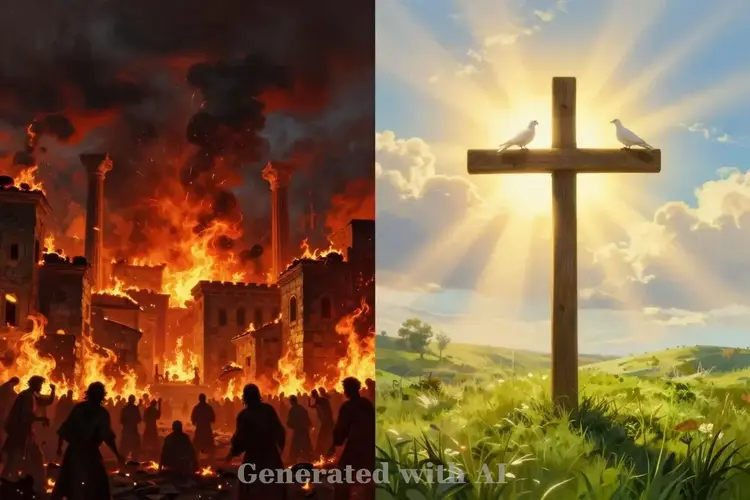
Reading the title might make you say, “There’s only one God!” And you’re right. However, there is a view out there – not uncommon, but verbalized often – that almost makes it sound like we believe in two different gods. Or at the very least believe that God had a major attitude change between the Old Testament and New Testament. What viewpoint am I referring to? The view that anger and judgment characterized God in the OT and love, grace, and mercy characterizes Him in the NT and through today.
At best this view justifies a skeptic’s position that God doesn’t exist. At worst, this view makes it sound like we believe in two gods. And then there’s the thought in between, a schizophrenic god.
I don’t know about you, but I don’t want the skeptic to have an incorrect view on God and what we believe about Him. So I think it’s good to address this and deal with the stories of God’s judgment (and anger) we find littered throughout the Old Testament. As I go through this topic, keep these two verses mind.
Jesus Christ is the same yesterday and today and forever.
Hebrews 13:8 (NIV)
I the Lord do not change.
Malachi 3:6a (NIV)
This is important to remember. God has not, and will not change. So whatever we see of God in one Testament, it exists in the other. So to demonstrate that there are not two gods in the Bible, I’m going to talk about God’s anger and judgment we see in the Old Testament and then point out how they show up in the New. In my next post, I’ll cover God’s mercy, grace, and love and show how it works in both the Old Testament and New Testament. And when I’m done, you’ll all be experts in debunking any two gods arguments. And schizophrenic god arguments.
God’s Anger and Judgment
Some people seem to think that God’s anger and judgment are random and/or exclusive to the Old Testament. But they’re not random. Nor are they exclusive to the Old Testament. Both those ideas are false. And both of these false narratives can contribute to the notion that God, as portrayed in the two testaments, is actually two different gods.
Old Testament
Since we’re all a bit more familiar with God’s judgment from the Old Testament, I’m going to start here. My plan is to briefly cover stories of God’s judgment as well as share why God sent those judgments. The why is very important since it’ll disprove the notion that God’s anger and judgment are random.
The Stories
When you read the Old Testament, you will find a lot of stories of God’s judgment. I’m going to only briefly list them out here without going into detail. I encourage you to read the passages for yourself to get the whole picture. And of note, this is not an exhaustive list.
- The Great Flood (Genesis 6-9) – God sends a worldwide flood to destroy humanity.
- The Tower of Babel (Genesis 11) – God confuses human language and scatters people across the earth.
- Sodom and Gomorrah (Genesis 18-19) – Two cities are destroyed by fire and brimstone.
- The Golden Calf (Exodus 32) – Approximately 3,000 Israelites are killed by the Levites (ordered by God through Moses).
- Nadab and Abihu (Leviticus 10) – Aaron’s two sons are consumed by fire from the Lord.
- The Spies’ Report (Numbers 13-14) – After the Israelites reject the Promised Land, God condemns that entire generation to wander 40 years in the wilderness until they die.
- Korah’s Rebellion (Numbers 16) – The ground opens up and swallows Korah and his followers.
- Plague on Baal Peor (Numbers 25) – 24,000 Israelites die in a plague.
- The Book of Judges – A cycle of oppression from their enemies and God sending a “judge” to rescue them.
- Uzzah and the Ark (2 Samuel 6:1-8) – Uzzah is struck dead for touching the Ark of the Covenant.
- The Plague After David’s Census (2 Samuel 24 / 1 Chronicles 21) – 70,000 Israelites die from a pestilence.
- Destruction of Israel by Assyria (2 Kings 17) – Assyria destroys the northern kingdom of Israel and exiles the inhabitants.
- Destruction of Judah by Babylon (2 Kings 24-25 / 2 Chronicles 36) – Babylon destroys the southern kingdom of Judah and exiles the inhabitants.
The Reasons
The reasons are very important. After all, if we truly believe in a loving God, why the judgments? The very broad reason is that God is also a God of justice. And He punishes sin. Furthermore, if it seems like God punished the Jews more than others, that’s because of the covenant God established with them. The covenant made at Mount Sinai included blessings for the Israelites when they kept the covenant and pursued God, and curses and judgments when they broke the covenant and strayed from God. And when looking at the various reasons for the different judgments I listed above, here’s what we find.
- Covenant Lawsuit – Israel accused of breaking the covenant in various ways.
- Idolatry – Worship of other gods as spiritual adultery.
- Social Injustice – Exploitation of widows, orphans, foreigners, and the poor.
- False Security – Trust in military alliances or temple presence rather than ethical obedience, i.e., believed that just because the were “God’s people” they were safe and could live however they wanted.
- General wickedness – We actually see this come up more for the non-Jewish nations, as well as for the Genesis flood.
- Priestly/Leadership corruption – Accepting bribes, ignoring injustices, not performing their duties properly as laid out in the Torah, etc.
- The Motions – Ritual without the proper heart behind it.
- Violating proper holiness protocols/commands of God from the Torah.
Notice that all the reasons for the judgments can cover at least one of the judgments I listed above. And each judgment can be covered by one or more of these reasons. When looking at the stories of judgment through the lenses of these reasons, I see a God of justice who must punish the sin – even though He loves the people (I’ll get more into this in Two Gods: Part Two, so stay tuned).
New Testament
When people think about God’s judgment and the New Testament, I guarantee the first place they’ll point to is the book of Revelation. And for good reason. The number and types of judgments listed in Revelation are crazy. To the point where I’m a little surprised that people think that God is not a god of judgment in the New Testament. I mean, did they even read Revelation? But I digress. The point of this section is to demonstrate that Revelation is not the only place in the New Testament that reveals God’s judgments. And that’s important to disprove the two gods notion. So let’s go.
The Stories
Stories of God’s judgment in the New Testament are not as varied or colorful. But they do exist. And there’s more than what I’ve got listed here. So if you’re curious, do your own research.
- Parables of Judgment (Matthew 13:24-30, 36-43; 25:31-46) – Wheat and weeds, Sheep and goats
- Seven Woes to Pharisees (Matthew 23) – Condemnation of religious hypocrisy
- Temple Cleansing (Mark 11:15-17) – Judgment on religious corruption
- True vs. False Followers (John 15:1-6) – Branches pruned or burned
- Ananias & Sapphira (Acts 5:1-11) – Instant death for lying to the Holy Spirit
- God’s Judgment on sin and people’s works(Romans 1:18-2:16) – Consequences for sin
- God’s Enemies (Philippians 3:18-19) – End will be destruction
- Deliberate sin (Hebrews 10:26-31) – Unrepentant heart
- False Prophets (2 Peter 2:4-10) – Like Sodom will be destroyed
- False Teachers (Jude 1:3-16) – Historical examples as proof of future judgment
- God’s Full Wrath (Revelation 6; 8:1-5; 8:6-9:21; 11:15-19; 16) – Seven Seals, Seven Trumpets, Seven Bowls
- Babylon Falls (Revelation 18) – Economic/political empire collapses
- Armies Destroyed (Revelation 19:11-21) – Destruction of those who war against God
- Lake of Fire (Revelation 20:7-15) – Final destination for death, Hades, devil, beast, false prophet, unsaved
Reasons
Looking closely at these, you’ll notice that the reasons for these judgments are reminiscent of the ones from the Old Testament. Things like, general sinfulness and wickedness, corrupt leaders, false sense of security, and going through the motions of a holy life without heart change. These reasons being the same prove that God’s standards for holiness and justice have not changed. Therefore, I can confidently say that God’s justice in the Old Testament is the same as in the New Testament and through today. Thereby giving strong evidence to disprove the notion of two gods.
Wrapping Up
The Bible doesn’t portray two gods. It portrays one. One God with the same character in the Old Testament and the New Testament. Today I discussed God’s judgment across the testaments. Next time I will talk about God’s love, grace, and mercy. So don’t worry if you feel like everything I talked about today painted a less-then-positive picture about God. I’ll balance it out next time! However, it is important to remember that He’s a God of justice and in the end, no sin will go unpunished. But He’s still the same loving God we sing about in church. I hope this first part clears up misconceptions about God’s judgments as found in the Old Testament.
God bless you all and remember, don’t be fooled if anyone claims we worship two gods. Because we don’t and I aim to wrap up this topic next time. Also, God’s judgment often confuses people. So if any of these stories doesn’t make sense – such as “Why did God strike Ananais and Sapphira dead?” – please ask. Make a comment or contact me through the contact form.
Outro
If you enjoyed this post, please consider doing one or all of these things. First, subscribe if you haven’t. If you have, thank you! Second, spread the word. Send these to everyone you know and encourage them to read and subscribe. This blog is purely word of mouth right now. I rely on you, my readers, to help me get more readers. And third, please consider donating. It’ll enable me to continue to offer regular posts.
Feel free to leave a comment with any questions about what I’ve written, any additional comments about the post, or if there’s a topic you’d like me to write about. Before doing that though, be sure to check out all my posts here and see if I’ve covered it already. And if you find I’ve done it already but aren’t satisfied or still have more questions, let me know! You can also contact me through this form.
Thank you for reading this! I greatly appreciate each one of you. Until next time, God bless you all!

Leave a Reply