

Intro
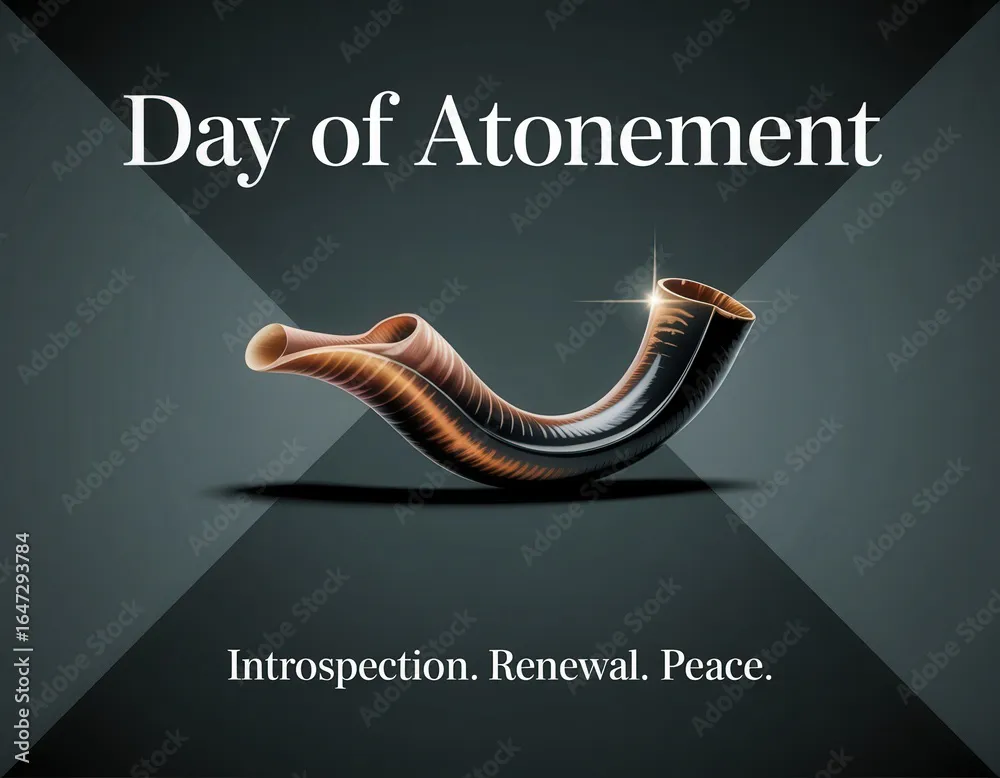
We’re at the end! Kind of. Today I’ll be discussing the final Jewish feast that God instituted in the Old Testament. However, I’m aware of a couple of other really well known holidays not instituted by God that I intend to discuss in upcoming posts. So while we’ve reached the end of the Divinely established holidays, the series of Jewish holidays isn’t quite at its end. But getting back to today’s topic, the holiday I’m analyzing today is known as the Day of Atonement – or Yom Kippur. The Day of Atonement is the most holy and solemn day on the Jewish calendar. However, it is also one of the most powerful references to Jesus in all the Jewish feasts. Buckle up, this is going to be fun.
What is it?
As I mentioned, the Day of Atonement is the most holy day on the Jewish calendar. This day ends a 10 day period of introspection and repentance by the Jewish people that started with the Feast of Trumpets. On this day, the High Priest makes atonement for all the sins of the entire nation of Israel. That’s a heavy burden. Before diving into the foreshadowing, let’s take a deeper dive at how God ordained this day and how it has evolved.
As God Ordained
The Lord spoke to Moses after the death of the two sons of Aaron who died when they approached the Lord. 2 The Lord said to Moses: “Tell your brother Aaron that he is not to come whenever he chooses into the Most Holy Place behind the curtain in front of the atonement cover on the ark, or else he will die. For I will appear in the cloud over the atonement cover.
3 “This is how Aaron is to enter the Most Holy Place: He must first bring a young bull for a sin offering and a ram for a burnt offering. 4 He is to put on the sacred linen tunic, with linen undergarments next to his body; he is to tie the linen sash around him and put on the linen turban. These are sacred garments; so he must bathe himself with water before he puts them on. 5 From the Israelite community he is to take two male goats for a sin offering and a ram for a burnt offering.
6 “Aaron is to offer the bull for his own sin offering to make atonement for himself and his household. 7 Then he is to take the two goats and present them before the Lord at the entrance to the tent of meeting. 8 He is to cast lots for the two goats—one lot for the Lord and the other for the scapegoat. 9 Aaron shall bring the goat whose lot falls to the Lord and sacrifice it for a sin offering. 10 But the goat chosen by lot as the scapegoat shall be presented alive before the Lord to be used for making atonement by sending it into the wilderness as a scapegoat.
11 “Aaron shall bring the bull for his own sin offering to make atonement for himself and his household, and he is to slaughter the bull for his own sin offering. 12 He is to take a censer full of burning coals from the altar before the Lord and two handfuls of finely ground fragrant incense and take them behind the curtain. 13 He is to put the incense on the fire before the Lord, and the smoke of the incense will conceal the atonement cover above the tablets of the covenant law, so that he will not die. 14 He is to take some of the bull’s blood and with his finger sprinkle it on the front of the atonement cover; then he shall sprinkle some of it with his finger seven times before the atonement cover.
15 “He shall then slaughter the goat for the sin offering for the people and take its blood behind the curtain and do with it as he did with the bull’s blood: He shall sprinkle it on the atonement cover and in front of it. 16 In this way he will make atonement for the Most Holy Place because of the uncleanness and rebellion of the Israelites, whatever their sins have been. He is to do the same for the tent of meeting, which is among them in the midst of their uncleanness. 17 No one is to be in the tent of meeting from the time Aaron goes in to make atonement in the Most Holy Place until he comes out, having made atonement for himself, his household and the whole community of Israel.
18 “Then he shall come out to the altar that is before the Lord and make atonement for it. He shall take some of the bull’s blood and some of the goat’s blood and put it on all the horns of the altar. 19 He shall sprinkle some of the blood on it with his finger seven times to cleanse it and to consecrate it from the uncleanness of the Israelites.
20 “When Aaron has finished making atonement for the Most Holy Place, the tent of meeting and the altar, he shall bring forward the live goat. 21 He is to lay both hands on the head of the live goat and confess over it all the wickedness and rebellion of the Israelites—all their sins—and put them on the goat’s head. He shall send the goat away into the wilderness in the care of someone appointed for the task. 22 The goat will carry on itself all their sins to a remote place; and the man shall release it in the wilderness.
23 “Then Aaron is to go into the tent of meeting and take off the linen garments he put on before he entered the Most Holy Place, and he is to leave them there. 24 He shall bathe himself with water in the sanctuary area and put on his regular garments. Then he shall come out and sacrifice the burnt offering for himself and the burnt offering for the people, to make atonement for himself and for the people. 25 He shall also burn the fat of the sin offering on the altar.
26 “The man who releases the goat as a scapegoat must wash his clothes and bathe himself with water; afterward he may come into the camp. 27 The bull and the goat for the sin offerings, whose blood was brought into the Most Holy Place to make atonement, must be taken outside the camp; their hides, flesh and intestines are to be burned up. 28 The man who burns them must wash his clothes and bathe himself with water; afterward he may come into the camp.
29 “This is to be a lasting ordinance for you: On the tenth day of the seventh month you must deny yourselves and not do any work—whether native-born or a foreigner residing among you— 30 because on this day atonement will be made for you, to cleanse you. Then, before the Lord, you will be clean from all your sins. 31 It is a day of sabbath rest, and you must deny yourselves; it is a lasting ordinance. 32 The priest who is anointed and ordained to succeed his father as high priest is to make atonement. He is to put on the sacred linen garments 33 and make atonement for the Most Holy Place, for the tent of meeting and the altar, and for the priests and all the members of the community.
34 “This is to be a lasting ordinance for you: Atonement is to be made once a year for all the sins of the Israelites.”
And it was done, as the Lord commanded Moses.
Leviticus 16 (NIV)
Hoo boy. The instructions for this holiday come immediately after the deaths of two of Aaron’s sons who tried to offer incense in a manner that they weren’t supposed to. And the instructions takes an entire chapter to describe! In addition, there’s a little snippet in Leviticus 23 to give a few more instructions specifically for the people.
26 The Lord said to Moses, 27 “The tenth day of this seventh month is the Day of Atonement. Hold a sacred assembly and deny yourselves, and present a food offering to the Lord. 28 Do not do any work on that day, because it is the Day of Atonement, when atonement is made for you before the Lord your God. 29 Those who do not deny themselves on that day must be cut off from their people. 30 I will destroy from among their people anyone who does any work on that day. 31 You shall do no work at all. This is to be a lasting ordinance for the generations to come, wherever you live. 32 It is a day of sabbath rest for you, and you must deny yourselves. From the evening of the ninth day of the month until the following evening you are to observe your sabbath.”
Leviticus 23:26-32 (NIV)
This was a day of enormous magnitude. For on this day the High Priest entered the Holy of Holies (the only time he could) and offered atonement for the sins of the entire nation. And if he didn’t do things just right, he would be struck dead. No pressure. Can you see why this became the most holy and solemn day of the year for the Jewish people?
Perhaps the most interesting part about these instructions is the two goats. One to serve as the sin offering for the nation and the other to serve as the scapegoat and be released into the wilderness – where it would die. I’ll discuss these goats more throughout the different sections, so keep them in mind.
As Observed
Over the years, the Jews developed different observances for this day. As well as some additional beliefs that aren’t outlined in Scripture. One such belief is that on this day, the Book of Life is opened, names written in it and then sealed again until next year. God never said that.
Second, at some point, the man responsible for leading the scapegoat out into the wilderness started leading the goat up to a cliff and pushing it off. Again, God did not command this. In fact, He specifically states to release the goat into the wild – to die, yes, but not by the hands of the Israelites. I believe this is meant to symbolize that God takes care of the sins of the people. I imagine that at some point, however, people started wondering (and worrying) what it might mean if the scapegoat came back into the camp. So they figured they’d make sure it never did. I can see the logic there, but it is at the expense of obedience to the Lord. We’re not much different today.
Another unusual custom was the tying of a scarlet ribbon around the scapegoat and a matching one in the temple. The idea being that when God accepted the sacrifices and the scapegoat offering, the ribbon in the temple turned white. This might be the strangest belief of them all. Some blending of mysticism with Judaism.
In more modern times, we see such practices as increased charitable giving. Weeks of introspection and repentance. Asking God and others for forgiveness, and forgiving others. Praying special prayers, giving food to others, having special meals, giving special blessings, etc. There’s quite a bit. After Yom Kippur is over, there’s also a lot of celebration with even more joy than the observances leading up to it.
Where is Jesus?
I mentioned that this holiday foreshadows Jesus more powerfully than many of the others – and that’s saying something! And like the Feast of Tabernacles, the Day of Atonement contains elements of Jesus’ First and Second Comings. Take a look.
First Coming
First of all, the obvious. Hebrews makes the case that Jesus is our High Priest. But in addition to being our High Priest, He also serves as the blood sacrifice (Hebrews 9:7-14). So not only does Jesus fulfill the High Priestly role found in the Day of Atonement, He also fulfills the twin roles of the bull offering and the goat offering – both of which were sin offerings.
Another piece is the Mercy Seat. The High Priest had to sprinkle the blood on the Mercy Seat. God – through Jesus – offered Mercy to all mankind. Furthermore, the word for Mercy Seat in Leviticus means “propitiation”, and the New Testament says in multiple places that Jesus is the propitiation for our sins (translated in some English Bibles as “atoning sacrifice”) – see 1 John 4:10 and 1 John 2:2.
Lastly, Jesus fulfilled the scapegoat requirement as well since God placed all of mankind’s sin upon Jesus and He took them away forever!
Second Coming
I don’t have a whole lot to say about this. The biggest things to note is that Yom Kippur points to a future redemption of all of Israel. And this won’t happen until Jesus comes back. The Jews also associate the Day of Atonement with judgment – which points to the great and terrible Day of the Lord at the Second Coming.
Another interesting connection comes from the word translated as “scapegoat”. The Hebrew word used here is Azazel. This word is also associated with the devil. Which points to the final judgment of the devil himself.
The Scarlet Ribbon
Remember the scarlet ribbon I referenced earlier? The mystic-type belief that when God accepted the sacrifices the one tied around a door handle in the temple turned white? Even though God did not give this instruction to the people, it seems like there was something to it. Ancient literature gives accounts of this actually happening during the Second Temple period. I’d be more skeptical of the whole ordeal if not for the fact that all of a sudden, the literature records the color change ceasing. You read that right, they say it just stopped for the last 40ish years before the destruction of the Second Temple. What happened 40ish years prior to the temple’s destruction? The Crucifixion.
While I’m not totally on board with the miraculous color turning of the ribbon, I have to admit that the timing of it ending makes sense. With the death of Jesus, God stopped accepting animal sacrifices for sin.
I don’t know the truth behind this, but I’m not going to rule out anything here. God may have honored the ribbon for His own reasons – if only to use it as another pointer to Jesus’.
Wrapping Up
And there we go. All seven God-ordained Jewish holidays wrapped up. For this last one, I wish for you to remember the seriousness of sin, the holiness of God, the sacrifice of Jesus, and the coming hope of His return.
Next time I’m going to give a summary outline of all seven festivals and how they point to Jesus. After that, I’ll move to one of the two well-known holidays that God did not ordain – but make an appearance in the Bible. Stay tuned!
Outro
If you enjoyed this post, please consider doing one or all of these things. First, subscribe if you haven’t. If you have, thank you! Second, spread the word. Send these to everyone you know and encourage them to read and subscribe. This blog is purely word of mouth right now. I rely on you, my readers, to help me get more readers. And third, please consider donating. It’ll enable me to continue to offer regular posts.
Feel free to leave a comment with any questions about what I’ve written, any additional comments about the post, or if there’s a topic you’d like me to write about. Before doing that though, be sure to check out all my posts here and see if I’ve covered it already. And if you find I’ve done it already but aren’t satisfied or still have more questions, let me know! You can also contact me through this form.
Thank you for reading this! I greatly appreciate each one of you. Until next time, God bless you all!

Leave a Reply