

Intro
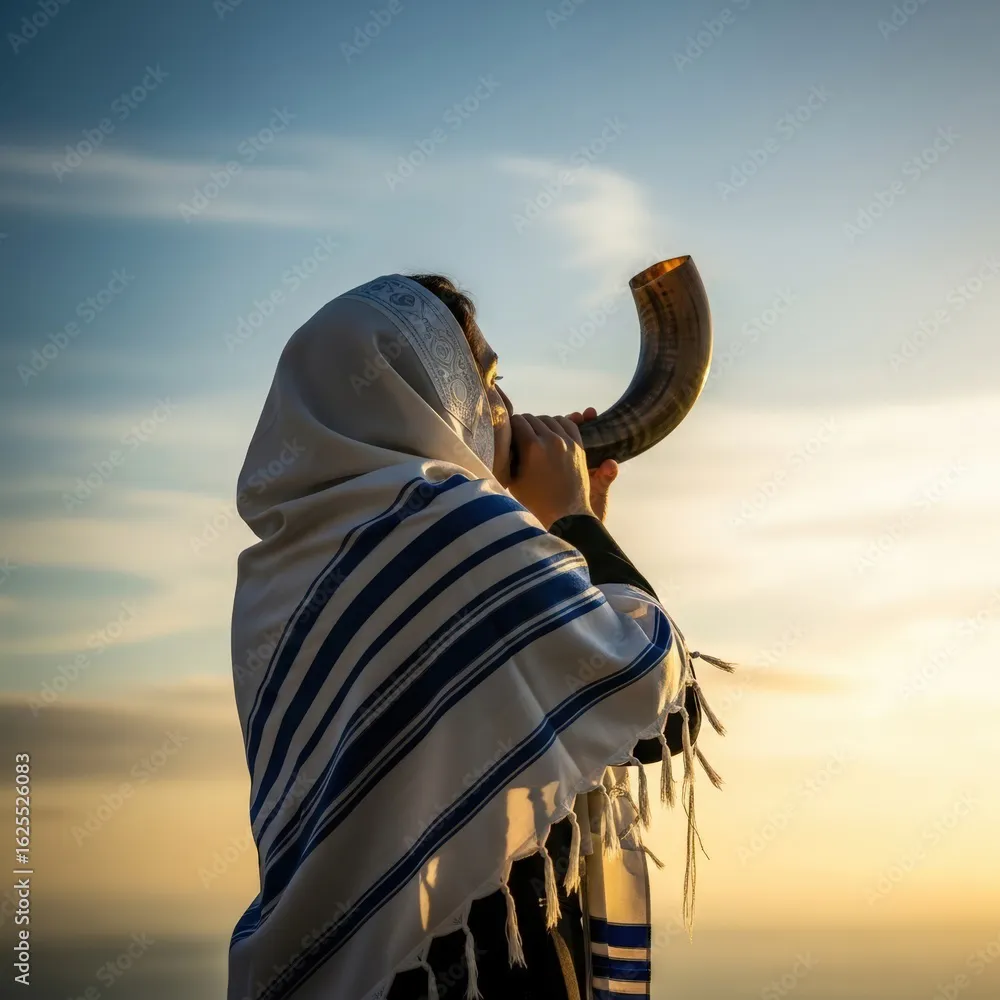
We are getting near the end of the Jewish holidays. After today, there is only one more instituted by God that I haven’t covered. And after that I will touch on two major Jewish holidays that were not ordained by God, but are referenced in the Bible. But back to today’s topic. It’s the noisy one. After all, a trumpet blast isn’t exactly quiet. And on the Feast of Trumpets, there were multiple trumpets sounded multiple times. This day started out quite noisy. So what’s the deal with it? I’m glad you asked, let’s find out.
The Feast
This feast actually appears in some ways to be a very straightforward feast. There aren’t a lot of instructions or details about it found in the Torah (the first five books of the Bible). And after that, it’s never mentioned or referenced again – though the imagery of trumpet blasts occur frequently throughout. Here’s the first occurrance in Leviticus.
The Lord said to Moses, “Say to the Israelites: ‘On the first day of the seventh month you are to have a day of sabbath rest, a sacred assembly commemorated with trumpet blasts. Do no regular work, but present a food offering to the Lord.’”
Leviticus 23:23-25 (NIV)
Three verses, that’s it. Very simple. It’s a day of Sabbath rest on a specific date, commemorated with trumpet blasts, no work, and a food offering. I could get behind this one very easily. Though I’m no musician, so my trumpet blasts might just come from an app I play through my phone.
Now before we all think how simple this feast is, I need to make note here of what Numbers says about celebrating this feast. It contains a bit more detail regarding offerings.
“‘On the first day of the seventh month hold a sacred assembly and do no regular work. It is a day for you to sound the trumpets. As an aroma pleasing to the Lord, offer a burnt offering of one young bull, one ram and seven male lambs a year old, all without defect. With the bull offer a grain offering of three-tenths of an ephah of the finest flour mixed with olive oil; with the ram, two-tenths; and with each of the seven lambs, one-tenth. Include one male goat as a sin offering to make atonement for you. These are in addition to the monthly and daily burnt offerings with their grain offerings and drink offerings as specified. They are food offerings presented to the Lord, a pleasing aroma.
Numbers 29:1-6 (NIV)
This passage in Numbers just made it a bit more complicated. Though when you compare it to the other festivals, this one still comes out on top in terms of how little is said about it. And the number of sacrifices listed here is also on the low end when looking at all the festivals.
The Purpose
So I’ve now answered the question of what God told the Israelites to do for this feast. But another question remains before I move on to finding Jesus (if you remember that’s been my purpose with all these holidays). And that question is, why? Every feast I’ve covered thus far has had a reason. Something to celebrate and remember. Typically the Jews remember historical events. Mostly surrounding the flight from Egypt and the wandering in the wilderness. However, this one is a little more unique. The Feast of Trumpets kicks off a ten day period of introspection and repentance by the Jewish people. For them, when they hear the first trumpet blast, they begin to confess their sin to God. This all leads up to the Day of Atonement – which I’ll discuss in greater detail in my next post.
And this makes sense in many ways. All throughout the Bible we see trumpets frequently used as a call to action. Including military action, general assembly, and worship and praise. So to use the trumpet as a call to repentance fits the theme. In addition to being a call to action, they were also used to herald something – or someone – great and important, such as the coronation of a new king.
The Fulfillment
Now how about that fulfillment? Here’s the interesting thing about this one. The fulfillment has yet to come. What do I mean? Before I spell it out for you, I wonder if you can figure it out based on some of these verses I’m going to share. I hope it becomes obvious pretty quickly what this feast points to with Jesus.
- Joel 2:1, “Blow the trumpet in Zion; sound the alarm on my holy hill.”
- Zephaniah 1:14-16, “The great day of the Lord is near…a day of trumpet and battle cry”
- Zechariah 9:9-17, “The Sovereign Lord will sound the trumpet;”
- 1 Corinthians 15:51-52, “For the trumpet will sound, the dead will be raised imperishable, and we will be changed.”
- 1 Thessalonians 4:16-17, “For the Lord himself will come down from heaven, with a loud command, with the voice of the archangel and with the trumpet call of God, and the dead in Christ will rise first.”
- Revelation 8:6-9:21, 11:15-19, These passages talk about 7 trumpets that will bring plagues upon the earth. Though I’d encourage you to take note of what the voice in Heaven cries out in chapter 11. (Hint: the transference of the kingdom of the world to the Kingdom of God.)
Do you see the pattern? To sum it up: the end times and the Second Coming of Christ. All these passages use a trumpet to herald “the day of the Lord”. His judgment of the world, His salvation of Israel, and the rapture of His church. So the Feast of Trumpets clearly points to the Second Coming and His eternal Kingdom. Yet, it also points to His wrath and judgment. And that’s why the introspection and repentance part of this feast is so important. We need to be ready and telling others before it’s too late.
Wrapping Up
Unlike the other feasts, this one points to the Second Coming rather than the First Coming of Jesus. I mentioned in my last one on Tabernacles that many see the fulfillment of that one in the Second Coming. And I was hesitant at the time to agree, but now I think I can see the Feast of Tabernacles spanning both comings. I was reminded that Zechariah 14 references this festival as the one that all humanity will celebrate. And it’s true that the Feast of Tabernacles points to God dwelling (tabernacling) with man, and there’s no reason it can’t point to both Jesus’ first (temporary) coming and His second (eternal) coming.
With that, I’d say that the first four festivals I talked about are all about Jesus’ first coming, the fifth is a hybrid of His first and second, and this sixth one is all about His second. And with that, I want to leave you with one final thought. Be on the alert. We don’t know when Christ shall return, but until He does, keep doing what He has commanded. Most important of all is the Great Commission. Let’s bring as many people with us into Heaven as we can.
Outro
If you enjoyed this post, please consider doing one or all of these things. First, subscribe if you haven’t. If you have, thank you! Second, spread the word. Send these to everyone you know and encourage them to read and subscribe. This blog is purely word of mouth right now. I rely on you, my readers, to help me get more readers. And third, please consider donating. It’ll enable me to continue to offer regular posts.
Feel free to leave a comment with any questions about what I’ve written, any additional comments about the post, or if there’s a topic you’d like me to write about. Before doing that though, be sure to check out all my posts here and see if I’ve covered it already. And if you find I’ve done it already but aren’t satisfied or still have more questions, let me know! You can also contact me through this form.
Thank you for reading this! I greatly appreciate each one of you. Until next time, God bless you all!

Leave a Reply