

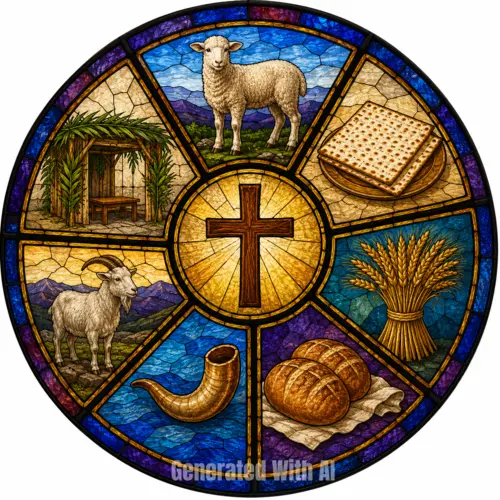
Intro
In this last post about the seven Jewish Holidays (or feasts or festivals) found in the Bible that God instituted, I’m giving a brief summary of how the feasts point to Jesus – either His first coming, second coming, or both. These aren’t in the same order that I did the individual posts on, but they are in the order of when they occur on the calendar. So let’s dive in.
Passover
Passover reminded the Jews about the night the angel of death killed the firstborn of Egypt, but passed over all Israelite homes as long as they put the blood of the Passover lamb on their doorposts. This marked the end of slavery and the beginning of freedom for them.
Jesus fulfilled this by becoming the unblemished, spotless Passover Lamb and shedding His blood for the forgiveness of our sins. By receiving this forgiveness, we are freed from our sins and are no longer slaves to them.
Unleavened Bread
The Feast of Unleavened Bread – which happened right after Passover – reminded the Jews of their flight from Egypt. Further, throughout Scripture, leaven is used as a picture of sin. This is important.
Jesus fulfilled this one because of His sinless life. And since leaven is a picture of sin, you could say Jesus lived an “unleavened life”. This goes hand in hand with Jesus being the unblemished, spotless Passover Lamb. Because only a perfect lamb could be sacrificed for the Passover.
Day of Firstfruits
The Day of Firstfruits served as a celebration of the barley harvest. And the Jews took this time to give thanks to God for His provision – appropriate. In addition, it reminded the Jews that the first fruits of everything belonged to God. Food and firstborn among animals and people.
Jesus fulfilled this by becoming the wave offering (the priest presented a wave offering for this festival) that He presented to God and then His atonement was released to be received by us (just as the wave offering was released to be used). This one occurred on Resurrection Day.
The first three holidays point to Jesus’ sacrifice, death, and resurrection. And it gets better from here.
Pentecost
Also called the Feast of Weeks, Pentecost celebrated the wheat harvest and the giving of the law at Mt. Sinai. It came 50 days after the first day of the Feast of Unleavened Bread.
The fulfillment of this one came on the day of Pentecost itself when the disciples were all gathered in the upper room. Holy Spirit poured out upon them and they preached the gospel to untold thousands. And the result was a harvest of 3000 people. The connection isn’t quite as obvious here (other than the usage of the word “harvest”), but the New Testament refers to the Holy Spirit as a type of first fruit that God gives believers. And like the Feast of Firstfruits, the Feast of Weeks is a feast of giving of the first fruits – of wheat rather than barley. Furthermore, the Jews remembered the giving of the law during this time. The law symbolized and instituted the Old Covenant; the outpouring of Holy Spirit symbolized and fully established the New Covenant.
With this one, we’ve reached the end of the Spring festivals and the end of the ones completely fulfilled by Jesus’ first coming.
Feast of Trumpets
Moving on to the Jewish holidays found in the fall, the Feast of Trumpets kicks off a ten day period of introspection and repentance. From the first trumpet blast sounded, the people began to look at their lives and confess their sins to God and others. They seek reconciliation and forgiveness.
In terms of fulfillment, this one hasn’t been fulfilled yet. The Feast of Trumpets is the first holiday on the Jewish calendar that points to the Second Coming of Christ. How so? Well, so much around the Second Coming is associated with trumpet blasts. A trumpet blast precedes the rapture of the church, a trumpet will herald the Great and Terrible Day of the Lord, angels will sound seven trumpets each for a different judgment on the inhabitants of the earth, etc. The festival urges people to seek forgiveness from God before it’s too late.
Day of Atonement
The confessing of sins from the Feast of Trumpets and the ten days following, culminates in the Day of Atonement – the most sacred and solemn day on the Jewish calendar. On this day, the high priest sacrificed a goat for a sin offering for the people and then on a second goat – the scapegoat – pronounced all the sins of the nation and laid them upon the goat. Someone then took the goat out to the wilderness and released it. It’s a little different now without the temple and the priesthood established. That’s why there’s a ten day period of confession. But the idea is the same. Sin must be atoned for and forgiven.
One thing interesting about this feast comes from the fact that I see elements of both Jesus’ first and second comings. It’s pretty obvious from a reading of Hebrews that Jesus serves as our High Priest, but also served as the atoning sacrifice for our sins. However, it also points to a future redemption of the entire nation of Israel when Jesus returns. Similarly, the Day of Atonement reminds us of the seriousness of sin and the need for judgment of it. And the Second Coming includes judgment of the wicked and of sin itself.
Feast of Tabernacles
This final of the holidays on the Jewish calendar (as instituted by God) is the Feast of Tabernacles, or Sukkot. The Jews take this time to live in tabernacles (think tents) and remember their ancestors’ journey through the wilderness after escaping Egypt. It’s a time to reflect on the provision and presence of God. After all, the official Tabernacle that the Lord directed Moses to make was the place of God’s presence among the Israelites.
Like the Day of Atonement, this festival points to both the first and second comings. And to me, it looks fairly obvious how. For Jesus’ first coming, John in particular used the Greek word for tabernacle to describe Jesus dwelling with mankind – much how God dwelt with the Israelites in the wilderness. And like those tabernacles that Jews live in to commemorate this festival, His first coming was temporary. However, all these festivals see a greater fulfillment than what is on the surface. And for this one, it also points to Jesus’ second coming, but as a permanent dwelling with mankind. The Bible also mentions that all nations will celebrate the Feast of Tabernacles. All nations will celebrate God dwelling with mankind for all eternity. That’s powerful.
And that’s the last of the Jewish holidays in this list. To sum up: the first four festivals in the Spring all point to the establishment of the New Covenant through Jesus’ death, resurrection, and sending of Holy Spirit. The last three in the fall primarily point to the second coming of Christ and His reign and rule over all and the destruction of sin once and for all (with some additional elements pointing back to His sacrifice and first coming).
Wrapping Up
And there you have it. All seven Jewish Holidays that God Almighty established. It’s incredible seeing how much they point to Jesus and all the foreshadowing that exists.
Even though this has come to a close, I’m not quite done with Jewish Holidays. There are two more that are very well known that I think a lot of people forget were not established by God. Despite that, you see God’s fingerprints all over the circumstances surrounding the establishment of these holidays. Join me next time as I explore the first of these two: Purim.
Outro
If you enjoyed this post, please consider doing one or all of these things. First, subscribe if you haven’t. If you have, thank you! Second, spread the word. Send these to everyone you know and encourage them to read and subscribe. This blog is purely word of mouth right now. I rely on you, my readers, to help me get more readers. And third, please consider donating. It’ll enable me to continue to offer regular posts.
Feel free to leave a comment with any questions about what I’ve written, any additional comments about the post, or if there’s a topic you’d like me to write about. Before doing that though, be sure to check out all my posts here and see if I’ve covered it already. And if you find I’ve done it already but aren’t satisfied or still have more questions, let me know! You can also contact me through this form.
Thank you for reading this! I greatly appreciate each one of you. Until next time, God bless you all!

Leave a Reply